ARTS / BOOKS
Chinese classics offer wisdom for modern world: Spanish sinologist

A creative visual featuring a collection of classical books Photo: VCG
When Gabriel Garcia-Noblejas Sanchez-Cendal first learned that he was being honored with the 19th Special Book Awards of China, the news came as a surprise to the Spanish sinologist."When I was told that I had received the award, I was shocked," Garcia-Noblejas told the Global Times. The initial disbelief soon gave way to gratitude and renewed determination.
"I felt very honored because it is an honor to receive such a prize from the Chinese government," he noted. "Awards like this give us strength to continue translating works that are valuable not only for Chinese culture, but also for Western culture."
As the highest national award granted to internationals who have made outstanding contributions in introducing contemporary China and promoting Chinese publications overseas, this year's honors were awarded to five authors, five translators and five publishers from 12 countries, including Russia, the US and more. Established in 2005, the award has been granted to 234 recipients from 67 countries so far, according to the organizers.
For nearly three decades, Garcia-Noblejas has devoted himself to bringing the richness of classical Chinese literature and thought to Spanish-speaking readers. He is also a tenured professor at the Faculty of Translation and Interpreting, University of Granada in Spain.
For Garcia-Noblejas, the award represents far more than personal recognition. It is, he said, an affirmation of the importance of strengthening ties between civilizations through books and language.
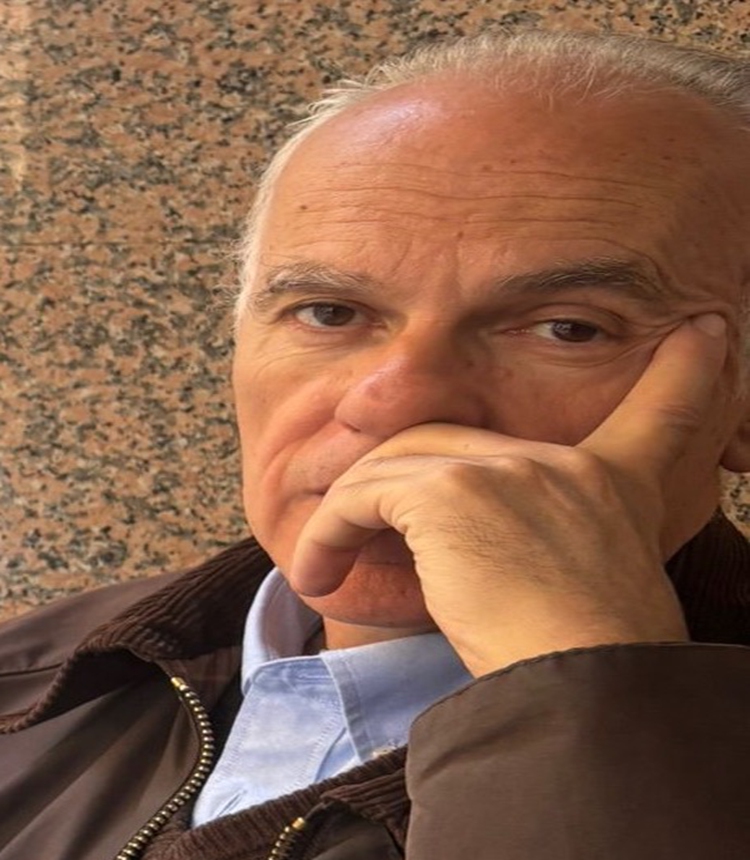
Spanish sinologist Gabriel Garcia-Noblejas Sanchez-Cendal Photo: Courtesy of Gabriel Garcia-Noblejas Sanchez-Cendal
Profound insightsHis journey with China began in 1993, when he arrived in the country on a scholarship while pursuing his doctoral dissertation in Spain on poetry translation. Looking for a civilization with a profound literary and philosophical tradition, he found himself drawn to China through Spanish translations of two classical Chinese masterpieces: The Analects of Confucius and the Tao Te Ching.
The Analects of Confucius, or Lunyu in Chinese, is a renowned collection of teachings and ideas from the ancient Chinese philosopher Confucius. The Tao Te Ching is a foundational text of Taoism by the ancient philosopher Laozi.
"I loved both books," he noted. "They sparked my interest in Chinese literature, thought and poetry, and that is why I decided to come to China."
Over the years, Garcia-Noblejas has translated many classical Chinese works such as The Book of Odes, The Classic of Mountains and Seas and Selected Works of Confucius, helping Spanish readers gain an understanding of Chinese culture and civilization.
For Spanish readers, the most popular work of classical Chinese literature is The Art of War by ancient military strategist Sun Tzu, as its profound philosophical insights offer people abundant inspiration in pursuing ideals and achieving goals, he said.
Among contemporary works, Spanish readers have shown great interest in the science fiction novel The Three-Body Problem by Liu Cixin, said the professor.
He also noted that Romance of the Three Kingdoms, one of China's Four Great Classical Novels, has yet to receive the attention it deserves in the Spanish-speaking world. In fact, works that blend historical narrative with literary imagination in this way not only showcase the profound depth of Chinese culture, but their dramatic stories and vividly drawn characters also align closely with the reading tastes of Spanish readers.
As a researcher with a preference for classical Chinese literature, Garcia-Noblejas said the artistic and spiritual values conveyed by ancient Chinese texts remain highly relevant to contemporary readers, illuminating a path for today's world.
Increasing interest
More than 50,000 people are currently studying the Chinese language across Spain, and the number has steadily increased in recent years, the Xinhua News Agency reported in April.
Speaking about the evolving level of interest in the Chinese language and Chinese culture among people in Spain and Latin America in recent years, Garcia-Noblejas said, "When I first started offering a Chinese translation course in 2001, there was only one student in the entire class. Over the past years, however, enrollment has remained steady at between 20 and 30 students each year at my university."
"Most of them travel to China specifically to study the language, experience local culture firsthand and live there for an extended period," he recalled.
Chinese-language programs at Spanish universities have also expanded significantly. Two decades ago, only two universities in Spain offered degree programs in Chinese studies; today, that number has risen to five, he added.
For him, some of the most rewarding moments have come not from awards or scholarly recognition, but from witnessing how books can inspire genuine curiosity about China.
He was once part of a reading club composed of retired professionals, teachers, doctors and architects. After they read his Spanish translations of the Selected Works of Confucius and Tales of the Chinese Fantastic, the entire group decided to travel to China, he said.
"They loved the books so much that they decided to visit China," he said. "I suppose that after visiting, they love China even more."
Alongside his translation work, Garcia-Noblejas has spent over 20 years teaching students, many of whom have gone on to become translators and scholars themselves.
Even after decades of scholarship, Garcia-Noblejas remains as dedicated as ever. He is currently close to completing a translation of the works of Tao Yuanming, one of China's most celebrated poets from the Jin Dynasty (265-420).
At the same time, his research interests are turning toward the earliest translations of Chinese books into Spanish.
"My goal is to continue strengthening dialogue with China through translation and research," he said. "Those early translations are a model for dialogue between China and the rest of the world through books."
"My work is to help Spanish readers appreciate the profound wisdom embodied in these Chinese classics, which have withstood the test of millennia," he added.
RELATED ARTICLES