ARTS / CULTURE & LEISURE
Ancient Baisha Murals in Yunnan unveil new digital experience for visitors
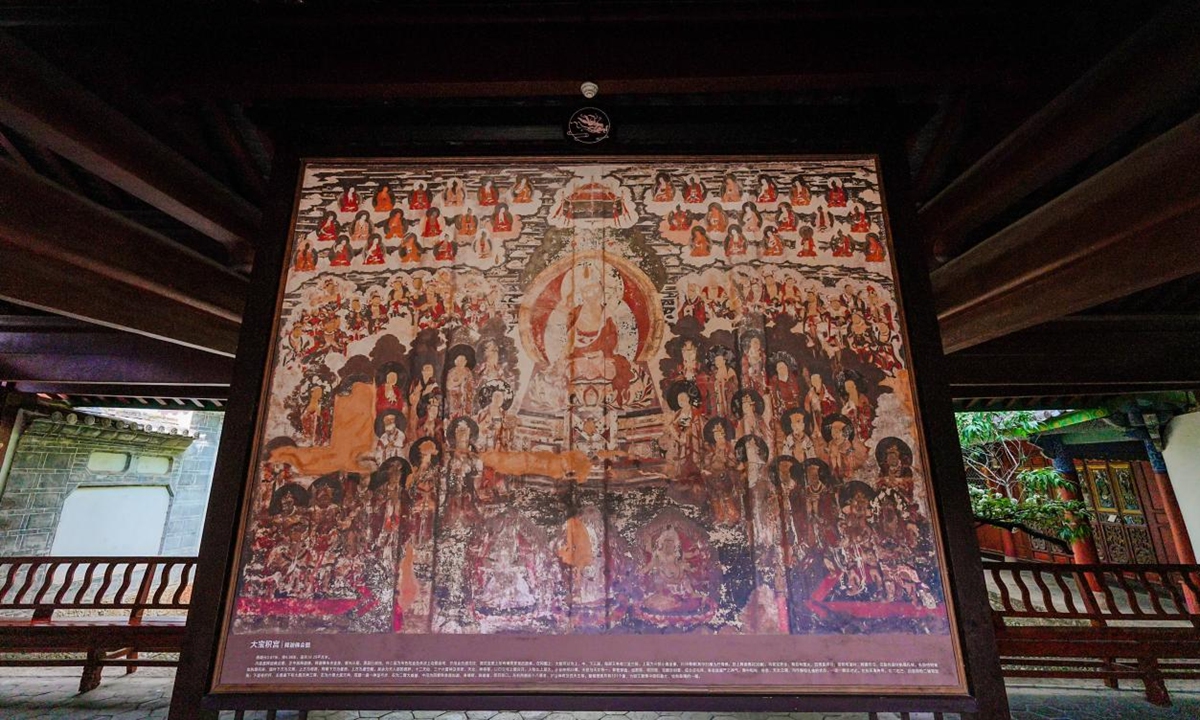
Photo: VCG
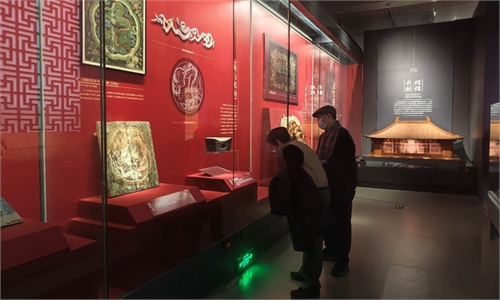
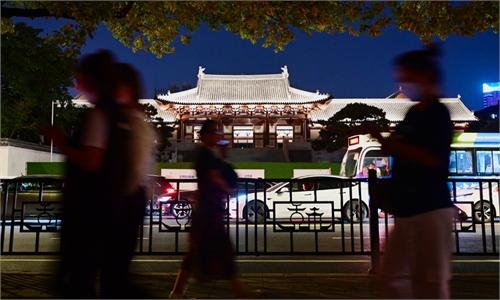
Part of the Baisha Murals Scenic Area, located at Baisha ancient town in Lijiang, Southwest China's Yunnan Province, has been completed digitalization upgrades and opened to the public, a staff member of the Baisha Murals Scenic Area told the Global Times on Monday.The digital exhibition hall of the Baisha Murals Scenic Area is currently undergoing testing and optimization, while an official opening date has yet to be announced.
During this period, visitors can access one of the palaces in the ancient building to enjoy a digital experience of the murals, He Linzhi, an operation staff member of the scenic area, told the Global Times.
As an integral part of the UNESCO World Heritage Site known as the Old Town of Lijiang, the Baisha Murals rank among China's four great mural art treasures, alongside the Mogao Grottoes Murals in Dunhuang, Northwest China's Gansu Province, the Fahai Temple Murals in Beijing, and the Yongle Palace Murals in North China's Shanxi Province.
There are 55 surviving murals scattered across its architectural complexes, including the Wenchang Palace, Dabaoji Palace, Liuli Hall and Dading Pavilion.
The recently opened Wenchang Palace was first built in the Ming Dynasty (1368-1644). It bore witness to a time when the local ethnic chief of Lijiang valued Han learning, established imperial examination systems and promoted moral education.
Preserved within the palace are Qing Dynasty (1644-1911) murals that depict the imperial examination customs and the essence of Wenchang culture. The core value of the Baisha Murals lies in their vivid depiction of the integration of multi-ethnic cultures. Jointly created by painters of the Han, Tibetan, Naxi and other ethnic groups, the murals incorporate diverse religious and cultural elements.
As a historical testament to the interaction, exchanges and integration of all ethnic peoples, they boast extremely high historical, artistic and social research value, He said.
He also noted that the restoration and upgrades aimed to enable the digital display of selected murals through high-definition digital scanning and image restoration among other technologies.
To address the fading and deterioration caused by the passage of time, the project has introduced AI-assisted restoration.
Drawing on historical records and analyses of remaining pigments, the technology enables the scientific reconstruction of missing colors, allowing the murals to once again reveal their original brilliance and splendor, the local convergence media center of Yulong county reported.
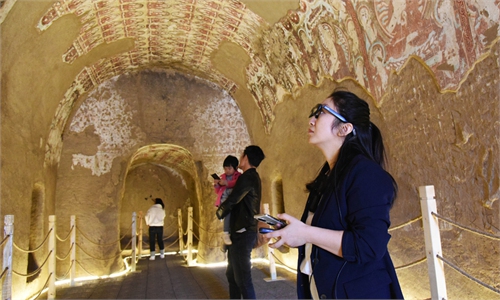
To preserve the original mural relics, a host of restrictions have been imposed at the on-site exhibition, such as limited visitor capacity, insufficient lighting, protective railings, and a ban on photography.
Consequently, visitors can barely make out the complete scenes of the murals. By contrast, the digital exhibition hall removes all such physical barriers, allowing visitors to appreciate the intricate details of the murals clearly through immersive experiences, He said.
RELATED ARTICLES