SPORT / FOOTBALL
Japan, aiming to win the World Cup, stunned 1-2 by Brazil at stoppage-time, sparking heated debate among Chinese football fans
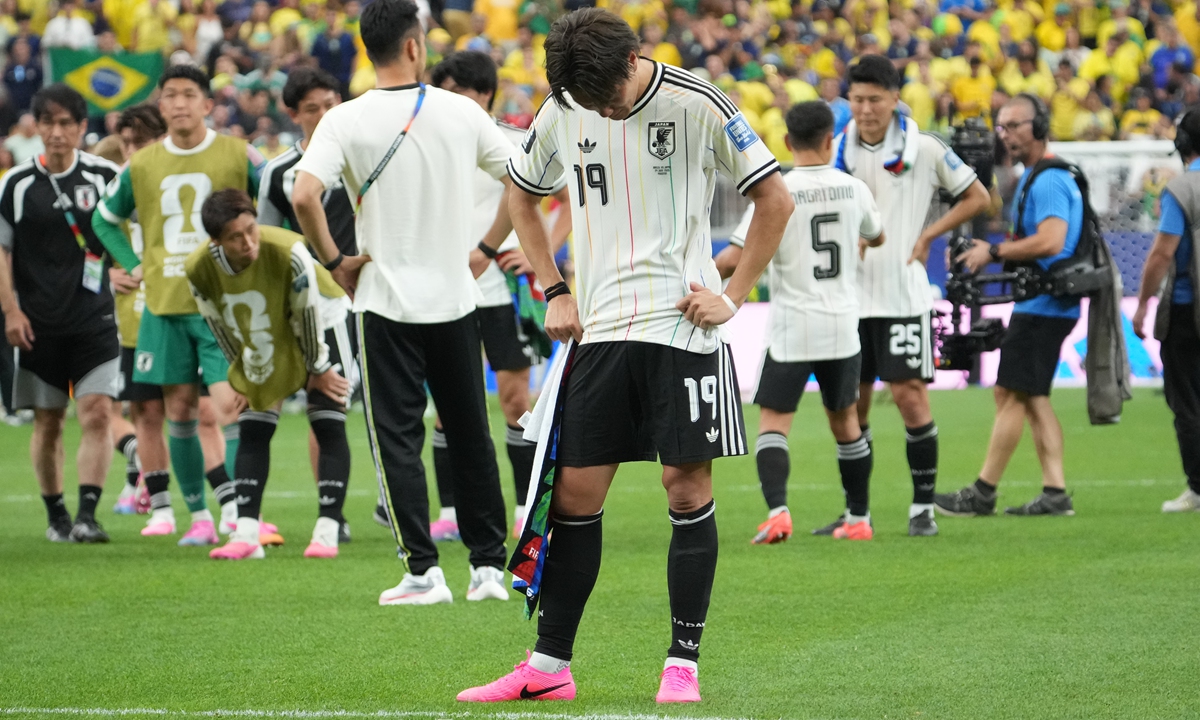
Koki Ogawa of Japan looks dejected after the 2-1 defeat to Brazil at the FIFA World Cup on June 29, 2026 in Houston, the US. Photo: VCG
Japan's dramatic 2-1 defeat to Brazil in the FIFA World Cup Round of 32 on Monday drew reflecting and respects from many Chinese football fans, with social media users praising the Japanese team for pushing the five-time world champions to the brink before bowing out in stoppage time.
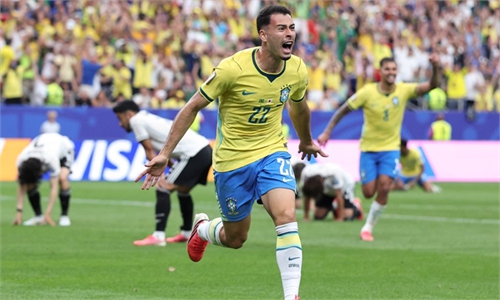
Japan took a surprise first-half lead through Kaishu Sano and frustrated Brazil for much of the match with disciplined defending. Brazil equalized through Casemiro before Gabriel Martinelli scored a stoppage-time winner to send the five-time world champions into the Round of 16.
Rather than celebrating the defeat of a regional rival, many Chinese fans expressed respect for Japan's performance even though the match finished in the early hours of Tuesday morning Beijing time, with some saying the match demonstrated the distance between Asian football and world's powerhouses.
On Chinese social media platform Sina Weibo, many football fans described Japan's elimination as "regrettable," noting that the Asian No.1 came within minutes of forcing extra time against one of the tournament favorites.
"Given the huge disparity in squad strength, Japan relied on solid defending, relentless work rate and high pressing to score against Brazil. That alone is remarkable," a Chinese football fan wrote on Weibo. "The Japanese team deserves to be the No.1 team in Asia, and I believe their football will be even stronger in the years to come."
Japan entered the knockout stage with growing confidence after a solid group campaign in Group F. They began with a 2-2 draw against the Netherlands, followed by an impressive 4-0 victory over Tunisia that set new team records, and then secured progression with a 1-1 draw against Sweden.
Before the Brazil match, Japan coach Hajime Moriyasu had boldly stated his team's ambitions. "In the near term we believe we are able to win and we believe we have that chance... even for this World Cup," he said.
After the defeat, however, Moriyasu took personal responsibility, admitting that his side had chances to win but ultimately fell short due to his own coaching limitations. "I felt we had chances. In this match we played believing we had a chance to win, and in reality we did have chances we couldn't take. That's why I feel my own abilities as coach were what fell short the most," he was quoted as saying by France 24.
Some Chinese observers highlighted Japan's organization, defensive discipline, and ability to compete on equal terms with football's elite.
Shen Qingxin, a Chengdu-based football fan, argued that Japan's 2-1 defeat to Brazil was not the result of being outclassed, but rather the margins between an established world powerhouse and an emerging elite team.
"Japan produced a solid first half with aggressive pressing and quick transitions that unsettled Brazil and earned them the opening goal," Shen told the Global Times.
"Champions aren't always the teams that play the best football; they're the teams that know how to win even when they aren't at their best. Japan has learned how to compete with the world's strongest teams, but it has yet to learn how to finish off a heavyweight contest," Shen said.
Shen's view echoed a broader discussion among Chinese football followers, with many arguing that the match once again exposed the final hurdle Japan has yet to overcome.
"Despite being widely regarded as Asia's strongest national team, Japan has never won a knockout match at the World Cup," football commentator Sun Yuxuan wrote on Weibo.
Japan have reached the World Cup knockout stages on five occasions (in 2002, 2010, 2018, 2022 and 2026), but only to fall at the first knockout hurdle each time. Three of those exits, including defeats to Belgium in 2018, Croatia in 2022 and Brazil in 2026, came after Japan had either taken the lead or pushed a heavyweight opponent to the limit.
"At the decisive moments, there's still a gap in sheer quality," Sun wrote, arguing that Japan has already learned how to compete with the world's elite but has yet to develop the ability to close out matches against them.
For many Chinese football followers, Japan's success has frequently served as a point of comparison for Chinese football. Discussions following the match again turned to topics such as youth development, overseas player pathways and long-term planning.
Football commentator and youth football promoter Dong Lu has once again put forward his view that Japanese football has hit a ceiling, adding that over the past nine years, the youth football team he leads has hardly ever lost to Japanese teams of the same age group, according to a video widely circulated on Chinese social media.
Japan's exit also means Australia are now the only remaining representative from the Asian Football Confederation (AFC) in the World Cup. Australia will take on Egypt in the Round of 32 on Friday.
RELATED ARTICLES