China’s summer flights grow rapidly, as holiday-goers flock to cool destinations home and abroad
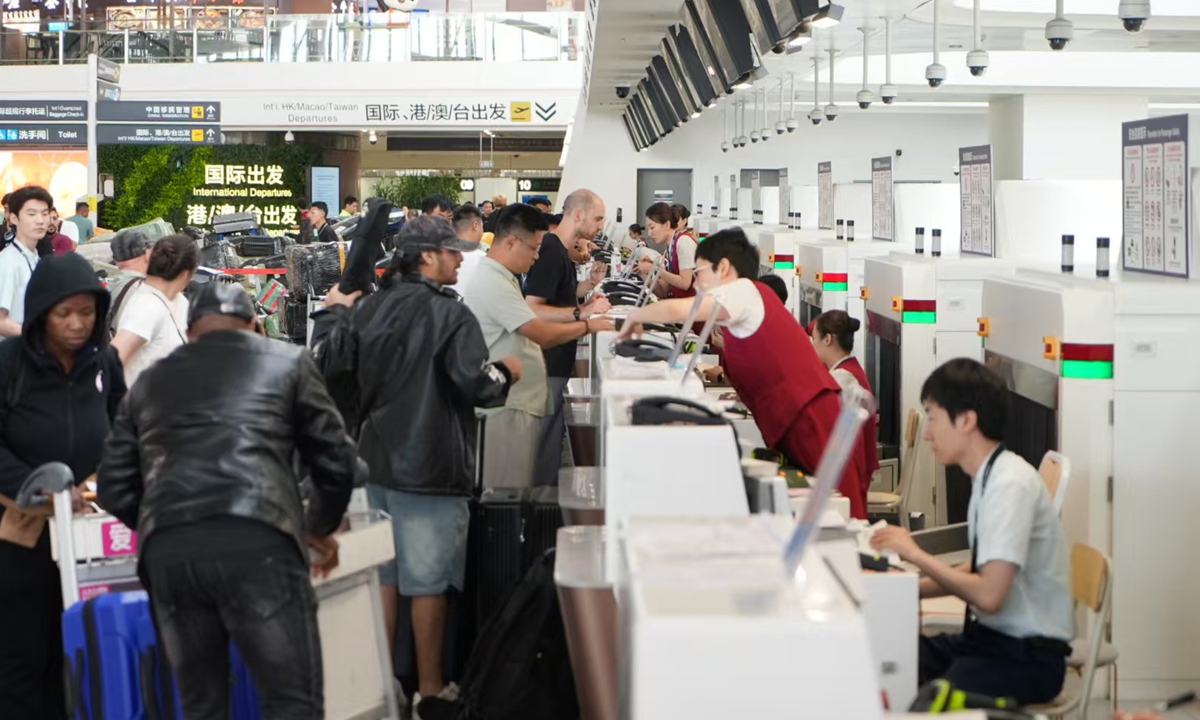
Photo: Courtesy of Beijing Daxing International Airport
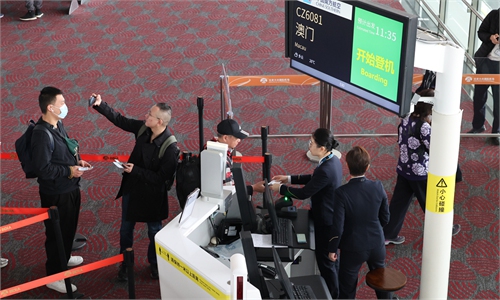
As the annual summer travel season arrives, Chinese airlines and airports are gearing up for peak demand by expanding flying capacity. On domestic routes, Northwest China's Xinjiang continues to witness a tourism boom, and internationally, South Korea, Thailand, and Malaysia are heated destinations for Chinese holiday-goers.
Carriers including China Southern Airlines, China Eastern Airlines, and Shenzhen Airlines are launching or increasing frequencies on popular flight routes to cities like Altay, Urumqi, and Yining in Xinjiang Uygur Autonomous Region.
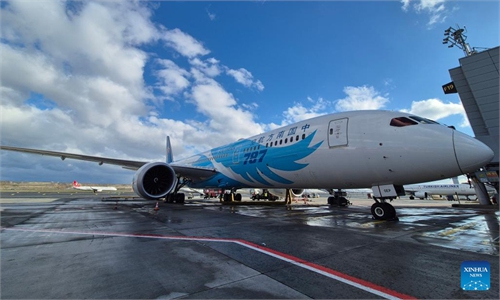
The Beijing branch of China Eastern Airlines said daily outbound flights from Beijing Daxing International Airport will increase from 100 to 120. The heated routes include destinations in Northwest China, including Lanzhou, Jiayuguan, Urumqi, and Altay. Among them, the Beijing Daxing-Urumqi route will be increased to three daily flights, and wide-body aircraft will be deployed during the peak summer season.
China Southern Airlines said it will increase flight routes and frequencies to key tourist hotspots in Northwest, Northeast, and Southwest China. At its Beijing hub, the carrier already runs more than 50 domestic routes and intends to ramp up flights from Beijing Daxing to a number of summer leisure destinations such as Aksu, Yining, Xining, and Yinchuan.
The surge in Xinjiang's popularity is backed by booking figures on the demand side. Data from travel analytics platform Umetrip showed that July flight reservations to Urumqi, Ili, Altay, Kashgar, Korla have all posted year-on-year growth, with visits to Altay seeing 37 percent increase.
Beijing Daxing International Airport said on Tuesday that, from July 1 to August 31, the airport is expected to handle a total of 62,200 flights, averaging 1,003 per day—a 10.46 percent increase from the previous quarter and a 2.24 percent rise year-on-year. Total passenger throughput is forecast to reach 10.12 million, with an average of 163,200 travelers per day, representing a 15.58 percent increase over the previous quarter and a 2.85 percent rise year-on-year.
In terms of international and regional routes, Beijing Daxing International Airport now connects to over 40 destinations worldwide. Passenger traffic is concentrated on popular flight routes to Moscow, Hong Kong, Kuala Lumpur, and Seoul, while outbound destinations such as Vladivostok, Hanoi, and Ho Chi Minh City have also seen a notable surge in passenger flow.
According to Qunar travel data, based on hotel booking volumes, the top three most-popular outbound destinations for the summer of 2026 are Thailand, South Korea, and Malaysia. Driven by the World Cup fervor, hotel bookings in Mexico have surged by 1.3 times, with Mexico City seeing a 2.1-fold increase. Hotel bookings in Canada have risen by 52 percent.
Flight Master data showed that among the top 20 countries by planned summer outbound flight volumes, South Korea, Thailand, and Malaysia rank in the top three. By city, Kuala Lumpur and Bangkok have planned increases of over 2,000 flights, while Seoul sees over 1,800 additional flights.
China Southern Airlines will add flights to Southeast Asian countries during summer, including Guangzhou-Singapore, Guangzhou-Yangon and Guangzhou-Phuket. Xiamen Airlines plans to launch new routes from Changsha to Singapore and Bangkok, Nanjing to Kuala Lumpur, and Fuzhou to Kota Kinabalu.
Notably, this summer season has seen significant growth in flight volumes to Central Asia, West Asia, and the emerging European destinations.
China Eastern Airlines is targeting the European market, planning to launch a direct Shanghai Pudong-Tbilisi route on July 15, and a direct Shanghai Pudong-Dublin route on July 20. The former is the carrier's first route to Georgia, while the latter is its first regular direct flight from East China to Dublin.
According to Flight Master's analysis, Central Asian routes have seen explosive growth this summer, with a recovery rate of 358.8 percent, driven by deepening economic and trade ties between China and the five Central Asian countries, visa-free policy implementations, and the rise of niche outbound tourism destinations. Driven by Central Asian growth, recovery rates for West Asian and South Asian routes have also reached 107.3 percent and 104.1 percent, respectively.
Global Times
RELATED ARTICLES