ARTS / CULTURE & LEISURE
2026 summer opens new paths for cinemas
Chinese cinemas transform into vibrant cultural hubs
By Published: Jul 08, 2026 10:39 PM

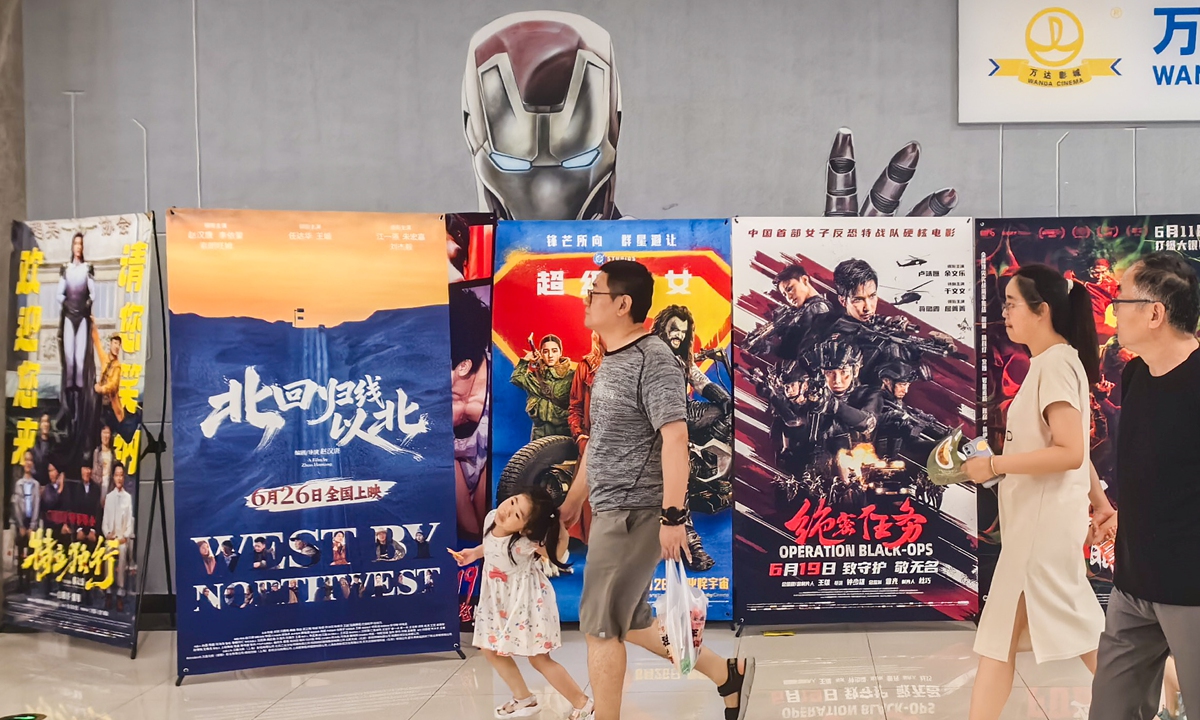
Photo: VCG
As the arrival of the summer holiday, over 90 films, including animations, comedies, and sci-fi works, are lined up for release in theaters across China. Students and families are expected to make up the majority of moviegoers during this season. Responding to this trend and the encouragement of new industry regulations, cinemas nationwide are using the summer box-office boom to explore how to transform themselves into integrated cultural spaces. Themed activities such as "learning science with movies," "traveling with movies," and "appreciating intangible heritage through movies" are being rolled out, greatly enriching the summer holidays for young audiences.
With the peak season for summer films, the China Film Administration and related agencies have officially issued a notice encouraging and supporting cinemas to upgrade and transform from single-function screening venues to comprehensive cultural spaces that integrate movies, socializing, entertainment, and consumption. Nationwide, cinemas are being encouraged to develop new blended business models, offer unique experiences, and upgrade their audiovisual technology, according to China's CCTV News.
The full notice, published on the official website of the China Film Administration, lays out clear directions: Cinemas are encouraged to create a wide variety of cinema types, including art cinemas, science-focused theaters, neighborhood cinemas, and themed movie venues. Cinemas will also be supported in developing the cultural value of their physical space by launching themed auditoriums, film culture exhibitions, and original creative products based on movies. At the same time, cinemas are encouraged to improve service quality through technical upgrades, including the introduction of virtual reality films.
Against this backdrop, and to expand the audience experience during the busy summer period, cinemas across China have upgraded their event offerings with a range of themed activities.
For example, a cinema within the Liaoning Science and Technology Museum in Northeast China invited professional science teachers to dress up as popular movie characters from films like Toy Story 5 and host fun, immersive science classes. Using familiar movie scenes, they explained scientific concepts to young audiences.
In East China's Anhui Province, one cinema invited families to get a close-up look at projection equipment and offered tours to systematically introduce the technical processes behind movie screenings. Young people had the chance to observe projection machines in action and ask questions about film production and projection technology.
Currently, many cinemas are also actively experimenting with diverse business models. Some offer light meals, creative cultural merchandise, and movie-themed products. Others are transforming themselves into multi-use spaces, hosting sports events, concerts, and music festivals as "second stage" activities after movies, thus reaching new audiences and expanding their customer base, according to CCTV News.
Rao Shuguang, president of the China Film Critics Association, noted that in the past, many cinemas suffered from uniformity and a lack of appealing events, which made it hard to consistently attract viewers and limited sustainable growth. He said that upgrading and transforming cinemas from single-function spaces into diversified, vibrant cultural venues will not only meet the needs of moviegoers, but also unlock the potential of the movie market, creating more opportunities for the industry.
"Cinemas that successfully upgrade and diversify operations bring new vitality. This can better meet audience needs and enhance the power of film consumption," Rao noted.
Zhang Peng, a cultural researcher and associate professor at Nanjing Normal University, told the Global Times on Wednesday that turning cinemas into cultural hubs is an industry trend, and this summer is an important window of opportunity. The summer market has natural advantages, Zhang explained, including high demand for family movies, students with ample free time, and a full slate of new releases. However, Zhang also pointed out that for cinemas to achieve a successful transformation, screening movies must always remain at the core of their business model.
"No matter how many supporting activities are introduced, movie screening is still a cinema's main business," Zhang said. "This transformation marks a shift in the industry from channel-driven to experience-driven. The summer season offers a chance to test new models, but the true test will be whether such operations can continue sustainably after September."
RELATED ARTICLES