BRASIL 247 / MORE
China-Brazil innovation cooperation gains momentum as vice-president meets BCIC delegation
Energy transition, AI and advanced manufacturing emerge as key pillars of deepening bilateral scientific and industrial partnership
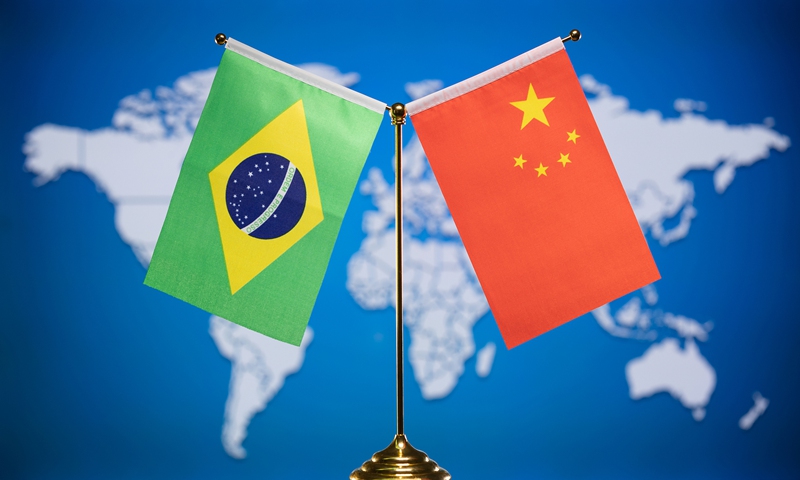
Photo: CFP
By Brasil 247 - Brazilian Vice President and Minister of Development, Industry, Trade and Services Geraldo Alckmin met on Tuesday with a delegation led by Huang Yehua, president of the Brazil-China Center for Innovation in Science and Technology (BCIC), in Brasília. The meeting underscored the growing strategic importance of scientific and technological cooperation between China and Brazil, with discussions focusing on energy transition, artificial intelligence (AI), industrial innovation and joint research.
The talks reflected the increasing alignment between the two countries in promoting innovation-driven development and expanding cooperation in emerging technologies that are expected to shape the next stage of industrial transformation.
Innovation at the center of bilateral cooperation
Based at the Technology Park of the Federal University of Rio de Janeiro (UFRJ), the BCIC serves as a platform connecting universities, research institutions and enterprises from both countries to promote collaborative innovation.
Since beginning operations in 2025, the center has launched joint research and development projects covering offshore oil and gas technologies, renewable energy and artificial intelligence, while encouraging the commercialization of scientific research through industrial applications.
The cooperation also includes joint programs for researcher exchanges and postgraduate education, helping cultivate highly qualified talent capable of sustaining long-term scientific collaboration between China and Brazil.
Complementary strengths in the green transition
During the meeting, Alckmin emphasized that Brazil and China possess highly complementary advantages in advancing the global energy transition.
Brazil has developed internationally recognized expertise in hydropower, biofuels, biomass and other renewable energy sources, while China has become a global leader in solar and wind power, battery manufacturing, electric vehicles and the large-scale production of clean energy technologies.
According to Alckmin, these complementary strengths create favorable conditions for expanding industrial and technological cooperation in renewable energy generation, energy storage systems, smart grids and low-carbon industrial technologies.
Joint projects currently underway also include research on second-generation ethanol production, hydrogen technologies, offshore energy development and the efficient utilization of bioenergy by-products, areas expected to further strengthen Brazil's competitiveness in global clean energy markets.
AI and advanced manufacturing become new drivers
Artificial intelligence was another central topic during the discussions.
Both sides highlighted AI's potential to improve industrial productivity, optimize energy management and accelerate scientific and technological innovation. The cooperation is expected to support Brazil's industrial modernization while opening new opportunities for Chinese and Brazilian companies, research institutions and universities to collaborate on advanced digital technologies.
The initiatives developed by BCIC are closely aligned with Brazil's New Industry Brazil (Nova Indústria Brasil) strategy, which seeks to promote digital transformation, sustainability, technological innovation and higher industrial productivity.
The center's work in renewable energy, intelligent manufacturing, AI and energy storage directly supports these national objectives while creating new opportunities for bilateral industrial cooperation.
Looking toward broader cooperation
Participants also announced that the third Brazil-China Forum on Marine Science and Technology Innovation is scheduled to take place in China in November 2026. The forum is expected to launch new joint research projects and facilitate additional cooperation agreements between institutions from both countries.
Looking ahead, BCIC plans to expand its activities into healthcare technologies, advanced medical equipment, smart cities, the bioeconomy and sustainable urban mobility, involving an even broader network of enterprises, universities and innovation centers.
At the conclusion of the meeting, Alckmin said that Brazil and China possess enormous potential to deepen cooperation in energy, technological innovation and advanced manufacturing. He noted that stronger scientific collaboration can help foster industrial innovation, develop highly skilled professionals, enhance the competitiveness of Brazil's manufacturing sector and further strengthen cooperation among Global South countries.
The meeting illustrates the steady evolution of China-Brazil relations from traditional trade toward higher-value scientific, technological and industrial collaboration. As both countries pursue green development and innovation-led growth, platforms such as the BCIC are expected to play an increasingly important role in translating complementary strengths into practical cooperation with global significance.
(Reported by Brasil 247 on July 8, 2026)
