BRASIL 247 / MORE
Brazil-China legal cooperation advances with exchanges among law firms, universities and legal experts
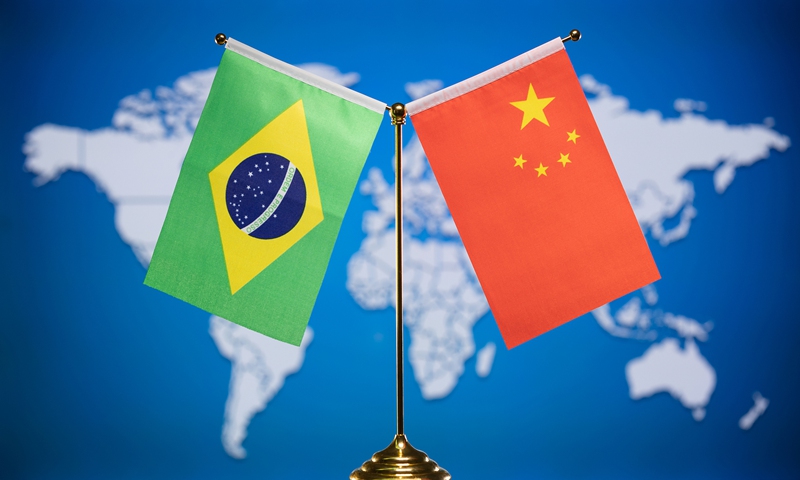
Photo: CFP
By Brasil 247 - Brazil-China legal cooperation advanced through an institutional mission to Shanghai that brought together Brazilian and Chinese lawyers, academics and specialists to discuss international arbitration, artificial intelligence in the legal sector, international trade, investment and academic cooperation. According to Brasil 247, the initiative reflects the growing need for stronger legal coordination as economic ties between the two countries continue to expand.
The mission was organized by the Brazil-China Sociocultural Institute (Ibrachina), in partnership with the Center for Economic and Social Law Studies (CEDES), Thomas Law Advogados and the East China University of Political Science and Law (ECUPL), one of China's leading law schools.
The program focused on strengthening institutional exchanges between the two countries' legal communities as Chinese investment in Brazil increases and more Brazilian companies expand into the Chinese market. Participants discussed legal frameworks, dispute resolution mechanisms, investment protection and emerging technologies applied to the justice system.
The delegation attended lectures and meetings on China's legal system, the special jurisdictions of Hong Kong and Macao, international trade, investment, artificial intelligence and institutional cooperation.
Artificial intelligence was one of the central themes of the mission. ECUPL professor Fei Xiuyan presented China's regulatory framework for generative AI and its application in legal education. Benjamin Minhao Chen, from the University of Hong Kong, examined the Common Law system in Hong Kong and the impact of AI on legal practice and the judiciary.
Professor Wang Chao, from the University of Macau, discussed the legal structure of the Macao Special Administrative Region, which combines the Civil Law tradition with the influence of Portuguese law. Professor Victor Gabriel Rodríguez addressed the philosophical and ethical challenges associated with artificial intelligence.
Representing Thomas Law Advogados and CEDES, Thomas Law presented an overview of Brazil's "Justice 4.0" initiatives, highlighting artificial intelligence projects developed by the Federal Supreme Court (STF) and the National Council of Justice (CNJ), while also discussing digital sovereignty, legal ethics, arbitration and mediation.
International arbitration was another major topic during the mission. Tim Wei, a lawyer at the Shanghai International Arbitration Center (SHIAC), presented China's arbitration system and the use of technology to support arbitrators and legal professionals.
The Brazilian delegation also conducted technical visits to Shanghai Hansheng Law Offices (HSL), Co-Effort Law Firm LLP and BZW Law Firm.
The mission concluded with the signing of two Memorandums of Understanding between Thomas Law Advogados and Shanghai Hansheng Law Offices and BZW Law Firm. The agreements establish a framework for expanding institutional exchanges, developing joint initiatives and strengthening legal dialogue between Brazil and China. The signing ceremony was attended by legal professionals Fernanda Mendes Bonini, Gláucia Barone, Monize Bessa and Renan Krettli.
(Reported by Brasil 247 on July 14, 2026)
