ARTS / CULTURE & LEISURE
China promotes rural cultures, modern countryside values
Conference on Civilized Rural Ethos kicks off
By Published: Jul 16, 2026 09:41 PM

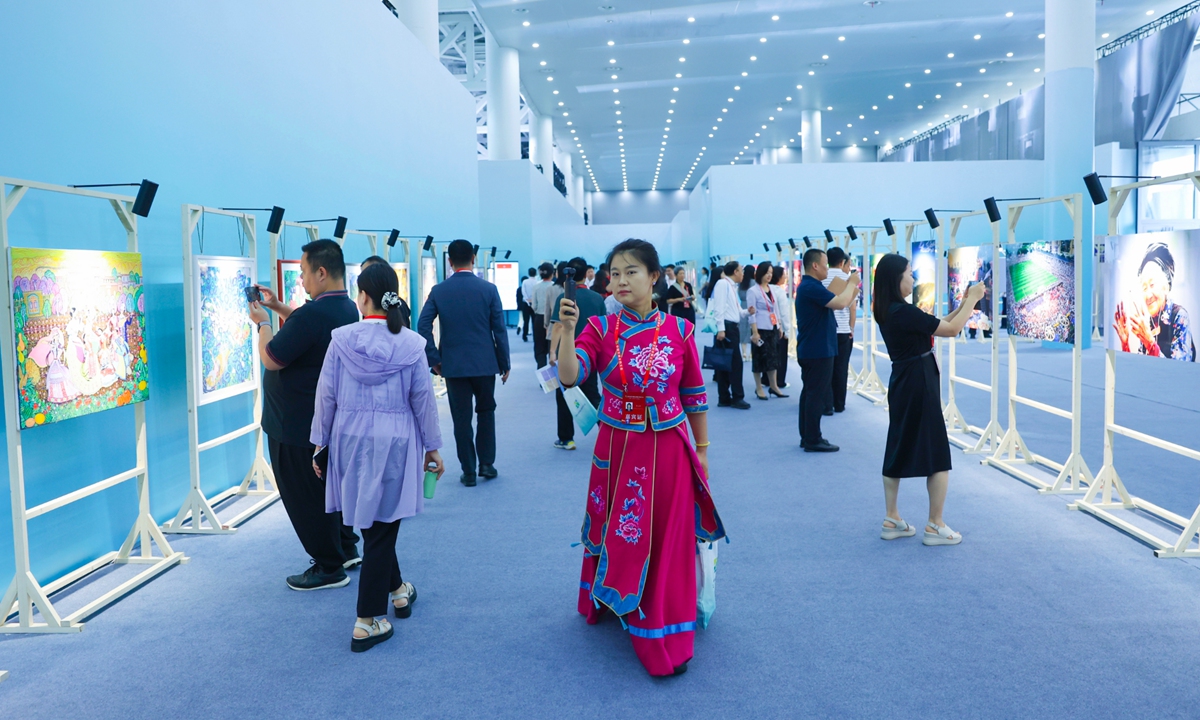
Photo: Courtesy of organizers
A national conference focusing on building civilized rural customs opened in Linyi, East China's Shandong Province, on Thursday, spotlighting China's efforts to revitalize rural cultural traditions, bridge urban-rural divides and reshape grassroots social governance with time-honored local values.
Titled "Building Better Countryside Through Cultural and Ethical Advancement," the 2026 China Conference on Civilized Rural Ethos gathered officials, scholars and cultural practitioners to share field-tested cases and release the 2026 national report on civilized rural development.
Attendees stressed that cultivating refined rural customs, wholesome family traditions and folk virtues serves as a spiritual cornerstone for comprehensive rural revitalization and balanced social progress across China. Unlike infrastructure-focused rural upgrading, the campaign targets intangible social progress with the aim of guiding rural residents with positive cultural values, reforming outdated rural conventions, boosting local cultural vitality and integrating urban and rural cultural development, according to conference participants, per the Xinhua News Agency.
Discussions covered grassroots theoretical promotion, traditional village protection, family education, internet-enabled rural civilization and innovative storytelling for rural cultural heritage.
Grassroots practices across China demonstrate how soft cultural governance can resolve long-standing social dilemmas and reshape rural community bonds.
Han Pengfei, a research fellow of overseas Chinese remittance cultural relics in Shantou city, South China's Guangdong Province, told the Global Times on Thursday that in Shantou, historical clan disputes over water resources and land interests spawned century-old inter-village feuds, with rigid unwritten rules banning marriage and communication between rival villages for generations.
Long resistant to rigid administrative intervention, these historical rifts have finally dissolved amid sustained civilized rural construction. Local elderly councils, clan elders and rural sages led gentle cultural mediation and neighborhood solidarity campaigns to reshape outdated folk prejudices. After years of cultural infiltration and mutual reconciliation, once-hostile villages have fully lifted intermarriage taboos, ending centuries of estrangement and rebuilding harmonious rural social order.
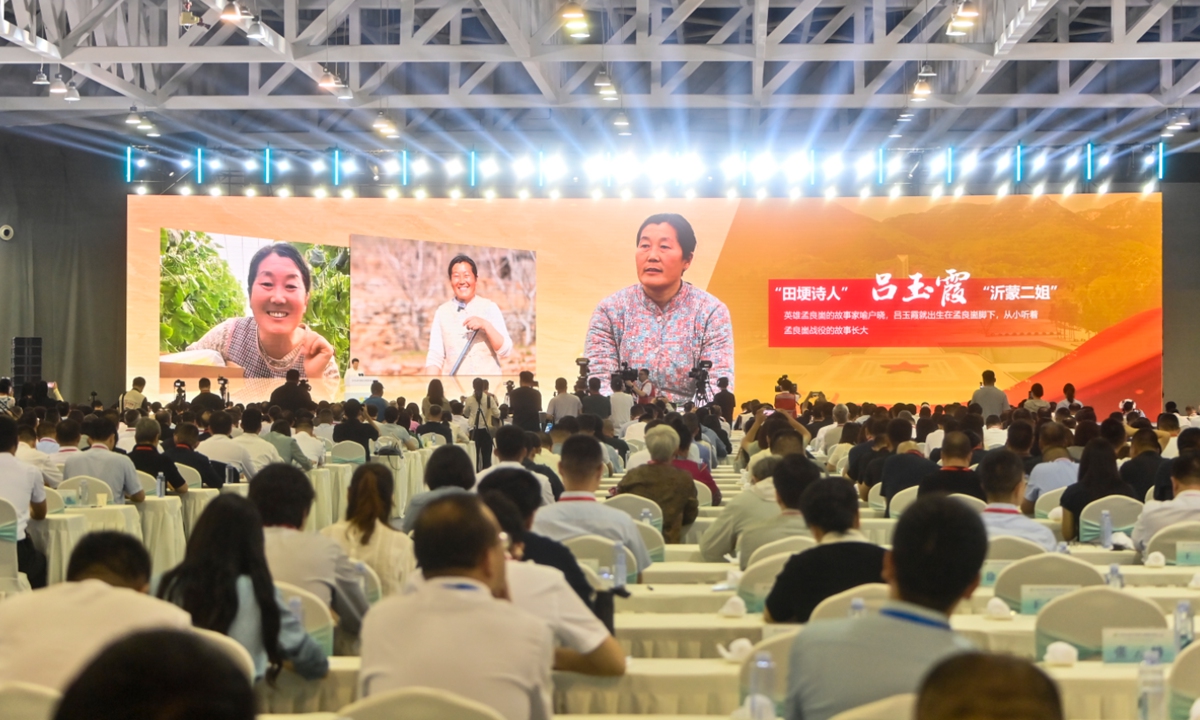
Photo: Courtesy of organizers
Cultural creativity has further amplified rural charm. Zheng Runqi, who stars in the well-received film Dear You, noted that the film centers on qiaopi, a centuries-old overseas Chinese correspondence culture that records how Chaoshan migrants worked hard in Southeast Asia and supported their families back home.
"Carrying local people's loyalty, righteousness and homeland devotion, the film has drawn floods of domestic and overseas tourists to its shooting locations, turning intangible rural traditions into influential cultural assets. And this cultural asset, in my eyes, is the product of China's rural civilization," Zheng said.
In Jianchuan county, the Dali Bai autonomous prefecture, Southwest China's Yunnan Province, traditional couplet culture has become a down-to-earth tool to nurture sound rural conduct. Yang Ting, president of the Jianchuan academy of cultural heritage, told the Global Times that couplets have evolved into an indispensable part of local daily life, spanning festivals, weddings and funerals. As a national historic and cultural city and China's couplet culture base, Jianchuan boasts a centuries-old tradition of self-written, self-created household couplets.
Local authorities have sorted out over 200 classic couplets advocating patriotism, neighborly harmony and integrity. Integrated with Jianchuan wood carvings, these virtuous family precepts are carved on wooden plaques displayed in households, turning moral education into subtle daily influence.
According to Yang, the county's first couplet-themed Village Spring Gala went viral online, accumulating over 560 million views, with local residents of all ages performing couplet recitals and ethnic nursery rhymes to showcase localized cultural charm. Couplets advocating ethnic unity and diligence have united communities, making traditional culture accessible and engaging for ordinary villagers.
Against a backdrop of persistent youth migration to fast-paced, efficiency-driven cities, experts said the revival of rural culture offers a vital antidote to modern social alienation.
Liu Chengji, professor at Beijing Normal University's School of Philosophy, told the Global Times that rural civilization is far from a fragmented grassroots project, but a systematic cultural heritage rooted in China's millennia-old farming traditions.
Liu explained that while China has long prioritized agricultural development as an economic foundation, urban expansion has created stark disparities, with city life dominated by efficiency, competition and high-pressure routines that depart from human nature's pursuit of tranquility and connection.
Against widespread urban burnout, the scholar outlined four core modern values of China's countryside: guaranteeing food security, providing aesthetic tourism resources, offering spiritual nostalgia and sustaining harmonious human-nature coexistence in an artificial, AI-dominated era.
Liu emphasized China's farming civilization is one of the world's only unbroken ancient civilizations, boasting a unique ecosystem integrating daily life, art and aesthetics. He noted that, as early as the 18th century, Chinese garden aesthetics and rural philosophies influenced European landscape design.
He concluded that China's rural civilization practices offer the globe universal experience for reference.
"The country's experience in resolving historical grassroots conflicts, revitalizing traditional folk culture and balancing urban and rural development provides an inspiring Eastern solution for global rural governance, including countries from the Global South, when pursuing sustainable rural revitalization," said Liu.
RELATED ARTICLES