LVMH-owned Tiffany files trademark lawsuit against Chinese sanitary pad brand over alleged name similarity; Chinese firm says ruling is under appeal
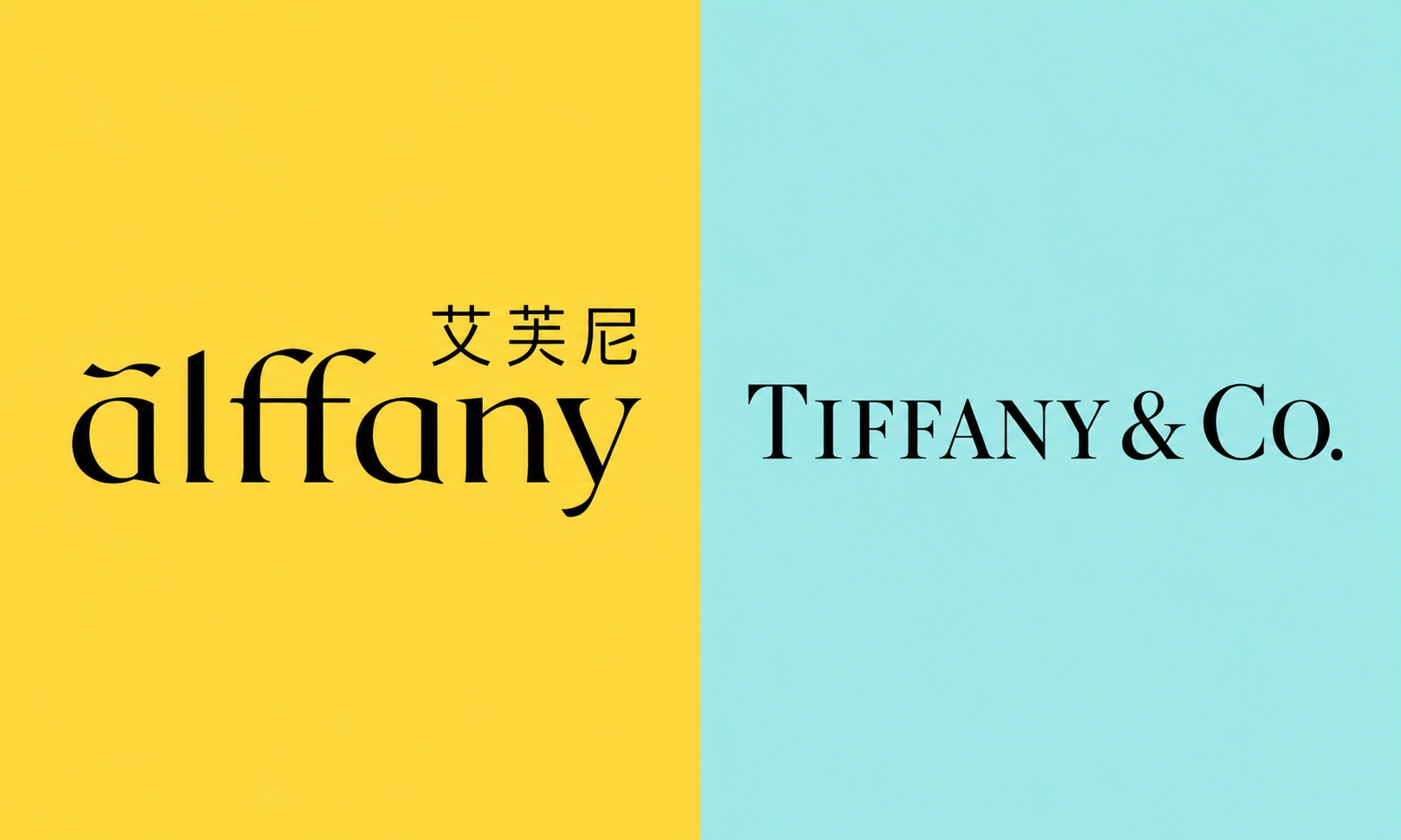
A side-by-side comparison of the logos of Chinese sanitary pad brand Alffany and US luxury jeweler Tiffany & Co. Photo: Screenshot of media reports
A trademark dispute between US luxury jeweler Tiffany & Co and Chinese sanitary pad brand Alffany has recently sparked widespread discussion among Chinese netizens. Tiffany sued Alffany over the alleged similarity between their brand names, with the case now under second-instance review at the Beijing High People's Court, the Chinese company told the Global Times on Saturday.
"The trademark invalidation case is currently under second-instance review by the Beijing High People's Court. We respect the judicial process and are not in a position to comment further on the details of the case. We will provide updates through official channels if there are any formal developments," said an Alffany customer service representative.
On July 9, the Beijing High People's Court heard an administrative case involving Tiffany, the China National Intellectual Property Administration and Haitao (Shanghai) Investment Co, according to media reports.
Haitao (Shanghai) Investment Co has since changed its name to Shanghai Shili Brand Management Co, which owns multiple "Alffany" trademarks, according to corporate information platform Qichacha.
On July 17, an Alffany brand representative surnamed Liu told a Chinese local media Jiupai News that the company specializes in sanitary pads and that the brand was inspired by the concept of aicao, or mugwort. The Chinese name "艾芙尼" is also a homophone of "爱护你," meaning "care for you."
Liu said the dispute is currently in the administrative litigation stage, with Tiffany seeking to invalidate the trademark. The US jeweler has also filed complaints on multiple e-commerce platforms requesting that Alffany products be removed and may later seek civil damages.
"We never intended to ride on Tiffany's popularity," Liu said, arguing that the two brands operate in different product categories and that there is no likelihood of consumer confusion.
Both Tiffany and French luxury giant Louis Vuitton (LV) are owned by luxury conglomerate LVMH, prompting some Chinese netizens to draw comparisons with LV's recent trademark lawsuit against Chinese tea chain Molly Tea.
Some Chinese netizens said that the latter parts of the two brands' English names did bear some resemblance. Others voiced support for the domestic brand, saying "What has the Chinese brand done to deserve this?" and "Sanitary pads and jewelry are completely different products — it is hard to associate one name with the other."
A high-profile trademark lawsuit between LV and Chinese tea chain Molly Tea has sparked fierce debate over intellectual property, cultural heritage and global design exchanges across Chinese social media. On July 2, the Suzhou Intermediate People's Court ruled that Molly Tea had infringed upon seven registered four-petal floral trademarks owned by LV, ordering the beverage brand to pay total compensation of 10.3 million yuan ($1.52 million) for economic losses and legal expenses. Molly Tea has announced plans to file an appeal, keeping the verdict unenforceable for now.
Although Tiffany and LV belong to the same group, the two cases differ significantly in legal nature, an industrial analyst said.
Xue Fusheng, a Beijing-based lawyer familiar with Intellectual Property Law, told the Global Times that LV's lawsuit against Molly Tea was a civil trademark infringement case. By contrast, the Tiffany-Alffany dispute is an administrative trademark case. The court's rule is primarily focused on the legality of an administrative ruling made by the China National Intellectual Property Administration regarding a specific "Alffany" trademark. It is not, at this stage, directly adjudicating whether the Chinese firm's commercial use of the mark constitutes infringement upon Tiffany's trademark rights. "At this stage, the case does not involve infringement damages," Xue said.
Simply put, Xue noted, the LV case concerns whether the actual use of a trademark constitutes infringement and whether damages should be awarded, while the Tiffany-Alffany case currently concerns whether a specific trademark can be registered or remain valid.
Even if a particular "Alffany" trademark is ultimately declared invalid, that would not mean a court has found the Chinese firm liable for trademark infringement. If Tiffany seeks to stop Alffany from using the relevant mark and claim damages, it would generally need to file a separate civil lawsuit, Xue said.
The lawyer noted that, in trademark registration reviews, disputes can arise even when the trademarks are used in different industries, if the letter arrangements are highly similar, though each case is assessed on its specific circumstances.
Tiffany had previously filed oppositions or invalidation requests against several "Alffany" trademarks owned by the Shanghai Shili Brand Management Co.
On December 28, 2017, Tiffany filed an invalidation request against one "Alffany" trademark. The mark was subsequently found to be similar to Tiffany's trademarks and designated for use on similar goods, and was ultimately declared invalid.
In 2025, Tiffany opposed the registration of another "Alffany" trademark, but the opposition was rejected and the mark was approved for registration. Tiffany later filed a separate request to invalidate the registered trademark.
As the case is now in second-instance proceedings, a ruling could generally be issued within a month, Xue said, adding that the timeline may be extended given the attention surrounding the case.
As of Saturday, multiple Alffany sanitary pad products remained available for sale across several Chinese e-commerce platforms.
RELATED ARTICLES