ARTS / ART
Young Chinese embrace TCM to prevent illnesses in ‘Sanfu’ days
Summer healing trend
By and Jiang Li Published: Jul 19, 2026 11:17 PM

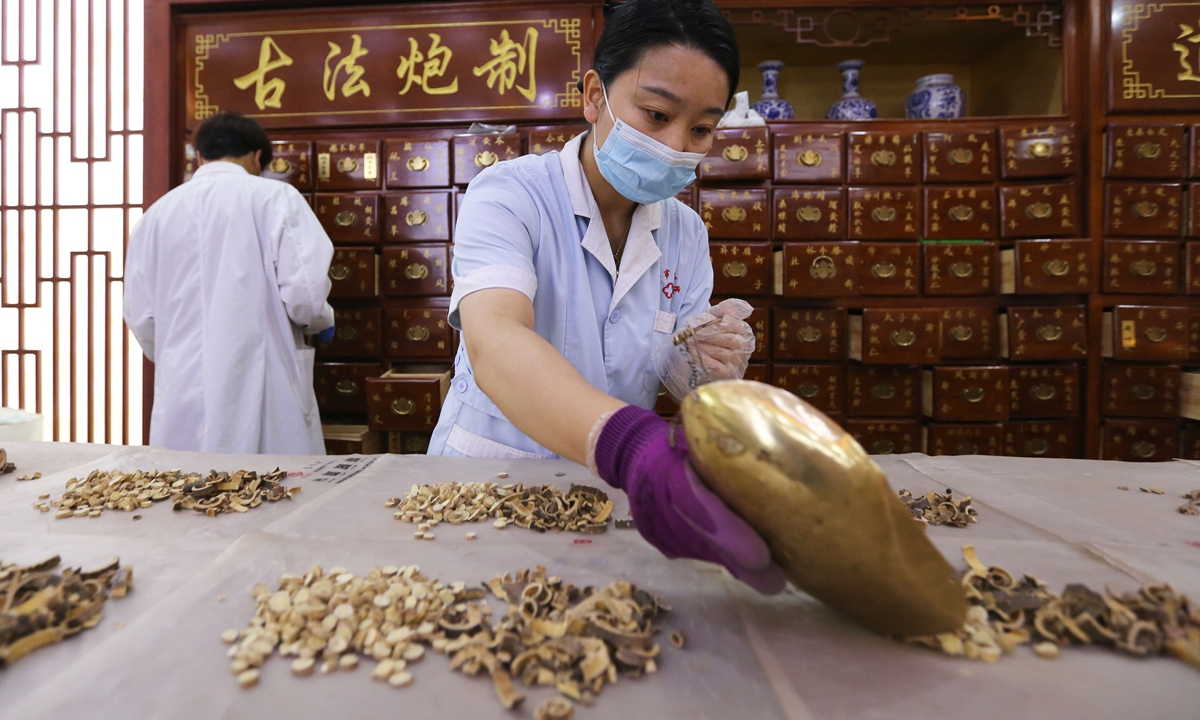
Medical staff prepare Sanfu patches with traditional Chinese medicine in Dingxi, Northwest China's Gansu Province on July 15, 2026. Photo on this page: VCG
As the sultry winds of summer sweep across China, the country entered a period known as the "dog days" of summer, or Sanfu. For this period of time, the Beijing Hospital of Traditional Chinese Medicine affiliated with Capital Medical University, like many hospitals in other places, launched services for providing Sanfu medicinal patches as part of the traditional Chinese medicine (TCM) practice of preventing winter illnesses during the summer.Pediatric and respiratory departments were packed with patients seeking treatment. They hoped that adopting TCM's "treating winter diseases in summer" could boost their immunity and lower the risk of respiratory infections during the future winter months.
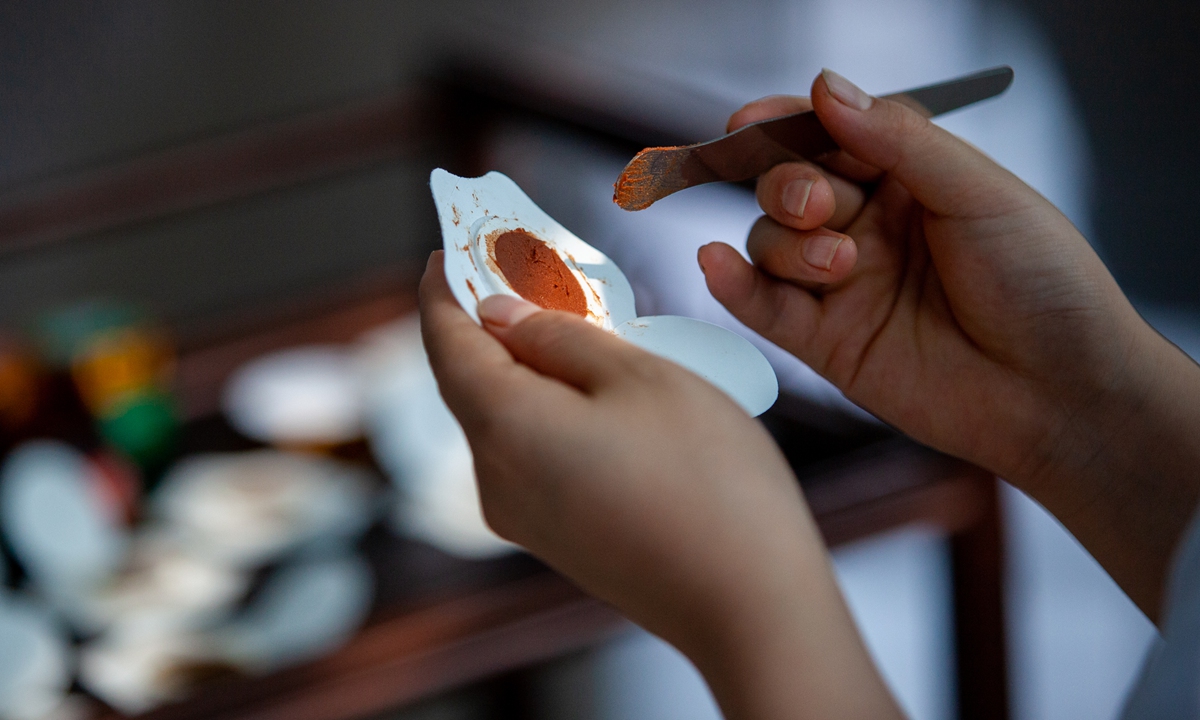
Medical staff prepare Sanfu patches with traditional Chinese medicine in Dingxi, Northwest China's Gansu Province on July 15, 2026. Photo on this page: VCG
Among the crowds waiting at the hospital's outpatient clinic, young faces were especially prominent."I have been providing related treatments at this hospital since 2005 and I've noticed that young people have gradually become the main group receiving Sanfu patch therapy. The number of elderly patients has remained about the same as in previous years, but we are seeing significantly more young faces in the outpatient clinic. Our data clearly shows this change," Zhu Yong, the hospital's chief respiratory physician, told the Global Times on Sunday.
Zhu noted that this trend reflects how deeply TCM concepts of health and wellness have taken hold among younger generations.
Sanfu, or "three fu," is a term that encapsulates the essence of the peak summer heat in China. Typically spanning from mid-July to mid-August, it is divided into three "fu" phases for about 40 days.
In China, these days are not only a time of intense heat but also a period rich with traditional practices and beliefs such as the delicate balance of yin and yang energies, especially in the realm of TCM.
Cui Yongqiang, a medical professor of Integrative Medicine at Beijing Guang'anmen Hospital, China Academy of Chinese Medical Sciences, told the Global Times that TCM holds that when yang energy is at its peak during the summer, the combination of warm weather and yang-strengthening herbal treatments can help expel coldness from the body and restore the balance between yin and yang.
"This TCM approach also carries a sense of ritual," Cui explained. Young people in China are increasingly embracing this ritual as part of their wellness practices.
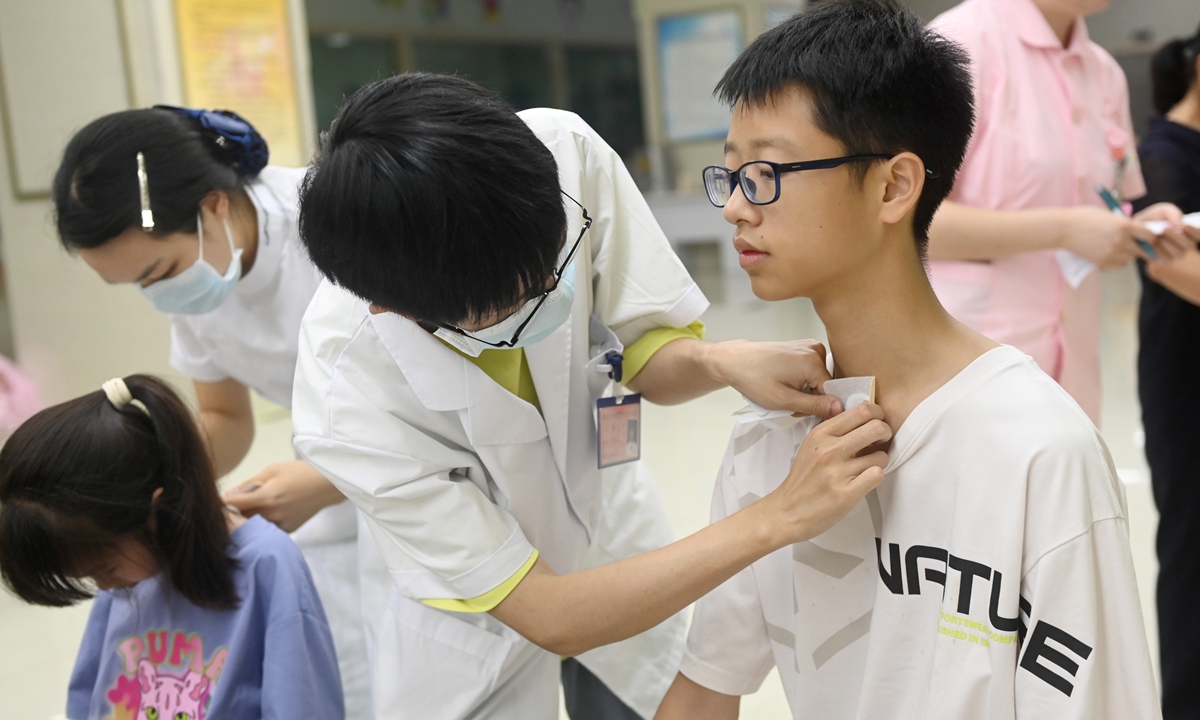
Medical staff apply Sanfu patches to local residents in Neijiang of Southwest China's Sichuan Province. Photo on this page: VCG
Treating winter illness in summerRooted in centuries of tradition, TCM plays a key role in how people in China care for their health during the Sanfu period. TCM encourages adapting people's lifestyles to seasonal changes, highlighting the need to achieve well-being by staying in harmony with nature, according to experts.
To safeguard the body's yang energy, TCM practitioners suggest specific methods such as Sanfu patches, applying specially formulated herbal paste to address issues like coughing, asthma, and joint pain. It is believed that applying these patches during the peak heat days can help maintain the body's yin-yang balance even when the weather turns colder.
Since the start of this year's Sanfu period, hospitals across China have seen a surge in appointments for Sanfu patch treatments. As of Tuesday, around 7,000 appointments had been made at the Beijing Hospital of Traditional Chinese Medicine, a figure similar to that during the same period in 2025. In Yongzhou, Central China's Hunan Province, a county-level TCM hospital has even opened a dedicated service window for Sanfu patch therapy, attracting a steady stream of residents seeking consultations and treatments.
Song Enzhuo, 24, previously knew little about the concept of "treating winter illnesses in summer" or TCM therapies like Sanfu patches. She always thought these wellness practices were more popular with the older generation. However, after struggling with recurring tonsillitis and at the recommendation of her family, she decided to give Sanfu patch therapy a try.
"When the patch was first applied, it felt cool and quite comfortable, and the whole process was easy. Afterward, my throat felt a bit better, and I became more interested in traditional therapies like this," Song told the Global Times.
Her experience with Sanfu patch therapy changed her perception of TCM wellness practices.
"I used to think traditional approaches were not really suited for young people, but after trying Sanfu patches, I realized they are actually quite simple. Young people can also learn about and benefit from these treatments depending on their individual needs," she said.
Zhang Gensheng, an inheritor of traditional acupuncture and moxibustion, told the Global Times that the growing popularity of TCM treatments like Sanfu patches among young people is closely linked to their lifestyles and physical conditions. He explained that some young people have irregular diets and sleep schedules, which can result in excess cold and dampness in the body. Some start trying more involved therapies like acupuncture after noticing improvement in their symptoms by applying Sanfu patches, leading to a younger demographic now turning to TCM for preventive care and rehabilitation.
Entering wellness mode
Cui offered a word of caution regarding the rising popularity of Sanfu patch therapy among young people. He stressed that it is important for this group to follow TCM principles and be sure their physical discomfort is truly caused by cold-related symptoms. Otherwise, if they simply follow the trend and use Sanfu patches blindly, it could have the opposite effect.
According to TCM philosophy, "treating winter illnesses in summer" is not the only way to maintain health during the Sanfu period. Many traditional Chinese herbs and foods have cooling properties that help the body cope with summer heat and support seasonal wellness routines. For example, in hot weather, people sweat more, leading to the loss of fluids and electrolytes. Drinking mung bean porridge can help replenish fluids and ease discomfort caused by the summer heat and humidity.
Zhu suggested that it is essential to maintain proper temperature and humidity to stay comfortable and healthy during the hottest days.
RELATED ARTICLES