SPORT / MISCELLANY
China releases blueprint to elevate role in global sports
Plan calls for deepening intl exchanges, cooperation
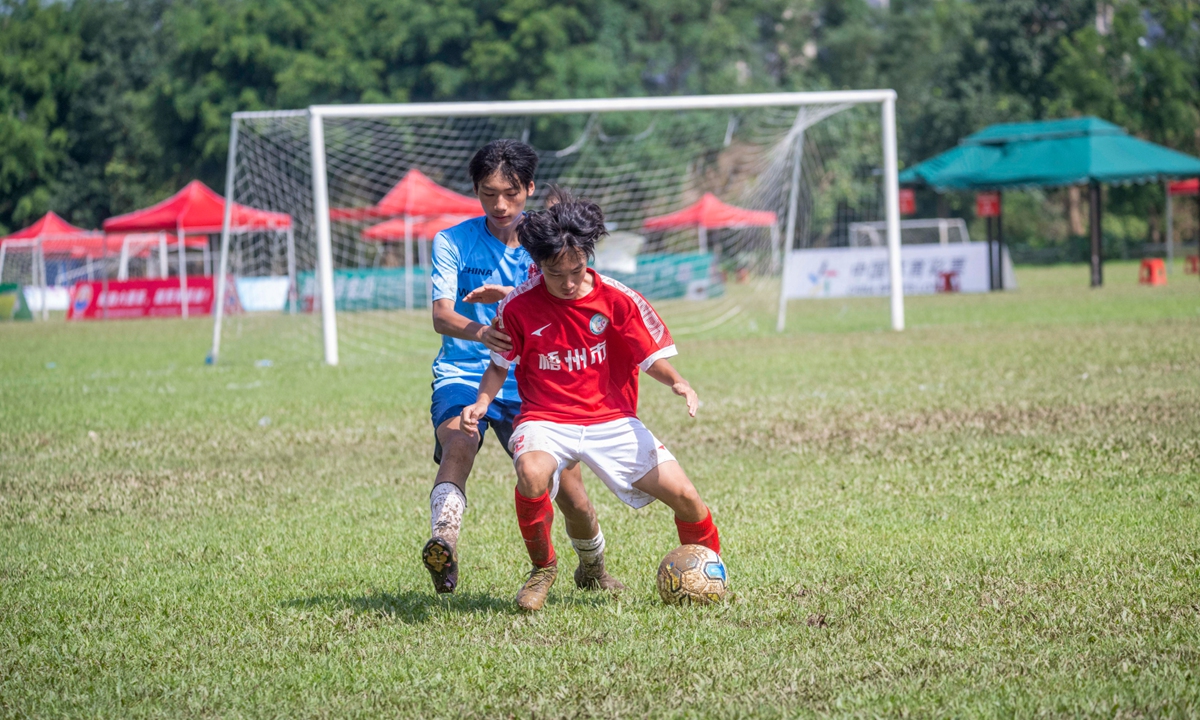
Photo: VCG
China has set its sights on deepening international exchanges and cooperation in sports while increasing its influence in global sports governance, according to a blueprint issued by the General Administration of Sport (GAS) on Wednesday.
Under the blueprint covering the 15th Five-Year Plan period (2026-30), China aims to build itself a leading sports power, improve public fitness, expand the sports industry and strengthen elite athletic performance by 2030.
The plan calls for strengthening sports exchanges with the US, building on the achievements of the China-Russia Years of Sports Exchange, and expanding sports cooperation under the frameworks such as BRICS, the Shanghai Cooperation Organization (SCO), and high-level people-to-people exchange mechanisms. It also calls for deepening sports exchanges and cooperation with neighboring countries and the broader developing world.
Ever since the days of "Ping-Pong Diplomacy," sports have been an important vehicle for advancing China's broader diplomatic agenda, Luo Le, a sports scholar at the Beijing University of Chemical Technology, told the Global Times on Thursday.
As a universal language, sports possess a unique ability to bring people together and promote exchanges between Chinese and US people, especially among young people. Through sports, US youth can gain a better understanding of China, its culture and history, while building friendships with their Chinese peers. Such people-to-people connections will play a highly positive role in fostering future exchanges between the two countries, Luo noted.
This year marks the 55th anniversary of China-US Ping-Pong Diplomacy.
In April 1971, a US table tennis team delegation took a historic trip to China, becoming the first delegation of Americans to visit China in decades. The trip was the beginning of what became known as Ping-Pong Diplomacy, which helped lay the groundwork for the establishment of official diplomatic relations between China and the US, the Xinhua News Agency reported.
The exchanges between China and the US also extend to baseball and pickleball.
About 400 participants, including members of eight youth baseball teams from China and the US took part in The Bond with Kuliang: 2026 China-US Youth Baseball Exhibition Games and Sports Festival in June in Fuzhou, East China's Fujian Province.
In May, a pickleball event was held in Ganzhou, East China's Jiangxi Province, featuring young players from the US' Utah Tech University and the Oregon Friendship Pickleball Delegation and Chinese pickleball teams.
To enhance China's voice and influence in international sports, the first priority is to improve the country's overall competitive strength on the global stage, Wang Dazhao, a Beijing-based sports commentator, told the Global Times on Thursday.
In sports with broad international appeal, such as football, athletics and swimming, China still has ground to make up. Closing that gap will require long-term planning like the new five-year plan, Wang noted.
The plan calls for deepening mutually beneficial cooperation with international sports federations. It also seeks to strengthen China's ability to help shape agendas and rules in international sports, while striving for more favorable conditions in resource allocation, event hosting, athlete training and competition. In addition, it promotes the global reach of traditional Chinese sports, including wushu, dragon boat racing, Go (weiqi), health qigong, and the dragon and lion dances.
Wang also acknowledged that noticeable improvements have been made in grassroots sports and public fitness in recent years.
By 2030, China aims to increase per capita sports venue space to around 4 square meters, raise the proportion of people who regularly participate in physical exercise to around 40 percent, improve the share of the population with a good level of physical fitness to 31.1 percent, remain among the world's leading countries in the number of world championship titles won, and expand the total size of the sports industry to more than 7 trillion yuan ($1 trillion).
During the 14th Five-Year Plan period (2021-25), Chinese athletes won 665 major titles at the Olympic Games, World Championships and World Cups. The total output of China's sports industry reached 3.8421 trillion yuan in 2024, Xinhua reported.
RELATED ARTICLES