ARTS / CULTURE & LEISURE
China revokes 3A tourist site ratings to further improve service quality
By Published: Aug 03, 2026 09:39 PM

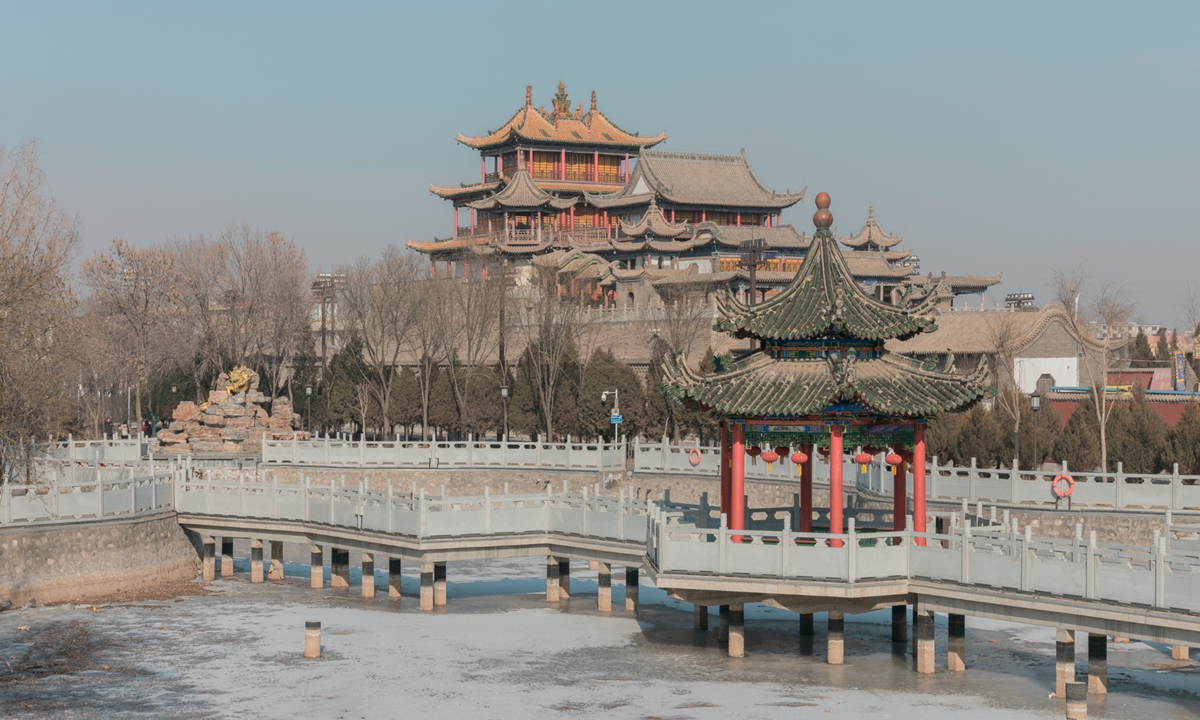
Photo: VCG
This summer, inbound tourism in China continues to boom. More foreign tourists are coming to the country, moving from surface-level sightseeing to deeper experiences. Amid the trend, many local culture and tourism departments have recently announced decisions to better manage the scenic spots and protect their brands and service quality. A group of tourist sites, including a Ming Dynasty (1368-1644) section of the Great Wall in Zhangye, Northwest China's Gansu Province, and a historic architectural complex in Shizuishan, the Ningxia Hui Autonomous Region, have had their 3A quality ratings revoked.According to the measures of tourist attraction quality rating management, China's scenic spots are graded from 1A to 5A, with 5A being the highest. Grades of 3A and below are evaluated by provincial-level committees, according to a report by China Newsweek.
These rating bodies must supervise, inspect, and re-evaluate the scenic sites each year and perform a more in-depth evaluation review every five years. If a site is found to not be maintaining standards, it can face warnings, public criticism, demotions, or even have its rating removed.
Many of the scenic spots that lost their 3A rankings were flagged during these reviews due to degradations in core attractions or growing safety concerns with supporting facilities. As a result, authorities revoked their quality ratings to encourage and ensure improvement.
For example, the Yuhuang Pavilion, a major site in Pingluo county in Shizuishan, Ningxia, is a national cultural relic and one of the best-preserved ancient architectural complexes in the region. Its grand design, multi-story wooden structures, and exquisite mortise-and-tenon craftsmanship made it a 3A scenic spot in 2005, according to China Newsweek.
However, in September 2023, local cultural and tourism officials noted problems such as outdated planning, limited funding, and deteriorating or mismatched infrastructure within the park. These issues damaged the protection and display of the pavilion's cultural value. In July 2026, the pavilion was officially deemed to be falling short of several 3A standards and was stripped of its rating.
This move to cancel certain scenic spot ratings reflects a shift in China's tourism industry: moving the focus from simply counting high-ranked sites toward improving actual quality. More dynamic management means "permanent" scenic ratings have ended. Instead, authorities now prioritize tourist experiences and rights, actively addressing bad practices in the industry, Liu Simin, a council member of the Beijing Tourism Society, told the Global Times on Monday.
Liu noted that scenic spots whose ratings have been revoked can apply again if they make improvements and wish to regain their rating, starting the evaluation process over again from the beginning.
Currently, inbound tourism has been heating up. For example, a report from CCTV News shows that at Zhangjiajie Grand Canyon in Central China's Hunan Province, over 50 percent of tourists in July were foreigners. Liu said that for 3A and below scenic sites, providing foreign language services and international facilities is seen as a helpful bonus. However, for top-level 4A and 5A scenic sites, the ability to receive and serve inbound tourists is now a key factor for assessment. The Zhangjiajie Grand Canyon scenic area, for instance, has launched a multilingual AI tourism assistant supporting 14 languages for real-time interaction and is also optimizing international payment and ticketing procedures for foreign visitors.
RELATED ARTICLES