BRASIL 247 / MORE
Brazil to cut natural gas prices for industry by more than 50%
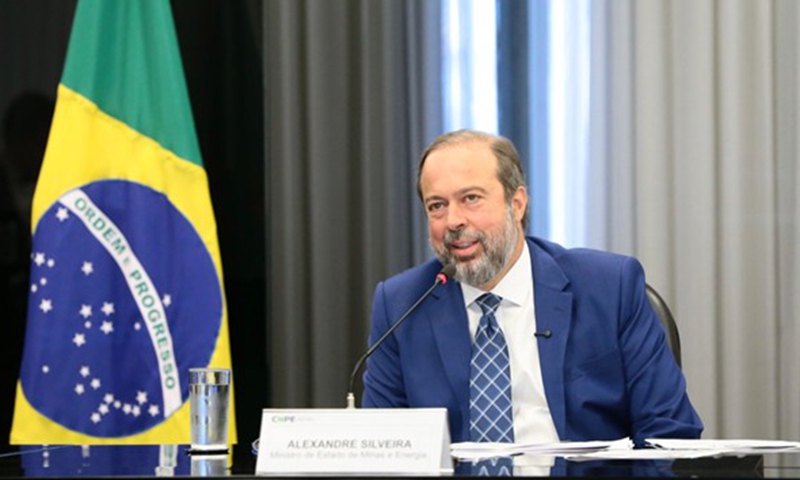
Alexandre Silveira, minister of Mines and Energy (Photo: Tauan Alencar/MME)
Brazil's Ministry of Mines and Energy (MME) announced on July 30 that natural gas prices for the country's industrial sector are expected to fall to around $5 per unit, down from the current range of $12 to $14. According to Brasil 247, citing Sputnik Brasil, the measure is part of a restructuring of the federal government's natural gas commercialization policy aimed at strengthening Brazil's industrial competitiveness.
The announcement was made by Mines and Energy Minister Alexandre Silveira during an event held at the ministry's headquarters in Brasília following a meeting of the National Energy Policy Council (CNPE). The event brought together federal officials, representatives of regulatory agencies and executives from the energy sector.
The policy responds to concerns over high natural gas prices in Brazil, which have been associated with declining demand and reduced industrial competitiveness. Mario Menel, president of the Brazilian Association of Self-Generation Energy Investors (ABIAPE), said gas prices in Brazil are four times higher than those in the US, affecting the country's competitiveness. Daniela Coutinho, vice president of the Brazilian Association of Large Energy Consumers and Free Consumers (ABRACE), stressed the importance of ensuring that lower-priced gas effectively reaches industrial users.
To address these challenges, the government announced measures designed to improve market conditions, including expanding access to pipelines owned by Petrobras, increasing gas reinjection into oil wells and improving transparency in sector auctions. The measures do not affect the gas distribution segment, which is operated by state concessionaires and regulated by state governments.
Silveira said the new policy would provide Brazil's industrial sector with natural gas priced at around $5 and highlighted the role of the National Agency of Petroleum, Natural Gas and Biofuels (ANP) in increasing transparency in the market. He described the initiative as the first step toward strengthening the country's industrial base.
The minister also said Brazil's electricity sector would enable greater use of thermoelectric power plants and projected more than $130 billion in investments in the distribution sector over the coming years. He noted that natural gas is particularly important for Brazil's steel industry and cited cases of major companies relocating operations from Brazil to the US.
Silveira also addressed discussions in Congress regarding subsidies for the electricity sector, arguing that they should be phased out. He said the federal government is pursuing a long-term and sovereign energy policy aimed at supporting Brazil's reindustrialization.
The minister also commented on the role of Petrobras and the state-owned Pre-Salt Petroleum Company (PPSA). According to Silveira, Brazilian law requires PPSA to maximize value generation, while Petrobras has expanded its financial competitiveness and social role in recent years under what he described as strong governance.
During the event, Silveira criticized what he described as the economic motivations behind international conflicts, arguing that public resources should prioritize social development rather than military equipment. He also said Brazil must balance industrial development with environmental preservation, acknowledging the need for a less development-focused and more environmentally conscious approach while maintaining equilibrium between the two objectives.
Silveira also discussed Brazil's critical minerals and rare earths strategy. He criticized the country's dependence on exporting raw iron ore and said Brazil should increase domestic industrialization of critical minerals. Speaking to reporters, he reaffirmed the government's commitment to attracting foreign investment while preserving national sovereignty.
According to the minister, Brazil welcomes foreign investment from countries including the US, Russia and China but seeks projects that generate added value within the country rather than focusing solely on exports.
Silveira also called for the approval of the Critical Minerals Bill, which is currently under consideration in Brazil's Senate.
(Reported by Brasil 247 on July 30, 2026)
