ARTS / CULTURE & LEISURE
Beijing named UNESCO-UIA World Capital of Architecture 2029 for blending ancient heritage with innovation
Why Beijing is named UNESCO-UIA World Capital of Architecture 2029


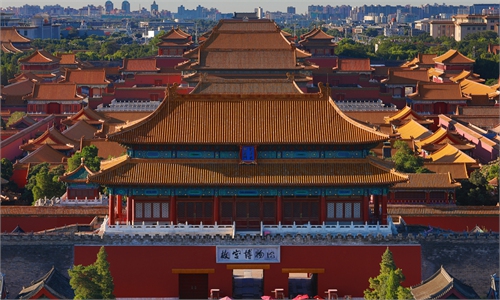
The golden tiles and sweeping upturned eaves with glazed mythical beasts at the Palace Museum in Beijing Photo: VCG
Beijing has been designated as the UNESCO-UIA (International Union of Architects) World Capital of Architecture 2029, UNESCO announced on Wednesday."Beijing was selected for its exceptional ability to bring together one of the world's richest architectural heritages with a forward-looking vision of sustainable urban development. Its historic urban fabric, successful regeneration projects and vibrant architectural culture demonstrate how heritage, innovation and community life can reinforce one another in shaping resilient and livable cities," says UNESCO in a press release.
Established jointly by UNESCO and UIA, the World Capital of Architecture program highlights the transformative role of architecture, urban planning, culture and heritage in advancing sustainable urban development. Every three years, UNESCO designates the host city of the UIA World Congress as the UNESCO-UIA World Capital of Architecture.
Why does the Chinese capital win the title and what does it mean for the ancient city and the international event?
Chinese architect Ma Yansong told the Global Times that Beijing is a beautiful city because it seamlessly blends tradition with modernity. "Historic and contemporary architecture coexist in a very harmonious way, which is one of the reasons UNESCO selected Beijing," he said.
Beijing is home to eight UNESCO World Heritage Sites, including the Great Wall, the Palace Museum, Temple of Heaven and Beijing Central Axis, highlighting its ancient urban planning and cultural heritage preservation.
"For me, the most beautiful landmark in the city is the Temple of Heaven. Its charm comes from the entire setting. As you walk along the elevated pathways surrounded by rows of trees, you naturally develop a sense of ceremony. Then, at the end of the route, the Hall of Prayer for Good Harvests comes into view. The proportions and composition are so perfectly balanced that they remind me of a symphony," Ma said.
In an era of globalization, cities around the world are becoming increasingly connected, making it even more important to preserve what makes each place unique. China, too, needs a recognizable image of its own, one that reflects its rich cultural heritage while presenting an identity to the world, Ma said.
Rio de Janeiro in Brazil became the first city to be designated the UNESCO-UIA World Capital of Architecture in 2020, followed by Copenhagen in 2023 and Barcelona in 2026.
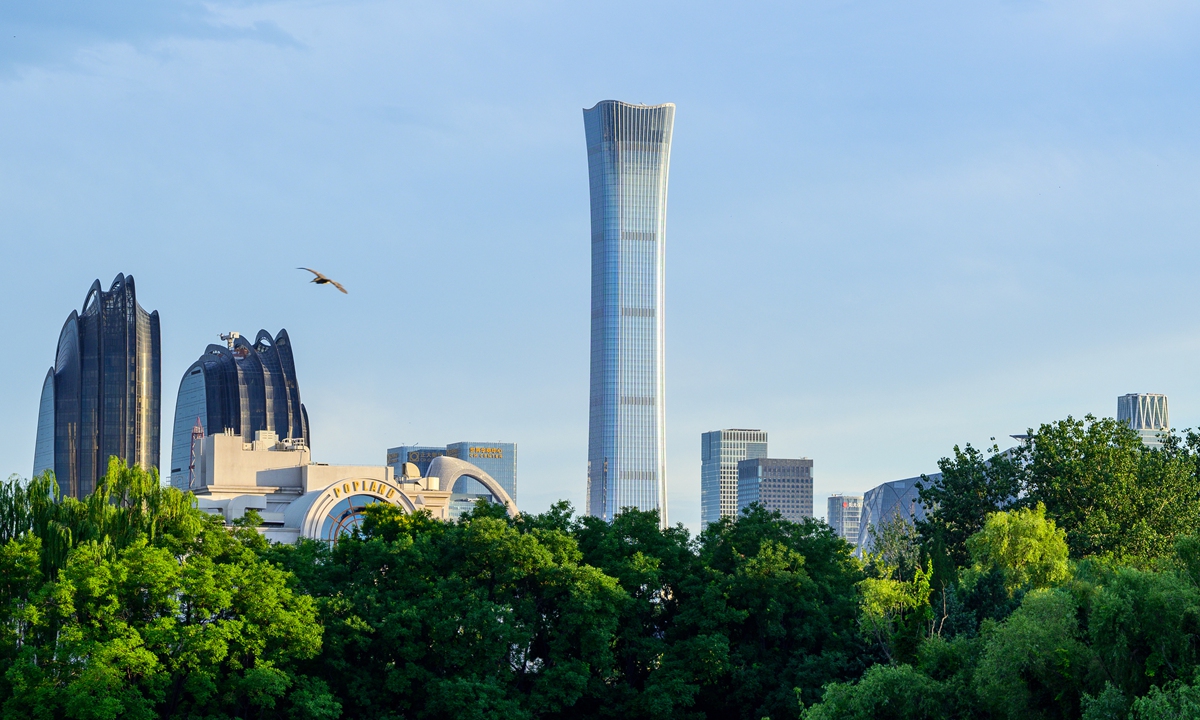
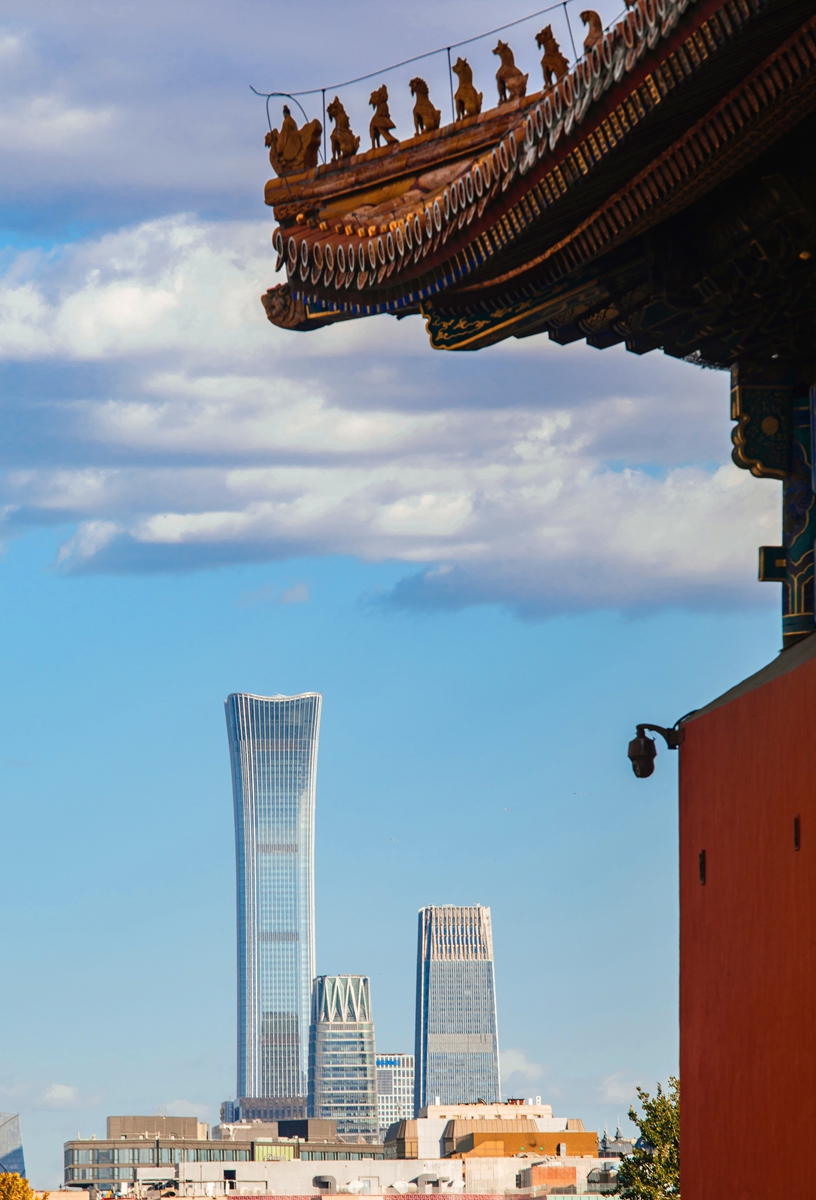
Beijing's city skyline Photo: VCG
'Back to balance'Following the designation, Beijing will host the 2029 UIA World Congress of Architects and General Assembly under the theme "Back to Balance." The Congress aspires to address the global anticipation of restoring balance in the world in three areas titled Balance between Human and Human, Balance between Human and Nature and Balance between Human and Technology, according to UIA.
Lü Ning, an associate professor at the School of Architecture and a senior engineer at the National Heritage Center of Tsinghua University, told the Global Times on Thursday that Beijing's architectural and cultural heritage naturally embodies the core concepts of harmony and equilibrium found in Chinese philosophy's "impartiality and harmony" and "unity of man and nature."
The city's Central Axis, renowned for its spatial symmetry that balances order and landscape design, exemplifies this philosophy. Beijing's holistic urban development approaches also highlight the city's commitment to balance both in heritage preservation and modern exploration, said Lü.
Taking the revitalization of Beijing's Dongxicha Hutong as an example, Zhang Man, an associate professor at Beijing University of Civil Engineering and Architecture, told the Global Times that the project has addressed the balance between long-time residents and new businesses in the historic neighborhood.
While preserving the ancient architecture of the hutong, or traditional alleyway and creating more public spaces, cafés, bookstores and cultural buildings were added to the community near the Miaoying Temple (White Pagoda Temple), breathing new vitality into the once cluttered historic block.
Forward-looking vision
Khaled El-Enany, director-general of UNESCO, said, "As we look towards to Beijing 2029, we are confident that the city's extraordinary architectural heritage, dynamic urban transformation, and forward-looking vision will inspire new international dialogue on the power of architecture in improving people's lives and in safeguarding shared heritage for future generations."
UNESCO's recognition is expected to raise standards for protection and management of the capital's World Heritage Sites, introducing advanced technologies, systematic oversight, and improved long-term monitoring, Lü noted.
Inheritance and revitalization will also benefit, as architects from around the globe exchange ideas and encourage innovative reuse, breathing new life into the heritage. Ongoing public engagement, through exhibitions, workshops, and regular cultural programs, will help keep the heritage alive, he said.
RELATED ARTICLES