Exclusive: WHO calls for support during DRC’s biggest Ebola outbreak
By Published: Aug 13, 2026 08:28 PM

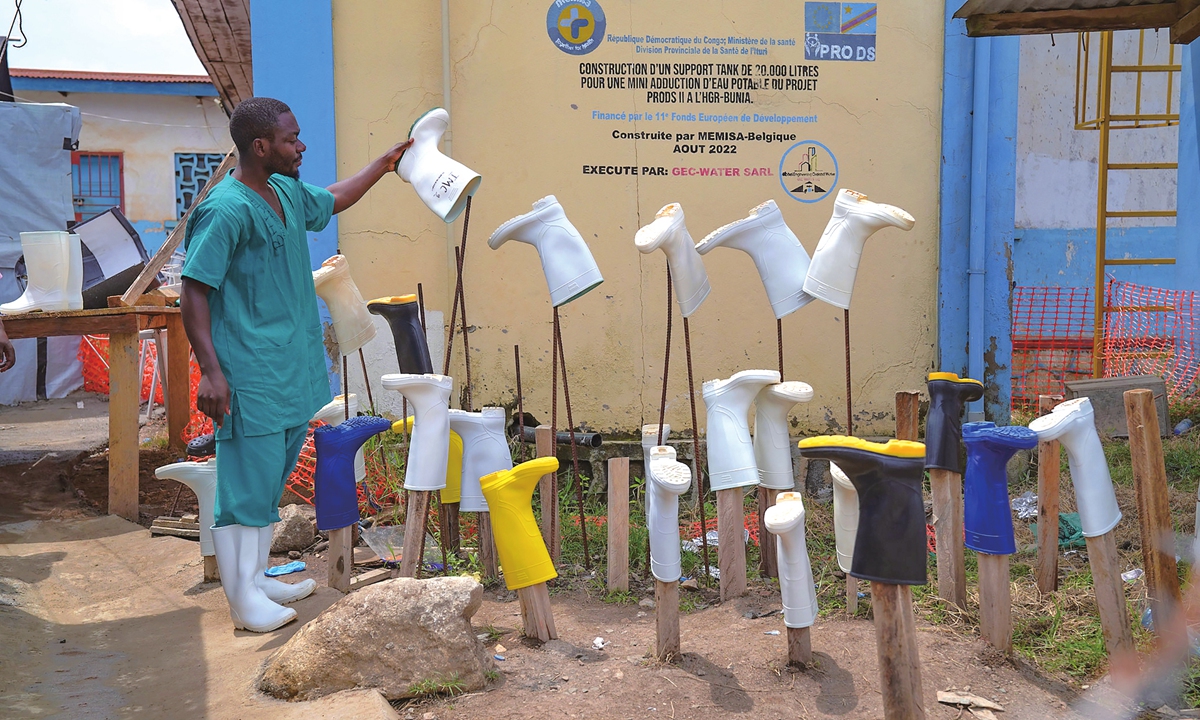
A health worker dries boots that were washed to prevent the spread of the Ebola virus at the treatment centre in Bunia General Hospital in Ituri, eastern Congo, on August 11, 2026. The current outbreak is the 17th Ebola outbreak in the DRC. It is now the country's largest on record and the second-largest Ebola outbreak globally. Photo: VCG
The Ebola outbreak in the Democratic Republic of the Congo (DRC) has become the largest the country has ever faced, with 4,449 confirmed cases and 2,061 deaths reported as of August 10. New infections are doubling weekly in some hotspots and spreading faster than the response can be scaled up, the World Health Organization (WHO) told the Global Times in an email on Thursday.
Ebola cases have been reported from 53 health zones across five provinces in the DRC and the outbreak is "outpacing the response." "We are in a major scale-up in every aspect of the response. Support is needed for all areas of the response, including surveillance, treatment, field investigation, safe burial teams, and community work," WHO said in its replies.
The data provided by the WHO to the Global Times showed that 46 percent of confirmed patients have died. A Xinhua News Agency report also noted that the global record remains the 2014-16 epidemic in West Africa, which had caused more than 28,600 reported cases and 11,325 deaths, according to WHO. WHO Director-General Tedros Adhanom Ghebreyesus warned that the DRC outbreak could eclipse it at its current pace.
"The outbreak had a big head start. It is still way ahead of us, and we are playing catch-up," the WHO chief said.
According to WHO, the outbreak is unfolding in a complex humanitarian context. In some affected areas, insecurity, population displacement, high population mobility and a fragile health system continue to complicate surveillance, contact tracing, access to care and other response activities. Humanitarian needs remain high, including those related to civilian protection, food security and access to essential health services.
The risk in the DRC was assessed as very high due to ongoing transmission and spread into new health zones. The risk in Uganda and neighboring countries was high because of cross-border mobility and uneven preparedness, while the risk to the rest of Africa and globally was low.
WHO told the Global Times that its advisory groups were convened following the declaration on May 16 of a Public Health Emergency of International Concern for the Ebola outbreak caused by the Bundibugyo virus (BVD) in the DRC. The groups met subsequently to review the candidate vaccine and treatment landscape for this type of Ebola disease.
On July 31, members of the advisory group met for the third time to review new preliminary data from animal studies showing that Ervebo offered some level of cross-protection against BVD in animals, particularly against death from the disease. The experts noted that efficacy of Ervebo against BVD disease and transmission would still need to be proven, and that a specific Bundibugyo vaccine would remain the preferred option, although preliminary data for candidate vaccines are not yet available.
Production and access to the vaccines, if sufficient efficacy data would arise, would also need to be facilitated at scale and made available to the affected populations, WHO said.
On August 1, China's third team of medical experts departed Beijing for the DRC to support efforts to contain the Ebola outbreak, taking over from two earlier teams and helping strengthen local prevention and control measures, according to Xinhua.
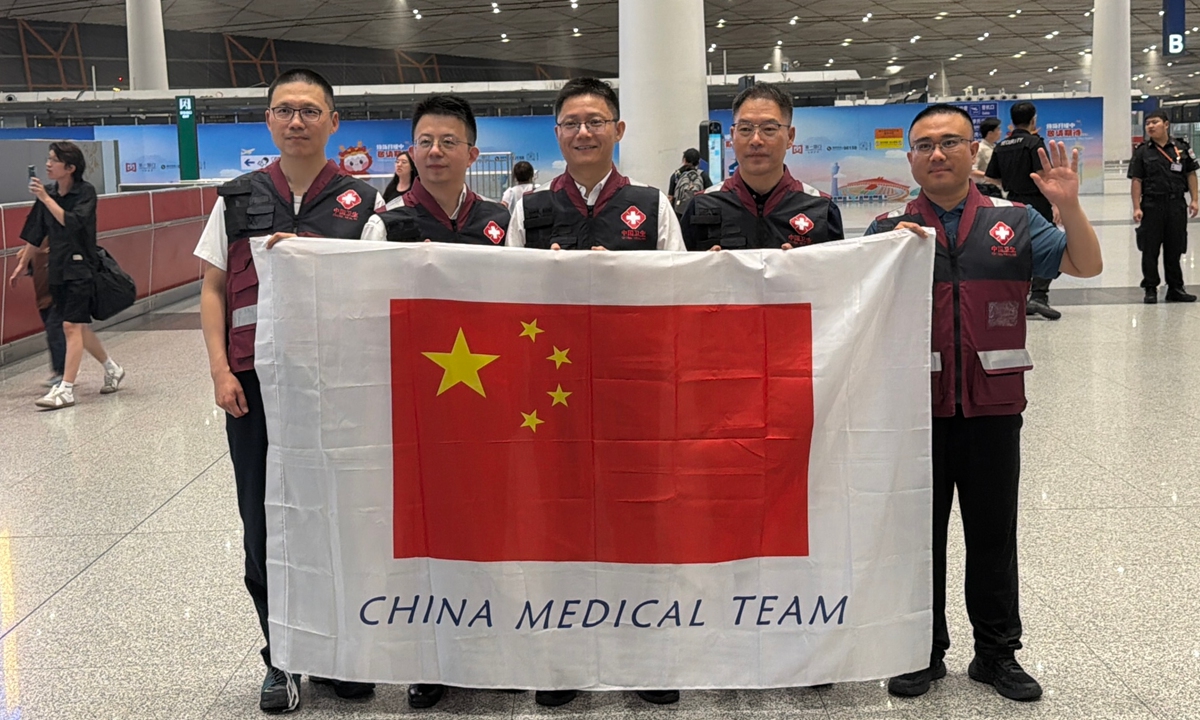
The second batch of China Medical Expert Teams departs Beijing for the Democratic Republic of the Congo (DRC) on July 2, 2026. Photo: Zhang Wanshi/GT
According to an official with the National Health Commission, the team will build on the work of the previous groups by providing technical assistance at the community level, sharing prevention and control experience, improving outbreak-response procedures and strengthening local capacity to manage the epidemic independently.China dispatched its first team of medical experts to the DRC in June and the second in July, according to a previous Global Times report.
Abdirahman Mahamud, WHO director for health emergency alert and response operations, said a moderate scenario could see the outbreak peak in about six months. A worse-case scenario could last nine months to a year, he added, according to Xinhua.
Additional Ebola treatment and isolation facilities are urgently needed, alongside trained health workers, medical supplies and equipment to ensure safe, high-quality care for all patients. "Continued international solidarity is essential to support national authorities and affected communities and to ensure the response expands faster than the outbreak," WHO said.
RELATED ARTICLES