Experts caution Mexico against using trade pacts as political leverage as new curbs on Chinese goods loom
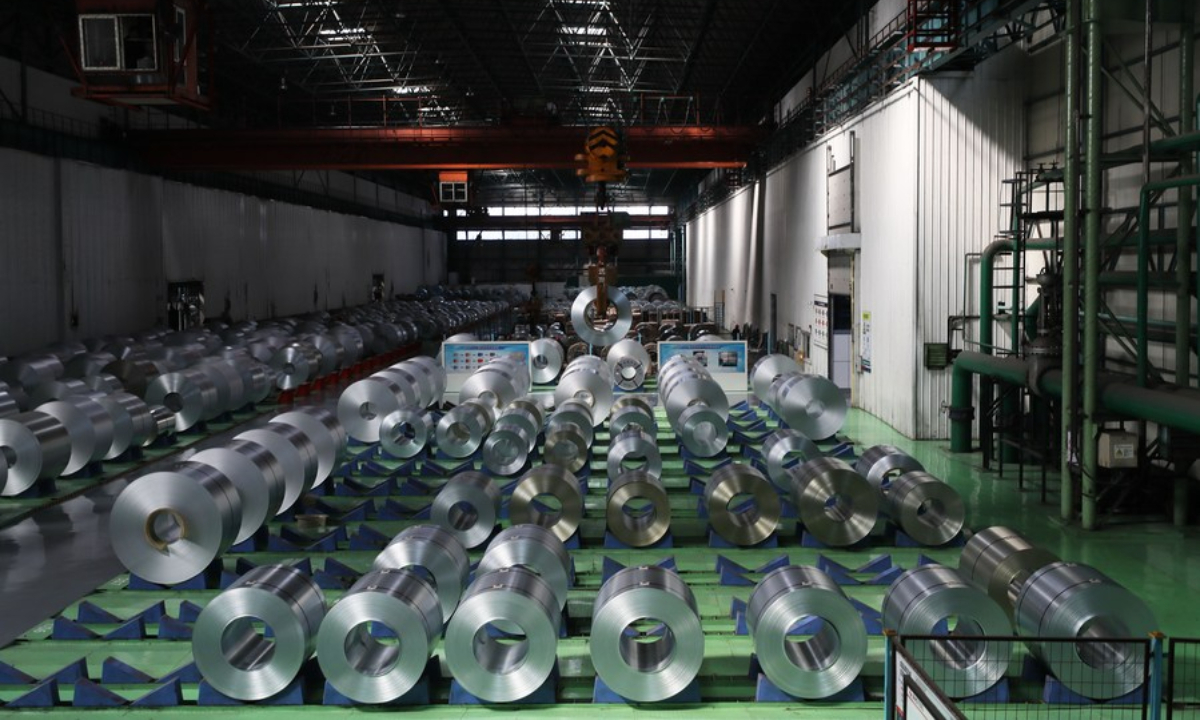
Steel rolls are seen at a factory of Ansteel in Anshan City, northeast China's Liaoning Province, Aug 19, 2021. Photo:Xinhua
Mexico is weighing tougher trade rules for China as talks with the US over a regional trade pact continue, Bloomberg reported. Chinese experts warned that regional trade pacts should not be used as tools of political pressure. While mutual respect and benefit remain the bedrock of sound China‑Mexico trade ties, blind tariff protection will undermine Mexico's manufacturing competitiveness.
Mexico is mulling further trade restrictions on selected products from China and other countries while raising existing import taxes on others, according to four people familiar with the matter, Bloomberg reported. Steel products and vehicles are among the leading candidates, according to one of the people.
The proposed restrictions would further align Mexico's trade stance with the US. The move comes as Mexico is seeking a multi-year extension of the North America trade pact known as the USMCA and pushing to grow domestic manufacturing at a time of lackluster investment at home, according to Bloomberg.
The new trade measures under consideration come as the USMCA hangs in the balance, after the US decided not to renew the deal that underpins Mexico's preferential access to the US market. That set in motion rolling annual reviews instead. The US administration has also pressured Mexico to adopt China-specific steel and aluminum tariffs mirroring the US Section 232 duties, aiming to forge a unified US-Mexico-Canada trade front against China, according to the Bloomberg report.
Intensifying US pressure has directly shaped Mexico's latest trade policy adjustments. Amid such geopolitical coercion, Mexico has faced calls to adopt protectionist trade measures that contradict its own market development needs and the interests of local enterprises, Zhou Mi, a senior research fellow at the Chinese Academy of International Trade and Economic Cooperation, told the Global Times on Wednesday.
The US is effectively turning the USMCA into a tool to pressure its regional partners. Yet such policy shifts are not optimal for Mexico's economic growth, but merely cater to US strategic demands, Zhou said.
Chinese experts stressed that mutual respect and benefit have long underpinned China-Mexico economic and trade relations, and they urged Mexico to view bilateral cooperation rationally and objectively. They warned that blind tariff protection will only backfire on Mexico's manufacturing sector.
As a major manufacturing player, Mexico relies heavily on imported raw materials including steel. New tariffs on key industrial products will trigger cost hikes along the entire industrial chain, pushing up production costs for downstream manufacturers and further weakening the competitiveness of Mexico's end products in global markets, Zhou said.
In addition, reduced US market openness and weaker purchasing power could limit choices for American consumers. Ultimately, Mexico will bear more economic costs instead of gaining benefits from such politically motivated trade restrictions, he noted.
In January, Mexico raised tariffs to as high as 50 percent on roughly 1,500 categories of products from nations that it had not signed free trade deals with, part of an effort to protect local producers as well as ease tensions with the US, Bloomberg reported.
Mexico's embrace of tariffs has led to a sharp decline in selected imports from some countries, particularly China. Imports of Chinese goods covered by the tariffs dropped nearly one-third year-on-year in the first five months of this year. Specifically, imports of Chinese light vehicles, auto parts and footwear slumped by more than 40 percent.
China's Ministry of Commerce (MOFCOM) in March released the final conclusions of a probe into Mexico's restrictive measures against China and other non-free trade agreement partners, stating that these measures constituted trade and investment barriers.
In response to the trade restrictions targeting China, the MOFCOM said in September 2025 that third‑party interests must not be sacrificed under external coercion.
It warned that any unilateral tariff moves by Mexico, even if implemented under World Trade Organization rules, would amount to appeasement of unilateral bullying. If implemented, such measures would hurt the interests of trading partners and erode the certainty of Mexico's own business environment. China urged Mexico to exercise caution and said that it would take necessary steps to safeguard its legitimate rights and interests.
Mexico is China's second-largest trading partner in Latin America, and China is Mexico's third-largest export destination. Our trade and economic cooperation benefits both sides. China always advocates universally beneficial and inclusive economic globalization, and opposes unilateralism, protectionism and discriminatory and exclusive measures in any form, Chinese Foreign Ministry spokesperson Guo Jiakun told a press conference in August 2025, in response to the Mexican government's plans to increase tariffs on China as part of its 2026 budget proposal.
China firmly opposes moves that are taken under coercion to constrain China or undermine China's legitimate rights and interests under any pretext. We believe the relevant country will uphold independence and properly handle relevant matters, Guo said.
RELATED ARTICLES