China’s large reusable rocket Xingyun-2 completes first long-duration engine test: reports
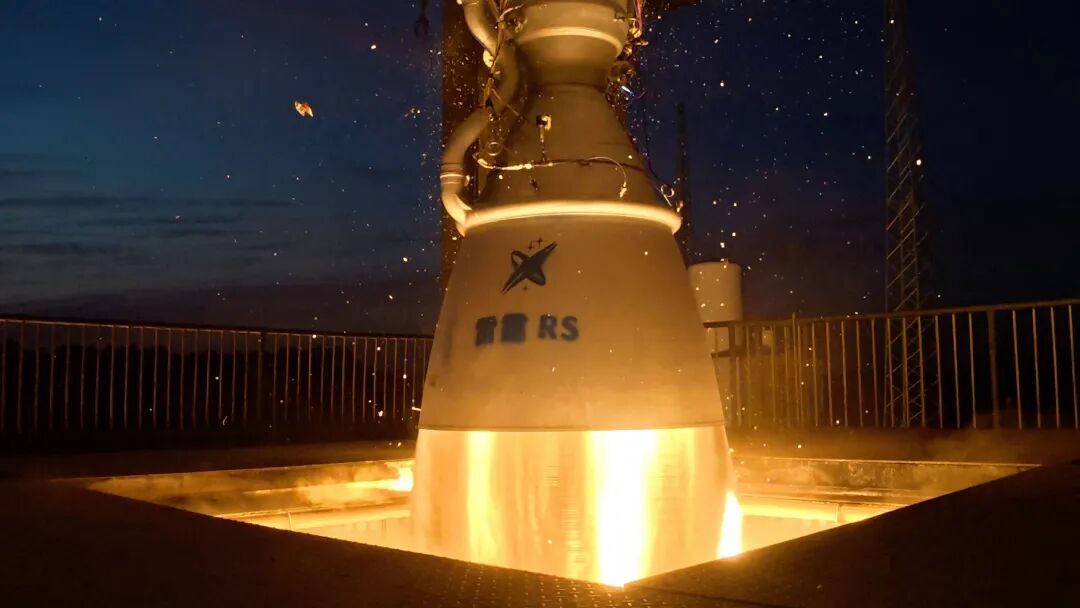
Photo: Courtesy of Deep Blue Aerospace
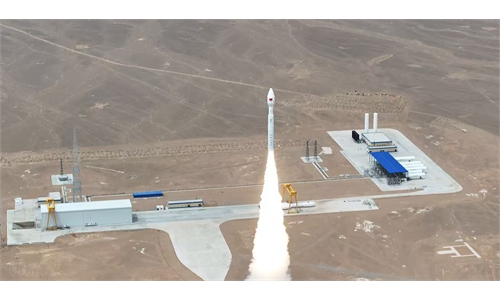
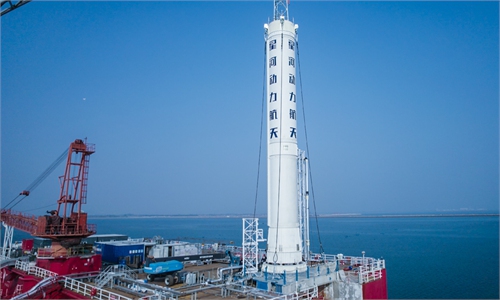
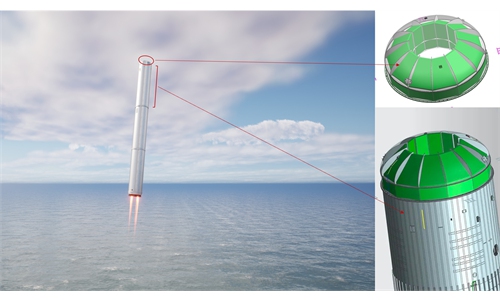
China's large reusable rocket Xingyun-2 has successfully completed its first long-duration engine test, marking an important step toward the country's next-generation space launch capability, according to domestic media reports on Friday.
According to the Chinese commercial space enterprise Deep Blue Aerospace, it has successfully completed a 100-second hot-fire test of its "Thunder-RS" 130-ton-class liquid oxygen/kerosene engine at a liquid rocket engine and propulsion system test site, the Science and Technology Daily reported on Friday.
The successful test marks a major technical breakthrough for the gas-generator-cycle pintle-type liquid oxygen/kerosene engine, which currently has the highest thrust among similar engines in China, according to the company. It also represents another step forward for China's commercial space sector in the development of high-thrust rocket propulsion systems, the Beijing News reported.
The engine is the primary power unit for Xingyun-2, a large reusable launch vehicle.
According to the company, the test recorded a thrust of 1,297.5 kilonewtons, or about 132.3 metric tons, meeting all design expectations. The result verified the reliability of the engine's integrated system as well as the thermal protection performance of its thrust chamber.
Deep Blue Aerospace said the Thunder-RS engine incorporates several proprietary core technologies, including a gas-generator cycle, pintle injector, and integrated metal 3D-printing structure, according to reports.
Prior to the long-duration test, the development team carried out multiple short-duration ignition trials to evaluate ignition timing, shutdown control, and component compatibility. After each short firing, the engine underwent health inspections, and the company said the system remained stable with zero anomalies and zero failures.
Meanwhile, the airframe structure, avionics system, and recovery navigation subsystems of Xingyun-2 are also being advanced in parallel.
The company noted that this was the first time the Thunder-RS engine had crossed the 100-second steady-state threshold. For a large liquid rocket engine, short firings principally verify whether the engine can ignite successfully, while long-duration testing examines whether it can operate continuously and reliably, according to the Beijing News.
The 100-second run covers the rocket's core operating period and serves as a comprehensive test of structural reliability, thermal protection and stable component performance.
The engine was designed from the outset with reusability in mind. Key performance targets such as deep throttling, multiple restarts, and rapid refurbishment checks were all set to support future recovery and reuse. The successful long-duration test not only confirms the engine's single-burn reliability, but also lays the groundwork for upcoming restart trials, lifespan evaluation, and reusability assessments, said the company.
Global Times
RELATED ARTICLES