Bringing China into America's data center debate misses real US challenge. Illustration: Liu Xidan/GT
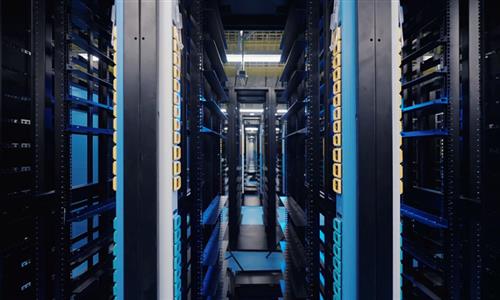
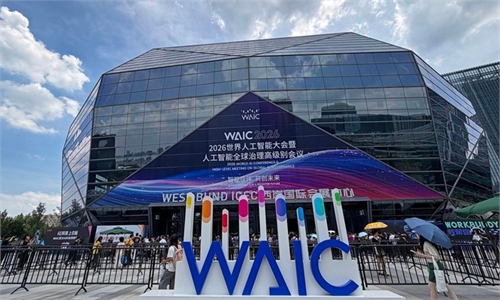
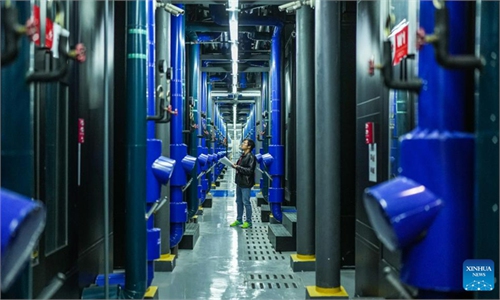
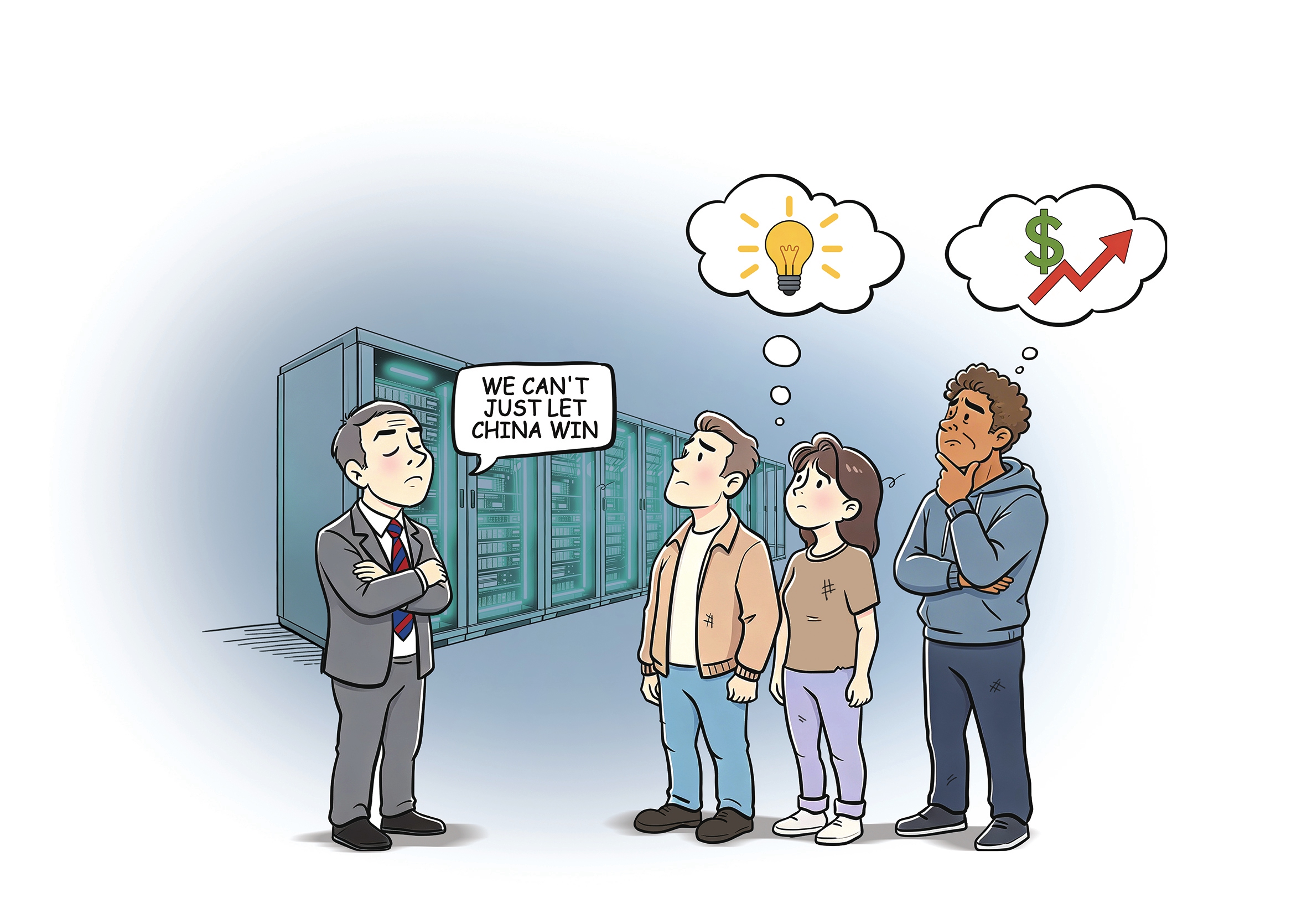
The debate over data center construction in the US has drawn growing attention. Lee Zeldin, administrator of the Environmental Protection Agency (EPA), warned on Sunday against banning data centers, The Hill reported. He was quoted as saying, "what we can't do is just say, well, let's not have any data centers built all across the entire country and let's just let China win."
By bringing China into the debate, his remarks added a geopolitical dimension to a discussion already driven by domestic concerns. This framing, however, may do little to address the practical constraints facing the expansion of US data centers.
Zeldin's remarks came amid a broader debate in the US over data center construction, as concerns have been raised about its potential impact on communities. A Fox News poll released in July found that voters opposed building data centers in their area to support artificial intelligence (AI) by a 40-point margin, with 70 percent against and 30 percent in favor. Among those opposed, 50 percent cited environmental concerns as their main reason, including energy and water use, pollution, noise and overall environmental impacts.
Energy has been a recurring concern in the debate. A Fox News report on August 20 cited researchers as estimating that existing data centers have already pushed up average wholesale electricity prices in the US by 2 percent to 6 percent, with even larger increases in areas where these facilities are concentrated. Beyond electricity costs, the sources of power used to run data centers have also attracted attention. As natural gas remains an important source of the electricity that supports data centers in the US, further expansion could raise additional questions about emissions and environmental impacts.
These are tangible concerns. They have direct implications for the daily lives of ordinary Americans, affecting issues such as electricity bills and environmental quality. Such challenges are separate from the question of whether the US can "win" the AI race against China. Bringing China into the debate does not help address the underlying challenges facing data center expansion in the US; instead, it risks shifting attention away from the issues that require solutions, including environmental concerns that fall squarely within the EPA's remit.
Of course, some Americans support data center construction, hoping it will create jobs and drive economic growth. Data centers are indeed an important part of the infrastructure needed for AI development. But decisions over how to expand data center capacity will ultimately depend on how this debate unfolds within the US. The concerns raised by Americans - from electricity costs to environmental impacts - require solutions at home. Bringing China into the discussion takes the debate in the wrong direction.
The development of AI should not be reduced to a contest in which one country's gain is defined by another's loss. As Chinese officials have noted, AI development should not become a source of rivalry. A discussion of whether China will "win" may attract attention, but such a zero-sum framing does not address the practical challenges involved in expanding data center capacity.
NBC News reported in June that a study by Data Center Watch, a project of AI intelligence firm 10a Labs that tracks local data center activity, found that data center opponents blocked or delayed at least 75 projects in the US worth about $130 billion from January through March, the most in a three-month period since the group began tracking this figure in 2023.
What challenges will these projects face going forward? The future of the broader expansion of data centers in the US may be influenced by how the domestic debate evolves and whether the country can address the concerns raised by its own citizens. Practical measures, such as improving the efficiency of the energy supply system and reconsidering import restrictions affecting certain clean energy supply chains, may offer a more effective path to addressing these concerns than framing the issue around China.
The author is a reporter with the Global Times. bizopinion@globaltimes.com.cn
RELATED ARTICLES