ARTS / CULTURE & LEISURE
AI-generated Chinese short film goes viral by turning monsters into a story about people
AI becoming more important but doesn’t determine a work’s value: expert
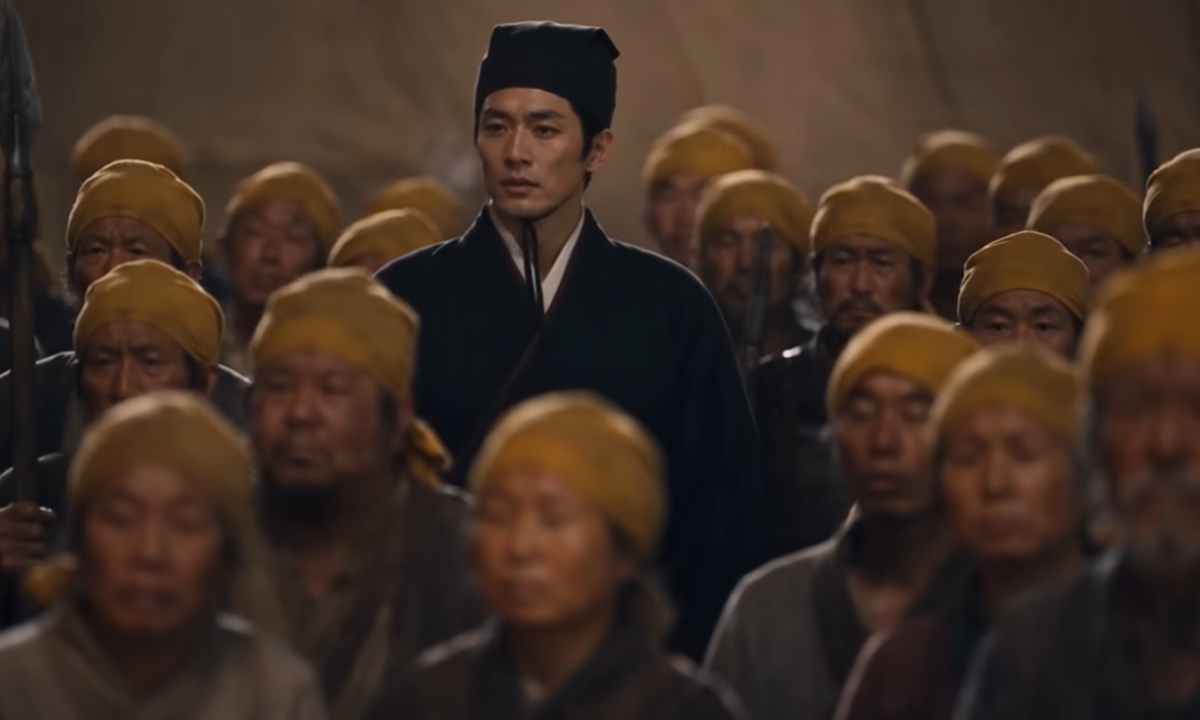
A scene from the short film Yaoyi Bu: Wen Cangsheng Photo: screenshot
An AI-generated animated short film has recently topped the overall ranking on Bilibili, one of China's largest video-sharing platforms. As of Tuesday afternoon, the short film The Book of Strange Tales: Asking about the People (Yaoyi Bu: Wen Cangsheng) had surpassed 14.5 million views, sparking widespread discussion over what truly defines the value and appeal of AI-generated works.The 26-minute film follows a historian tasked with investigating and documenting yaoguai (monsters). As he delves deeper, he discovers that the so-called monsters are actually ordinary people suffering from famine, forced labor and hardship. Faced with a dilemma - recording the truth could put them in greater danger, while portraying them as monsters could save their lives but erase their real stories from history - he chooses to protect them turning them into "monsters."
The film first attracted attention for its AI-generated visuals, with its consistent character designs, ancient settings and cinematic scenes showcasing new possibilities for AI-assisted animation. According to creator "Qingguadan," the project was made with the help of several AI tools, including ByteDance's Seedance 2.5 video generation model, OpenAI's GPT Image tool and Jimeng AI, a Chinese AI creation platform that provides text-to-image and text-to-video generation services.
As discussions around the film continued, audience attention gradually shifted from "what AI can create" to "what the story is trying to express." The historian's choice to "turn people into monsters" and the closing line, "When later generations read of monsters, do not ask about ghosts and gods; ask about the people" became the focus of online discussions.
Li Baile, a graduate student at Sichuan University and an AI short drama enthusiast, told the Global Times on Tuesday that AI-generated works need more than impressive visuals to keep audiences engaged.
"Compared with works that simply showcase AI effects, content that truly attracts viewers needs to build an emotional connection through characters and storytelling," Li said.
"What moved me about Asking about the People was that the film did not provide a direct modern setting, while the fictional story still raised questions that remain relevant today, such as who has the power to define history, whose voices are recorded and whose suffering is remembered," she noted.
Similar views are shared by many AI content creators. Zhao Yafeng, an AI short drama director based in Beijing who previously worked as a screenwriter for short-form dramas, told the Global Times on Tuesday that AI has lowered the technical barriers of visual creation, allowing more individual creators to explore forms of expression that were once difficult to achieve.
"As AI tools continue to evolve, they are becoming increasingly involved in the production process, assisting creators with tasks such as visual design, scene planning and concept testing," she said. "But as visual generation becomes easier, creators need to pay more attention to what their works actually want to express."
Zhao's comments reflect a broader discussion surrounding the rapid integration of AI into content production, as the industry explores how to embrace technological innovation while ensuring the healthy development of online content.
According to the National Radio and Television Administration, new regulations on the development and management of micro-dramas will take effect on September 1. They call for "strengthening new popular culture under internet conditions" and encourage innovation in micro-drama creation, technological applications and distribution methods.
Against this backdrop, more AI-generated short films are moving beyond simply demonstrating technological capabilities and start to explore themes centered on personal emotions, cultural memory and social connections.
In July, the AI short film Half of a Youtiao, (youtiao, a traditional Chinese food in the form of a deep‑fried dough stick), received more than 1.1 million likes, 129,000 interactions and 342,000 shares. Many comments focused not on the technology behind the film but on personal memories, with viewers saying the story reminded them of grandparents and childhood experiences, according to The Paper.
Another AI short film, Paper Phone, drew attention by incorporating elements of traditional Chinese mourning culture. According to reports, the film, which tells the story of a child attempting to communicate with his deceased grandmother through a "paper phone," gained millions of views due to its emotional portrayal of family bonds and remembrance.
These cases show that AI is reshaping the way content is created, but the technology itself does not determine the value of a work. As Zhao noted, "In many successful AI-generated works, technology serves as the entry point that attracts viewers, while emotions and content determine whether they choose to stay."
RELATED ARTICLES