PHOTO / CHINA
Ecological improvement creates favorable environment for migratory waterbirds in N China's Zunhua
Published: Aug 28, 2026 08:30 AM
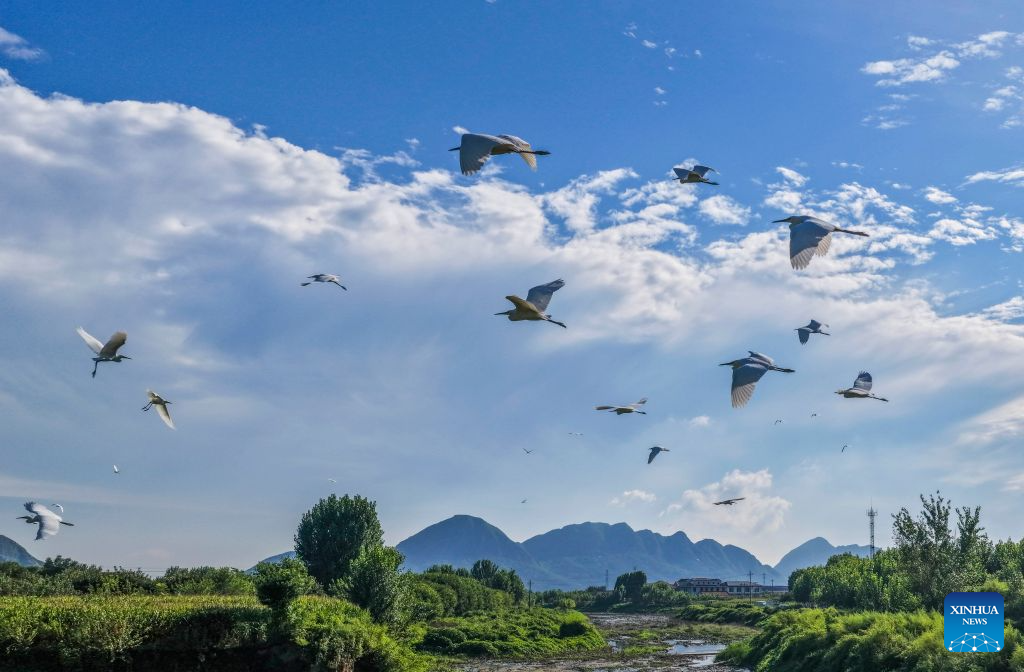
A drone photo taken on Aug. 26, 2026 shows egrets flying over the Shahe River in Zunhua, north China's Hebei Province. In recent years, Zunhua has continuously promoted the dredging of the Shahe River channel, ecological restoration of the riverbank, and control of agricultural non-point source pollution. A total of 12.6 kilometers of wetland buffer zones have been built, and 38 hectares of waterfront plant communities have been restored, providing a favorable environment for migratory waterbirds such as egrets, night herons, and herons to inhabit and breed. (Photo by Liu Mancang/Xinhua)
A drone photo taken on Aug. 26, 2026 shows egrets flying over the Shahe River in Zunhua, north China's Hebei Province. In recent years, Zunhua has continuously promoted the dredging of the Shahe River channel, ecological restoration of the riverbank, and control of agricultural non-point source pollution. A total of 12.6 kilometers of wetland buffer zones have been built, and 38 hectares of waterfront plant communities have been restored, providing a favorable environment for migratory waterbirds such as egrets, night herons, and herons to inhabit and breed. (Photo by Liu Mancang/Xinhua)

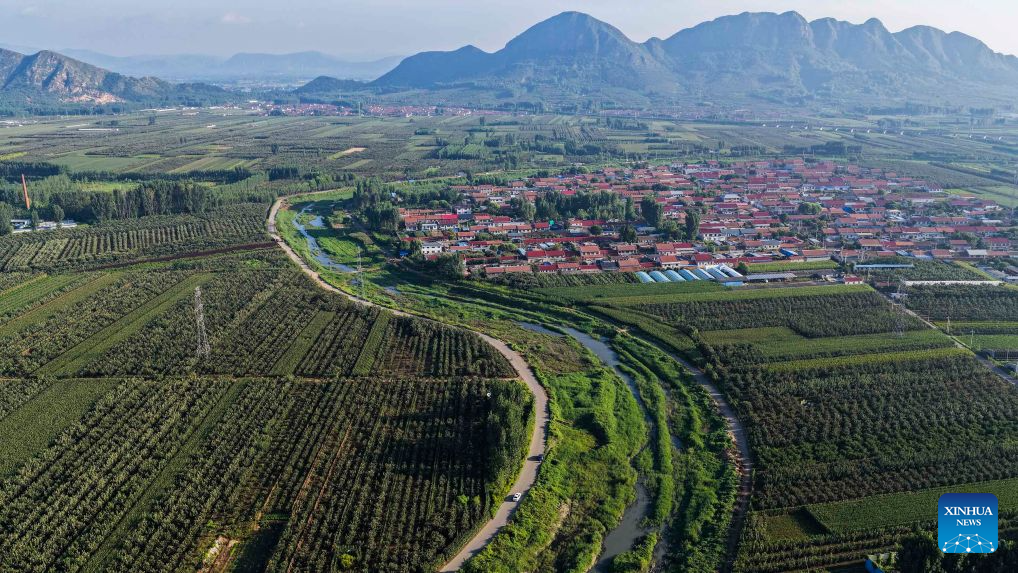
An aerial drone photo taken on Aug. 26, 2026 shows a view of the Shahe River in Zunhua, north China's Hebei Province. In recent years, Zunhua has continuously promoted the dredging of the Shahe River channel, ecological restoration of the riverbank, and control of agricultural non-point source pollution. A total of 12.6 kilometers of wetland buffer zones have been built, and 38 hectares of waterfront plant communities have been restored, providing a favorable environment for migratory waterbirds such as egrets, night herons, and herons to inhabit and breed. (Photo by Liu Mancang/Xinhua)
An aerial drone photo taken on Aug. 26, 2026 shows a view of the Shahe River in Zunhua, north China's Hebei Province. In recent years, Zunhua has continuously promoted the dredging of the Shahe River channel, ecological restoration of the riverbank, and control of agricultural non-point source pollution. A total of 12.6 kilometers of wetland buffer zones have been built, and 38 hectares of waterfront plant communities have been restored, providing a favorable environment for migratory waterbirds such as egrets, night herons, and herons to inhabit and breed. (Photo by Liu Mancang/Xinhua)


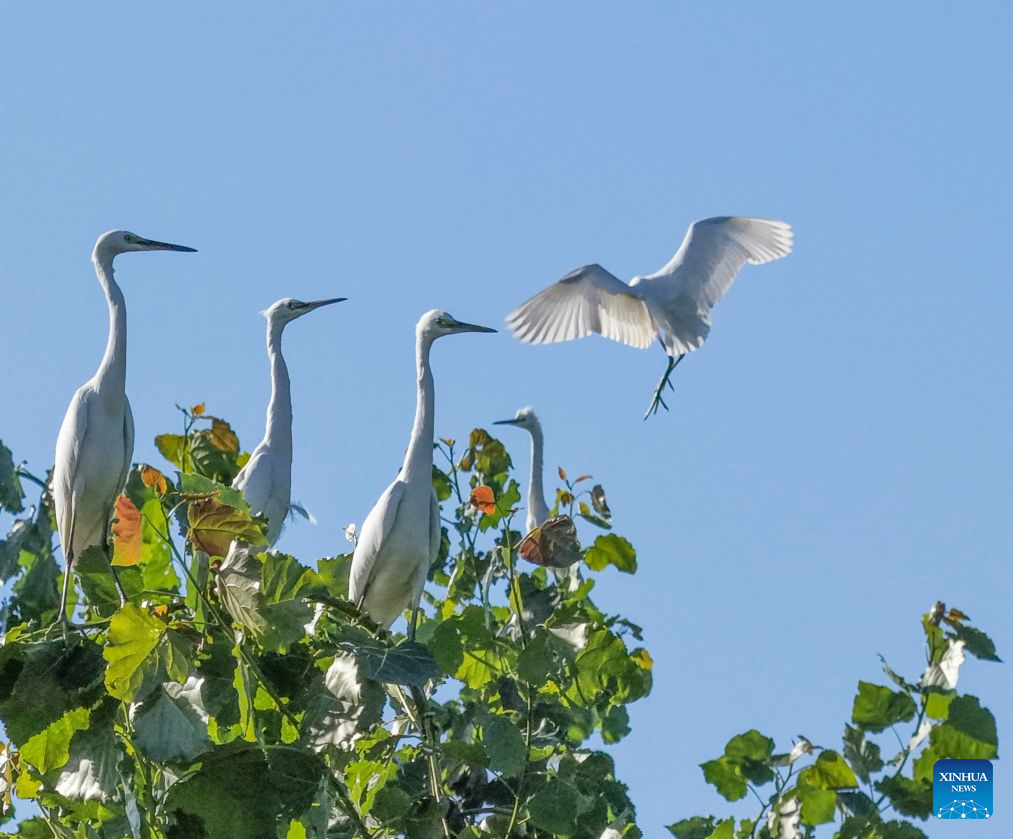
A drone photo taken on Aug. 26, 2026 shows egrets resting on the top of trees near the Shahe River in Zunhua, north China's Hebei Province. In recent years, Zunhua has continuously promoted the dredging of the Shahe River channel, ecological restoration of the riverbank, and control of agricultural non-point source pollution. A total of 12.6 kilometers of wetland buffer zones have been built, and 38 hectares of waterfront plant communities have been restored, providing a favorable environment for migratory waterbirds such as egrets, night herons, and herons to inhabit and breed. (Photo by Liu Mancang/Xinhua)

A drone photo taken on Aug. 26, 2026 shows egrets resting on the top of trees near the Shahe River in Zunhua, north China's Hebei Province. In recent years, Zunhua has continuously promoted the dredging of the Shahe River channel, ecological restoration of the riverbank, and control of agricultural non-point source pollution. A total of 12.6 kilometers of wetland buffer zones have been built, and 38 hectares of waterfront plant communities have been restored, providing a favorable environment for migratory waterbirds such as egrets, night herons, and herons to inhabit and breed. (Photo by Liu Mancang/Xinhua)


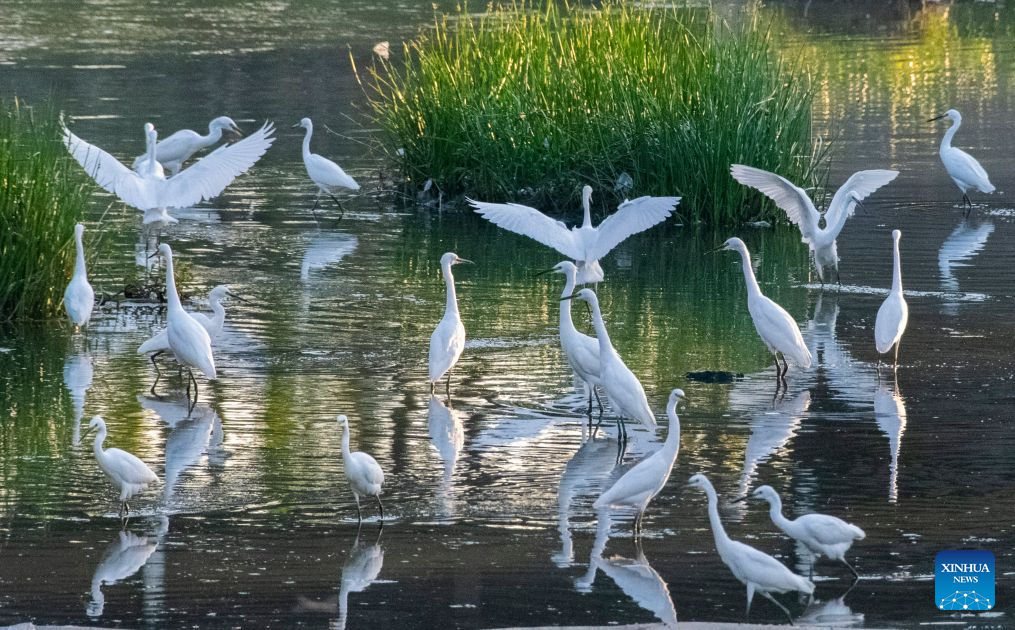
This photo taken on Aug. 26, 2026 shows egrets resting on the Shahe River in Zunhua, north China's Hebei Province. In recent years, Zunhua has continuously promoted the dredging of the Shahe River channel, ecological restoration of the riverbank, and control of agricultural non-point source pollution. A total of 12.6 kilometers of wetland buffer zones have been built, and 38 hectares of waterfront plant communities have been restored, providing a favorable environment for migratory waterbirds such as egrets, night herons, and herons to inhabit and breed. (Photo by Liu Mancang/Xinhua)

This photo taken on Aug. 26, 2026 shows egrets resting on the Shahe River in Zunhua, north China's Hebei Province. In recent years, Zunhua has continuously promoted the dredging of the Shahe River channel, ecological restoration of the riverbank, and control of agricultural non-point source pollution. A total of 12.6 kilometers of wetland buffer zones have been built, and 38 hectares of waterfront plant communities have been restored, providing a favorable environment for migratory waterbirds such as egrets, night herons, and herons to inhabit and breed. (Photo by Liu Mancang/Xinhua)