Vietnamese Durian Illustration: Liu Xidan/GT
Vietnam's Central Highlands is an important coffee-growing region. Yet media reports said that some farmers are switching from their traditional crop to durian, drawn by surging Chinese demand for the pungent "king of fruits." "You can live okay with coffee, but it's durian that makes you rich," said Pham Xuan Lan, as he showed AFP journalists around his farm.
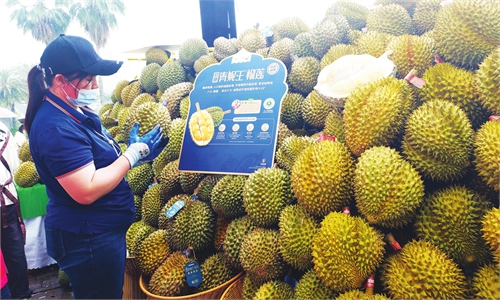
What is driving farmers in Vietnam's Central Highlands to make the switch? Part of the answer lies at the other end of the supply chain - in China. In 2025, China imported 1.868 million tons of fresh durian, worth about $7.49 billion. In 2015, the figure was just 299,000 tons. Over those 10 years, China's durian imports grew several times over.
What makes the durian story interesting is not simply the growth in China's imports, but where that demand lies. China is the world's largest durian market, and consumption is spreading beyond the biggest cities. Fourth-tier cities and rural areas account for 48 percent of durian sales, according to reports.
The durian industry perhaps offers a glimpse of the opportunities in China's broader consumer market. Its growing popularity in smaller cities and rural areas points to the spending potential of a vast consumer base. That potential is too large to ignore. This may be only a small example, but demand for the fruit has continued to grow even as prices have fallen from their peaks in recent years, making it an increasingly attractive crop for growers.
Seen in this light, Vietnamese farmers' switch from coffee to durian looks less like a bet on a passing trend than a long-term investment in a market they expect to remain important. Durian trees can take several years to bear fruit, so the decision reflects a degree of confidence in the Chinese market.
The same is true for growers in other Southeast Asian durian-producing economies, including Thailand and Malaysia. For them, expanding trade routes, logistics and distribution channels takes on added importance, making it easier for their products to reach Chinese consumers.
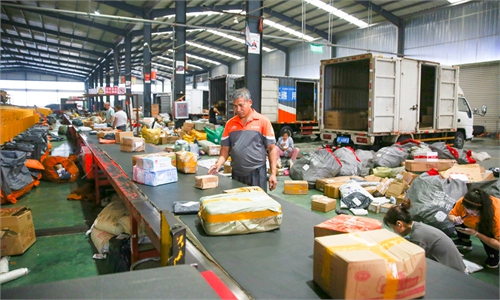
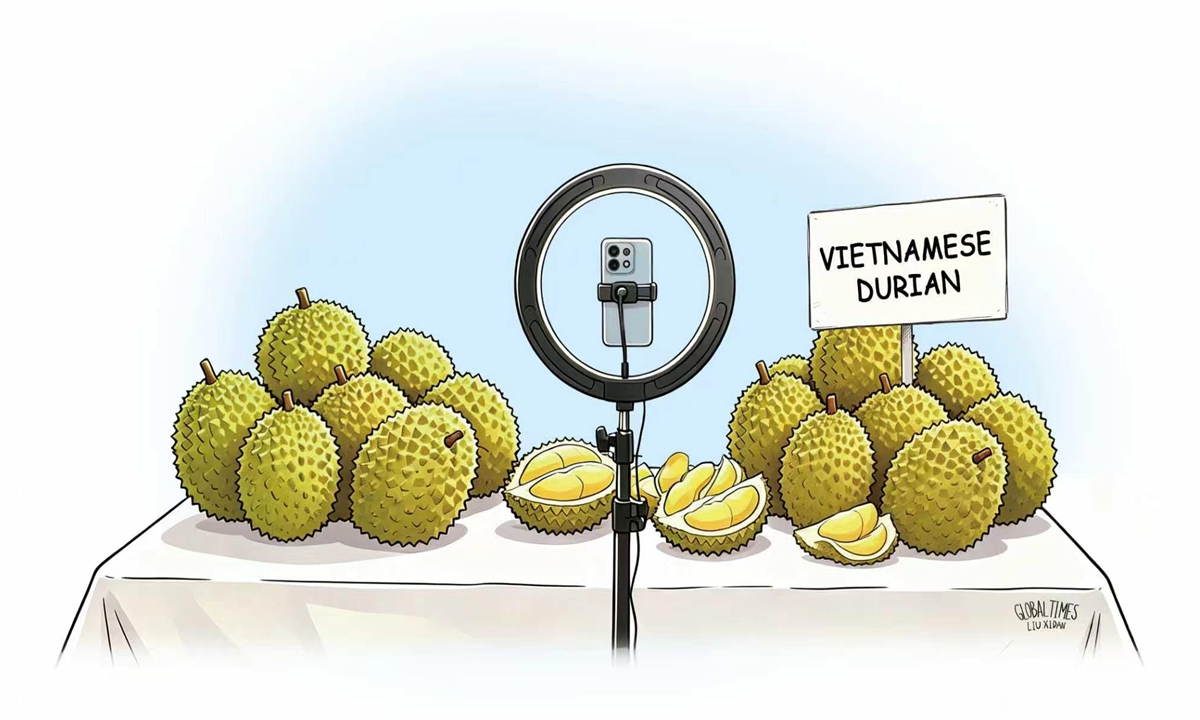
Who are these Chinese consumers? People aged 26 to 35 make up the largest group of durian buyers in China, and many are accustomed to shopping online. On Chinese e-commerce platforms, some sellers source directly from farms and use livestreams to show consumers how the fruit is selected, packed and shipped. By cutting out some traditional middlemen, this model can bring prices down and reach a broader range of consumers, while giving them a more direct view of the product.
China's consumer market is sometimes portrayed as declining in certain Western media outlets. Yet the durian story points to a different picture. Consumer demand remains broad and active, while e-commerce is creating new ways for businesses to reach shoppers. For producers of consumer goods, reaching China increasingly means reaching Chinese consumers directly - a task that differs from selling industrial inputs into supply chains. E-commerce is becoming an increasingly important part of that connection.
The opportunity extends well beyond durian. Mangosteen, longan, mangoes and pineapples, along with a wider range of food and everyday consumer goods, are finding their way into the Chinese market. The Chinese and ASEAN economies have complementary strengths in consumer products, leaving more room for trade to grow in both directions. For both sides, the potential goes beyond individual products to a broader consumer market.
E-commerce is also expanding rapidly in parts of Southeast Asia. Local media outlets report that online platforms are expected to be a major distribution channel during Vietnam's National Day holiday this year, taking on much of the role once played by physical supermarkets.
As e-commerce grows on both sides, there is broader room for deeper digital trade between China and Southeast Asia. For farmers and small producers, stronger e-commerce links could make it easier to reach Chinese consumers. The durian story offers a glimpse of what closer digital connections could mean for trade across the region.
The author is a reporter with the Global Times.
bizopinion@globaltimes.com.cn
RELATED ARTICLES