US cloud giants in talks to host China’s Kimi K3 on revenue-share terms, exposing rift between Washington narrative and market reality: experts
Market cost-performance vote against Washington's AI crackdown: experts
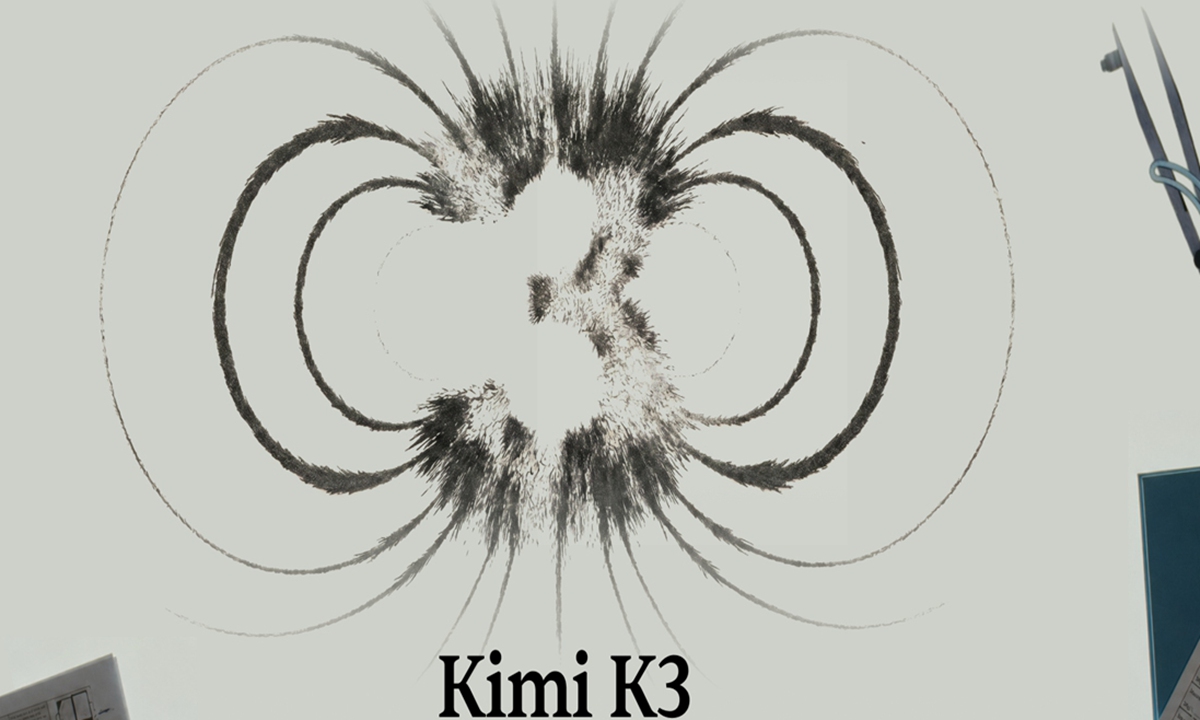
Photo: Courtesy of Moonshot AI
China's Moonshot AI is in talks with Microsoft, Amazon and Alphabet's Google over revenue-sharing agreements that would allow the US cloud giants to host its blockbuster Kimi K3 model, a deal that, if reached, would be the first big revenue-sharing pact between a Chinese artificial intelligence (AI) firm and a major US cloud company, according to Reuters.
The talks, which come despite persistent US political pressure on Chinese AI firms, underscore a widening rift between Washington's narrowing AI-control narrative and industrial realities, Chinese experts said.
Moonshot is seeking a share of up to 30 percent of revenue generated from K3-related services on Microsoft's Azure, Amazon Web Services and Google Cloud, Reuters reported, citing sources. The discussions are at an early stage and there is no certainty they will result in agreements, the sources said.
Tian Feng, former dean of SenseTime's Intelligence Industry Research Institute, told the Global Times that unlike traditional one-time licensing deals, revenue-sharing model builds long-term interest alignment, turning cloud vendors from mere buyers into stable business partners.
"If the talks succeed, this would mark the first time a Chinese large-language model enters mainstream US commercial channels as a rule-setter, and the first time the US commercial market casts a vote on cost performance for Chinese large-language models through real procurement," Tian said.
Kimi K3 delivers industry-leading performance comparable to top-tier closed-source US AI models, Tian said.
Liu Gang, chief economist of the Chinese Institute of New Generation Artificial Intelligence Development Strategies, told the Global Times that the three major US cloud giants have extremely stringent screening standards for onboard AI models. Their willingness to negotiate revenue-sharing partnerships, rather than simple one-way purchases, proves Kimi K3's irreplaceable value.
Its prominent cost advantages fit well with cost-sensitive US enterprise clients, while its open-source feature and deep integration into global developer ecosystems further strengthen its overseas appeal, Liu added.
Kimi K3 posted strong results in third-party evaluations, Reuters reported. Arena.ai ranked it first in a benchmark assessing web interface-building capabilities, while Artificial Analysis said that it delivers performance comparable to OpenAI's GPT-5.5 and Anthropic's Claude Opus 4.8, particularly on tests measuring complex, multi-step tasks.
The potential cooperation offers profound and far-reaching value for both Chinese and US industry players, analysts said.
For Moonshot AI, landing on mainstream US cloud platforms offers compliant, mature enterprise sales channels, setting a valuable benchmark for Chinese AI firms' global expansion and generating sustainable shared revenue. For US cloud vendors, Kimi K3's high performance and low costs help retain corporate users and optimize server resource utilization, Tian said.
The project still faces certain challenges, including complex negotiations over data management and token measurement rules, Tian added.
According to one of the sources, unresolved issues in Moonshot's negotiations with the US cloud companies include how revenue might be split, data access and auditing token usage, Reuters reported.
The reported negotiations also take place amid a worsening US crackdown on the Chinese AI sector.
Notably, Moonshot has come under fire from US Treasury Secretary Scott Bessent, who said last month that he might add it to a trade blacklist. US officials have alleged the company of stealing from Anthropic's most sophisticated model, Fable, to help create Kimi K3 and illegally acquiring Nvidia chips, Reuters reported.
Moonshot has rejected suggestions that Kimi K3's performance was achieved via distillation, telling China's National Business Daily last month that its performance gains came from original changes to underlying architecture.
It is widely acknowledged that the groundless accusations from the US side are essentially intended to safeguard the high premium commercial interests of US closed-source AI giants, provide public opinion and legal grounds for restrictions, and maintain the monopoly position of American closed-source AI leaders in the global market, analysts said.
Notably, many US industry players have publicly opposed Washington's threats to sanction Chinese AI companies. Nearly 200 US start-ups have urged the US government not to cut off access to Chinese open-source models, warning that such moves could weaken the competitiveness of US companies, US media reported.
"This highlights a clear rift between political narratives and industrial rationality, one that continues to widen amid real market procurement," Tian said.
Addressing relevant US allegations, Chinese Foreign Ministry spokesperson Lin Jian told a press conference in July that the development of AI in China comes from greater self-reliance and strength in science and technology, and is fueled by China's vision of extensive consultation and joint contribution for shared benefit.
He emphasized that China opposes politicizing and instrumentalizing trade and tech issues. Such actions will only stifle global AI advances and serve no one's interests.
RELATED ARTICLES