ARTS / CULTURE & LEISURE
Black Myth’s next hero: How Zhong Kui, China’s ancient demon-slayer, is stepping into the global spotlight
The timeless spirit behind Zhong Kui, a centuries-old Chinese folk figure
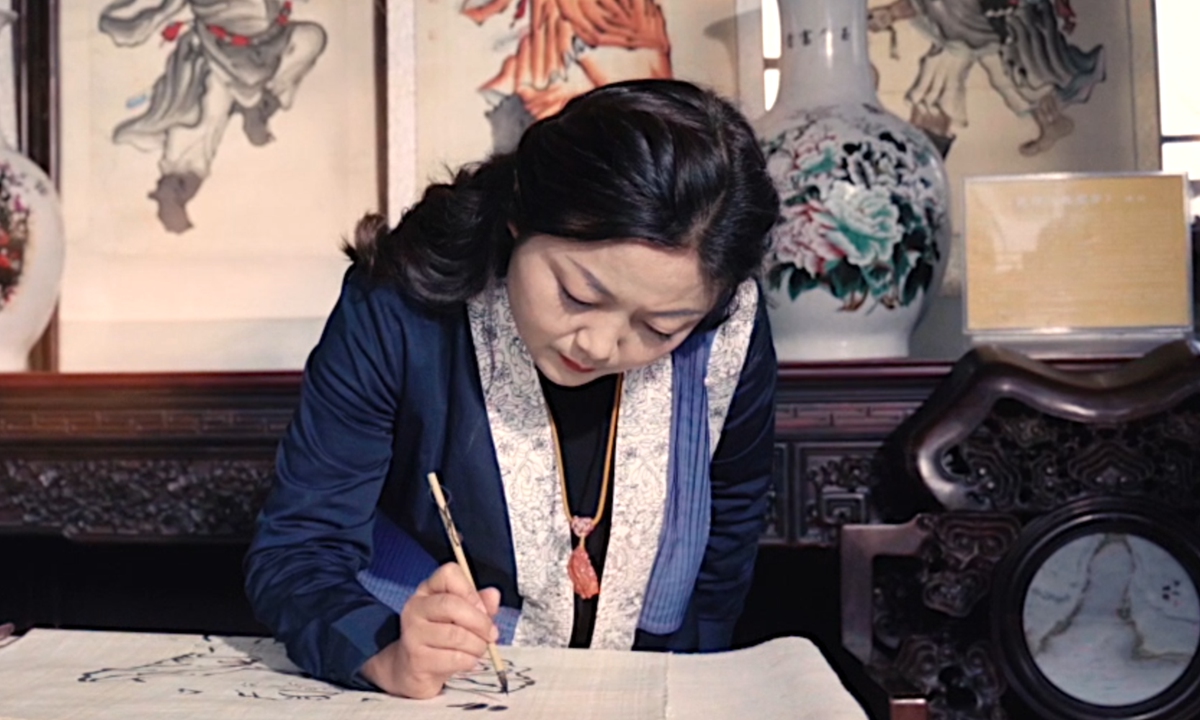
Yin Tingting, a representative inheritor of Lingbi Yin-style Zhong Kui paintings Photo: Courtesy of Yin Tingting
In a studio in Lingbi, East China's Anhui Province, a formidable-looking figure often appears on paintings.With a leopard-like head, piercing eyes, a bushy beard, and a ritual weapon in hand, the figure exudes an imposing presence.
Yet these seemingly intimidating images do not depict a villain. They portray Zhong Kui, a legendary guardian figure who has been worshiped in Chinese folk culture for centuries.
Yin Tingting, a representative inheritor of the intangible cultural heritage of Lingbi Yin-style Zhong Kui paintings, told the Global Times that Zhong Kui's fierce appearance embodies his qualities of detesting evil, upholding justice and standing firm against wrongdoing.
"The figure has long been associated with warding off evil spirits and bringing blessings, appearing in door guardian paintings, New Year paintings and folk customs," she said. "While the forms of Zhong Kui's image may change over time, his core spirit of 'punishing evil and promoting good' remains unchanged, giving the character a lasting connection with contemporary audiences."
That traditional image is now entering a new chapter. Recently, video game developer Game Science released the first gameplay trailer for Black Myth: Zhong Kui, once again drawing international attention.
For many overseas players, Zhong Kui may not be as familiar as Sun Wukong, globally known as The Monkey King, but his roots in Chinese folk legends have allowed the character to be continually reinterpreted over the centuries.
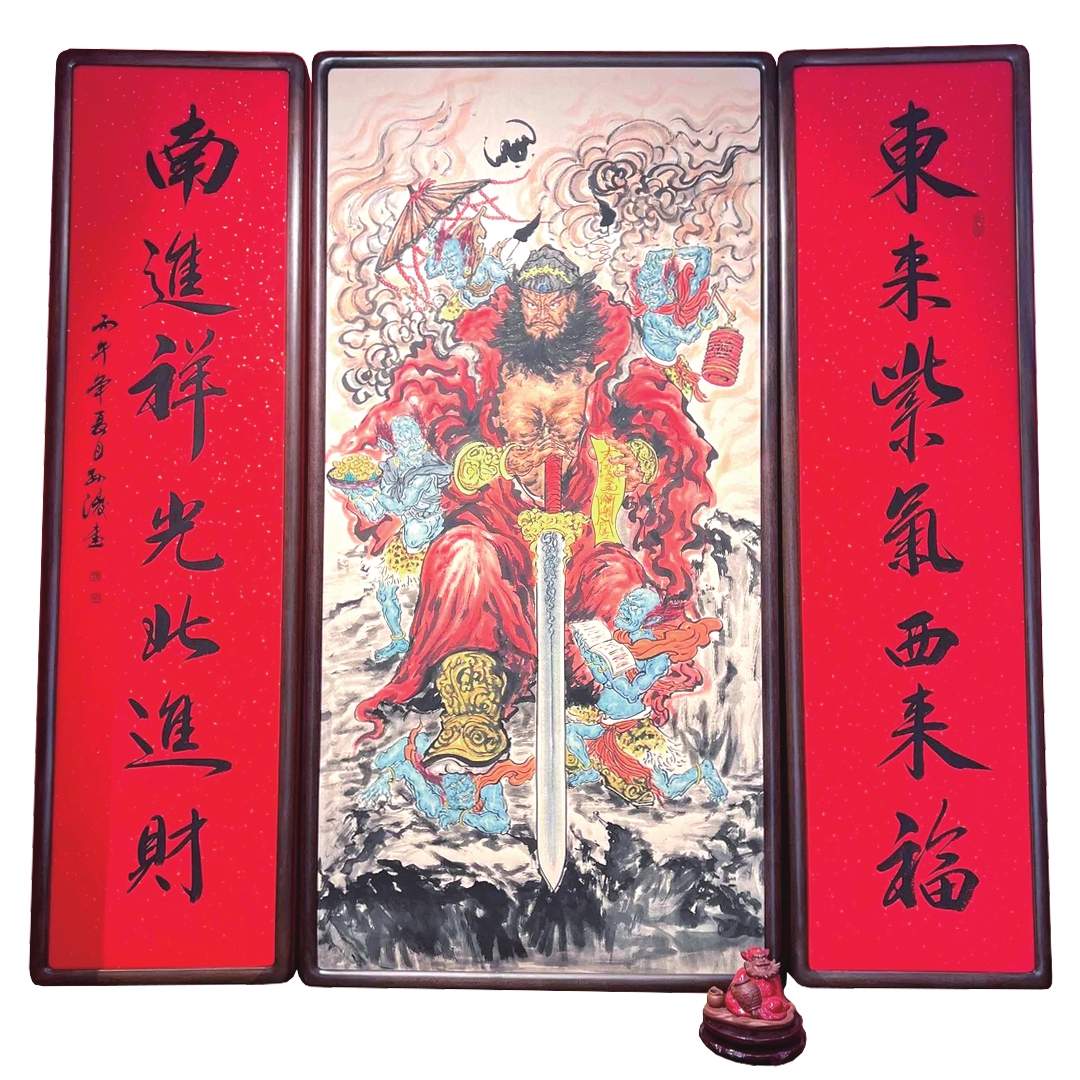
A Zhong Kui painting by Xie Chong Photo: Courtesy of Xie Chong
Passed down through generationsFrom a guardian deity in folk legends to an artistic figure depicted by painters, Zhong Kui's survival through history has relied on generations of creators preserving and reshaping his image. In Lingbi, Yin-style Zhong Kui paintings have been passed down through multiple generations. As a fifth-generation inheritor of the intangible cultural heritage, Yin has spent years studying this traditional art form. In her view, the challenge of creating Zhong Kui paintings is not simply to portray a fierce-looking figure, but to use brushwork to convey the spirit behind the character.
"Zhong Kui may look 'ugly' to many people, but his heart is beautiful," Yin said. "He does not necessarily have to look fierce, but his sense of righteousness must be shown."
In her works, Yin follows the artistic principle of portraying Zhong Kui as "majestic but not fierce, unusual-looking but not evil." Through lines, expressions and colors, she seeks to preserve the solemnity of traditional door guardian paintings while revealing the folk hero's inner warmth.
This artistic approach has continued throughout the development of Lingbi Zhong Kui paintings.
Yin said the art form is known as a "living fossil in painting," with its origins tracing back to the Zhong Kui image created by Tang Dynasty (618-907) painter Wu Daozi and gradually developing into a mature art form during the Song Dynasty (960-1279).
As one of the important local schools of Zhong Kui paintings, Yin-style works have preserved traditional techniques through family inheritance, emphasizing powerful brushstrokes to portray the figure's spirit and character.
For Yin, this inheritance comes not only from artistic techniques but also from family memories.
She said her grandfather, Yin Yulin, never stopped creating Zhong Kui paintings and left behind several representative images of the figure. One of his designs was later adopted as a trademark for local specialty products and recorded in Lingbi County Annals.
Today, Yin is also exploring ways to bring this ancient figure into more modern forms of communication.
"Traditional cultural symbols need to constantly seek new ways of expression while being passed down," Yin said. "By preserving their cultural essence while adapting to contemporary aesthetics and communication methods, we can help more people understand and appreciate them."
A new chapter
While Yin focuses on preserving the cultural roots of Zhong Kui, modern creators are exploring how to bring the traditional figure into new spaces.
Xie Chong, a contemporary Zhong Kui painter and blogger, said that compared with some better-known Chinese mythological figures, Zhong Kui's greatest characteristic lies in the openness of his stories.
"Sun Wukong has a relatively fixed storyline, while Zhong Kui comes from folk legends without a strictly defined narrative system," Xie told the Global Times. "This leaves more room for modern creators." Digital media such as games and films can help traditional culture reach more young audiences. Creators can innovate in visual design, storytelling and character development by incorporating more elements of traditional Chinese culture, but the core spirit embodied by Zhong Kui should remain unchanged.
"Works and related stories can introduce more magical weapons and enrich their stories, but Zhong Kui's qualities of integrity, courage and punishing evil while upholding justice cannot be lost," Xie said.
As traditional mythological figures seek to connect with more overseas audiences, Chinese myth-inspired works have in recent years explored new ways of expression. With games, animations and films gaining wider popularity, the success of Black Myth: Wukong has helped more overseas players discover Journey to the West and the Chinese culture behind it.
"I believe they will not see a mysterious or strange China, but a China with deep folk culture and beliefs," Xie said.
Similar to Xie, Yin said inheritance does not mean keeping traditions unchanged. Instead, it means preserving their cultural essence while allowing them to evolve with the times.
"Preservation is our responsibility, while innovation gives traditions greater vitality," she said.
For Yin and Xie, Zhong Kui's enduring appeal lies not simply in his history of more than a millennium, but in the values embedded in the folk beliefs he represents, the desire to ward off evil, protect the home and seek blessings.
As these ideas find new expressions through stories, media and popular culture, Zhong Kui offers a glimpse of how the enduring elements of Chinese folk beliefs can continue to live and evolve in contemporary society.
RELATED ARTICLES