ARTS / CULTURE & LEISURE
Chinese scholar living her own 'Odyssey'
How reading shaped a life between China and Greece
Editor's Note:
In an age of information overload, reading remains a necessary channel to invigorate the mind, provide inspiration and cultivate virtue. Whether it is childhood enlightenment or the pursuits of adulthood, everyone's reading journey carries unique emotions and life experiences. The Global Times has specially launched the "100 Avid Readers" series, inviting guests from various fields to share their connections with books, stories of growth and sparks of thought.
In this installment, we meet Greek drama scholar Luo Tong, the third generation of her family to devote herself to the study of Greek culture and its connections with China. She grew up surrounded by Greek literature, following in the footsteps of her grandfather, renowned translator Luo Niansheng.
When she was a child, Luo Tong did not read the books in her grandfather's study. She copied them.
Just as her father had done as a child, she helped her grandfather, renowned translator Luo Niansheng, transcribe his manuscripts, copying those long Greek names and passages from ancient tragedies. Even in his later years, as his eyesight deteriorated, Luo Niansheng continued working on his translation of Homer's Iliad.
For Luo Tong, however, those early encounters with Greek literature were still largely beyond her understanding. At that age, she was simply too young to grasp the world contained in the words she was copying.
For years, Greek literature was simply part of her family life. Only later did she begin to read it for herself and devote her life to studying the ancient Greek world.
Looking back, she realizes that what began almost unconsciously in her grandfather's study gradually became the path she would follow for life.
Seeds planted
The seeds of her interest in Greek literature were planted in childhood, though she did not recognize them at the time. They began to take root in 1985 or 1986, when her father, theater director Luo Jinlin, staged Oedipus Rex at the Central Academy of Drama in Beijing. Sitting in the audience, Luo Tong was struck for the first time by the power of Greek tragedy. The texts she had grown up copying suddenly came alive on stage.
The words she had once copied without much thought suddenly took on a different meaning. Seeing the tragedy performed on stage made her realize what those texts could convey beyond the page.
She returned to the books she had copied as a child and began reading them for herself. She read her grandfather's translations, wrote plays of her own and gradually developed a deeper interest in Greek literature.
Eventually, that interest took her to Greece. She spent nearly three decades there, reading Greek tragedies in the original Greek alongside modern drama, while gaining a deeper understanding of how contemporary Greek scholars interpreted and discussed their ancient heritage.
The experience broadened her understanding of Greek literature and gave her a different perspective as a Chinese scholar studying it.
After returning to China, her reading entered a new phase.
She began retranslating Greek tragedies, believing that the translations produced by her grandfather's generation, while highly literary, were not always suitable for contemporary theater. A sentence that reads beautifully on the page may sound unnatural when spoken by an actor, she felt.
Reading also became something she wanted to share.
Nowadays, Luo Tong gives lectures, reads Plato's Symposium aloud and recommends books to students who are curious about Greek culture but do not know where to begin.
She encourages readers to approach ancient Greek literature through its major works and the ideas surrounding them, from Homer and the great tragedians to Aristophanes and Aristotle's Poetics, rather than treating the ancient texts as isolated works.
Beyond that, she has also sought to make ancient Greek civilization more accessible to Chinese readers, including through her work on In Search of the Greeks and her endorsement of How to Fit All of Ancient Greece in an Elevator, which she praised for presenting the subject in language that contemporary readers can easily understand.
Searching for direction
Among the ancient works she especially recommends is Homer's The Odyssey, a work she sees as much more than an adventure story about a hero trying to find his way home.
In her lectures, she has used The Odyssey to introduce readers to its colorful cast of gods, heroes and women, from the Sirens and Circe to Calypso and Penelope, showing how these characters bring the ancient Greek world to life.
With Christopher Nolan's The Odyssey drawing attention in China this summer, Luo Tong has been thinking about Ithaca, the homeland to which Odysseus spends years trying to return.
What matters, she said, is not simply reaching Ithaca. It is everything that happens on the way home.
"Life is full of different Odyssey periods," she told the Global Times. The phrase does not describe a particular age. Instead, it refers to those stretches of life when people are searching for direction, moving through uncertainty and discovering who they are.
She sees herself as being in one of those periods even now. And she is not in a hurry to leave it.
"I really enjoy my Odyssey period," she said.
Her understanding of The Odyssey is also reflected in her openness to modern adaptations. She welcomes films, television productions and social media as ways of bringing ancient Greek culture to wider audiences.
The popularity of Nolan's film in China, she believes, shows that the questions at the heart of Greek mythology — fate, suffering, choice and human nature — can resonate across cultures.
Luo Tong does not regard adaptation as a betrayal of the original, either. Homer's epics themselves were shaped through generations of oral transmission and reinterpretation. For her, allowing an ancient story to be seen through a contemporary lens is part of how a classic remains alive.
She and her students are now rehearsing a new production of Agamemnon, incorporating contemporary themes including anti-war ideas.
In an age of information overload, reading remains a necessary channel to invigorate the mind, provide inspiration and cultivate virtue. Whether it is childhood enlightenment or the pursuits of adulthood, everyone's reading journey carries unique emotions and life experiences. The Global Times has specially launched the "100 Avid Readers" series, inviting guests from various fields to share their connections with books, stories of growth and sparks of thought.
In this installment, we meet Greek drama scholar Luo Tong, the third generation of her family to devote herself to the study of Greek culture and its connections with China. She grew up surrounded by Greek literature, following in the footsteps of her grandfather, renowned translator Luo Niansheng.
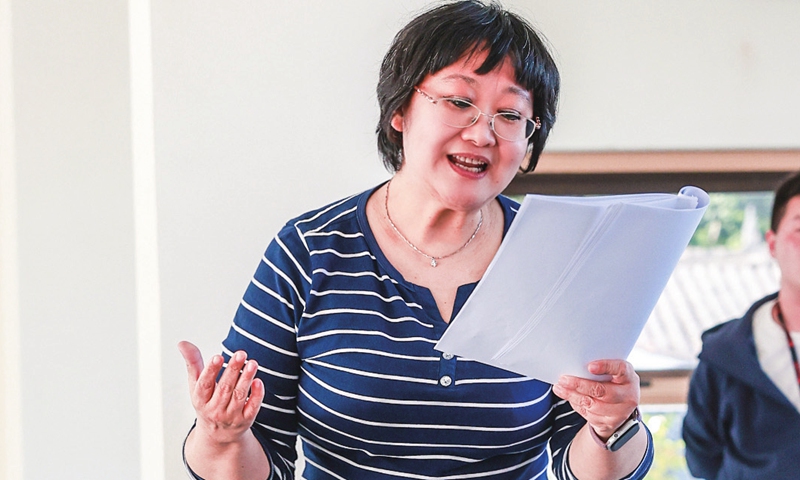
Luo Tong Photo: Courtesy of Luo Tong
When she was a child, Luo Tong did not read the books in her grandfather's study. She copied them.
Just as her father had done as a child, she helped her grandfather, renowned translator Luo Niansheng, transcribe his manuscripts, copying those long Greek names and passages from ancient tragedies. Even in his later years, as his eyesight deteriorated, Luo Niansheng continued working on his translation of Homer's Iliad.
For Luo Tong, however, those early encounters with Greek literature were still largely beyond her understanding. At that age, she was simply too young to grasp the world contained in the words she was copying.
For years, Greek literature was simply part of her family life. Only later did she begin to read it for herself and devote her life to studying the ancient Greek world.
Looking back, she realizes that what began almost unconsciously in her grandfather's study gradually became the path she would follow for life.
Seeds planted
The seeds of her interest in Greek literature were planted in childhood, though she did not recognize them at the time. They began to take root in 1985 or 1986, when her father, theater director Luo Jinlin, staged Oedipus Rex at the Central Academy of Drama in Beijing. Sitting in the audience, Luo Tong was struck for the first time by the power of Greek tragedy. The texts she had grown up copying suddenly came alive on stage.
The words she had once copied without much thought suddenly took on a different meaning. Seeing the tragedy performed on stage made her realize what those texts could convey beyond the page.
She returned to the books she had copied as a child and began reading them for herself. She read her grandfather's translations, wrote plays of her own and gradually developed a deeper interest in Greek literature.
Eventually, that interest took her to Greece. She spent nearly three decades there, reading Greek tragedies in the original Greek alongside modern drama, while gaining a deeper understanding of how contemporary Greek scholars interpreted and discussed their ancient heritage.
The experience broadened her understanding of Greek literature and gave her a different perspective as a Chinese scholar studying it.
After returning to China, her reading entered a new phase.
She began retranslating Greek tragedies, believing that the translations produced by her grandfather's generation, while highly literary, were not always suitable for contemporary theater. A sentence that reads beautifully on the page may sound unnatural when spoken by an actor, she felt.
Reading also became something she wanted to share.
Nowadays, Luo Tong gives lectures, reads Plato's Symposium aloud and recommends books to students who are curious about Greek culture but do not know where to begin.
She encourages readers to approach ancient Greek literature through its major works and the ideas surrounding them, from Homer and the great tragedians to Aristophanes and Aristotle's Poetics, rather than treating the ancient texts as isolated works.
Beyond that, she has also sought to make ancient Greek civilization more accessible to Chinese readers, including through her work on In Search of the Greeks and her endorsement of How to Fit All of Ancient Greece in an Elevator, which she praised for presenting the subject in language that contemporary readers can easily understand.
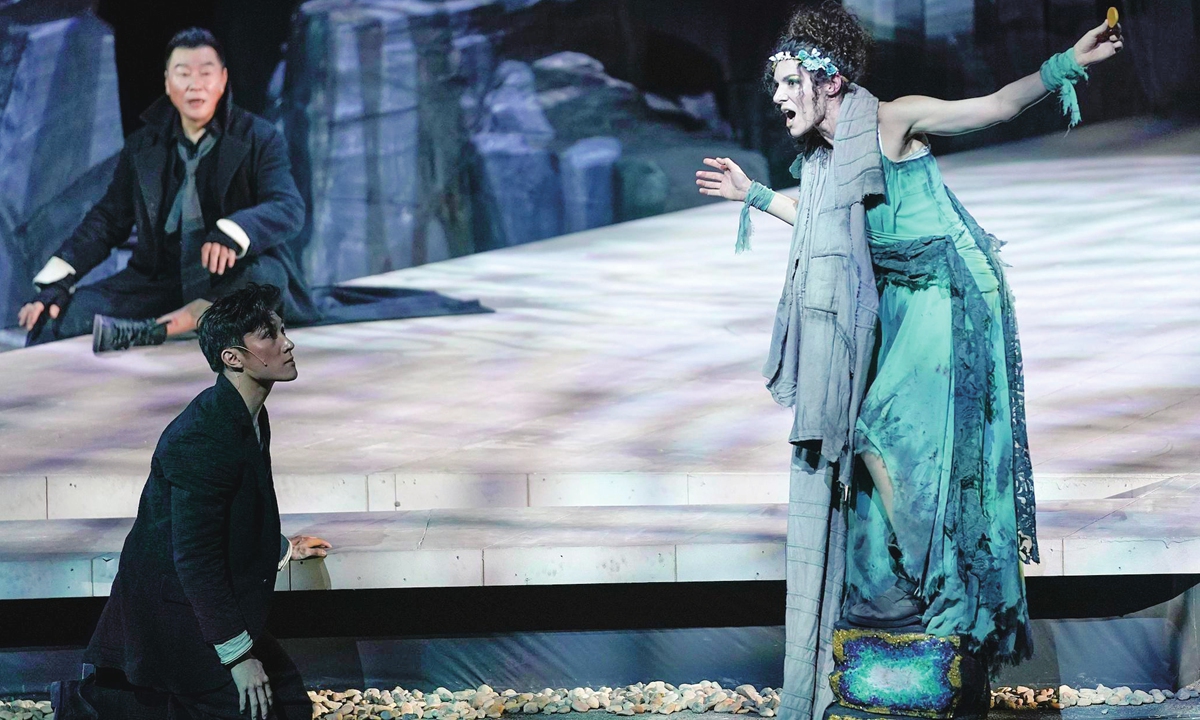
The Chinese-Greek bilingual drama Agamemnon, jointly produced by the National Theatre of China and the National Theatre of Greece, is staged in Beijing. Photo: VCG
Searching for direction
Among the ancient works she especially recommends is Homer's The Odyssey, a work she sees as much more than an adventure story about a hero trying to find his way home.
In her lectures, she has used The Odyssey to introduce readers to its colorful cast of gods, heroes and women, from the Sirens and Circe to Calypso and Penelope, showing how these characters bring the ancient Greek world to life.
With Christopher Nolan's The Odyssey drawing attention in China this summer, Luo Tong has been thinking about Ithaca, the homeland to which Odysseus spends years trying to return.
What matters, she said, is not simply reaching Ithaca. It is everything that happens on the way home.
"Life is full of different Odyssey periods," she told the Global Times. The phrase does not describe a particular age. Instead, it refers to those stretches of life when people are searching for direction, moving through uncertainty and discovering who they are.
She sees herself as being in one of those periods even now. And she is not in a hurry to leave it.
"I really enjoy my Odyssey period," she said.
Her understanding of The Odyssey is also reflected in her openness to modern adaptations. She welcomes films, television productions and social media as ways of bringing ancient Greek culture to wider audiences.
The popularity of Nolan's film in China, she believes, shows that the questions at the heart of Greek mythology — fate, suffering, choice and human nature — can resonate across cultures.
Luo Tong does not regard adaptation as a betrayal of the original, either. Homer's epics themselves were shaped through generations of oral transmission and reinterpretation. For her, allowing an ancient story to be seen through a contemporary lens is part of how a classic remains alive.
She and her students are now rehearsing a new production of Agamemnon, incorporating contemporary themes including anti-war ideas.
RELATED ARTICLES