Silk Road Maritime Forum kicks off in Xiamen with focus on shared growth, open cooperation
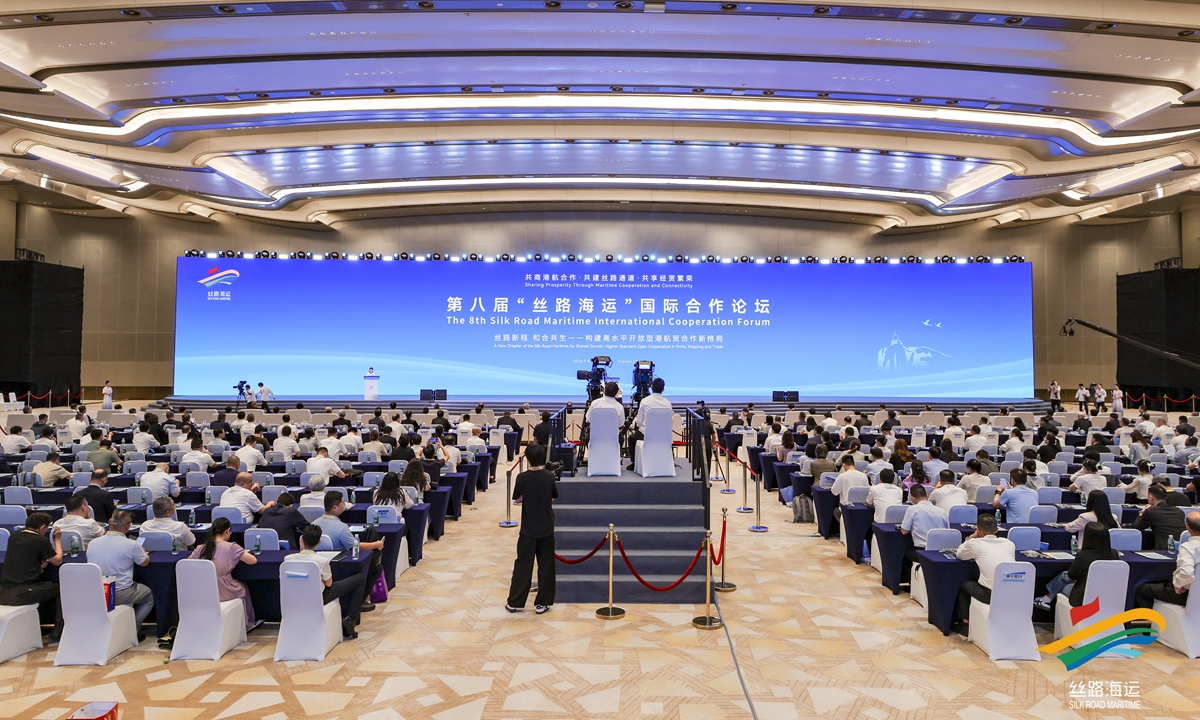
The 8th Silk Road Maritime International Cooperation Forum kicks off in Xiamen, East China's Fujian Province, on September 8, 2026. Photo: Courtesy of Fujian Provincial Port Group Co
The 8th Silk Road Maritime International Cooperation Forum opened in the coastal city of Xiamen, East China's Fujian Province on Tuesday. Domestic and foreign officials and industry insiders agreed that in the face of multiple challenges including geopolitical risks and the green transition, all parties in the shipping industry should strengthen connectivity and open cooperation, while actively embracing the valuable certainty and development opportunities that the Chinese market brings to the world.
The forum, held under the theme of "A new chapter of the Silk Road Maritime for shared growth: higher-standard open cooperation in ports, shipping and trade," brings together more than 1,800 representatives from 19 countries and regions to discuss deeper cooperation in ports, shipping, logistics, trade, finance and technology.
At the opening ceremony, speakers discussed topics ranging from global supply chains and maritime connectivity to port development and trade, highlighting the importance of international cooperation as global trade faces mounting headwinds — from trade tensions to supply chain fragmentation.
Gu Jinshan, president of the China Ports and Harbours Association, said that China's port industry has demonstrated strong commitment to serving the real economy and promoting coordinated development across ports, shipping, and trade in recent years. It has achieved substantial results and laid a solid waterborne transport foundation for China's high-level opening-up and steady economic growth.
Ren Weimin, director of the Transport Division of the United Nations Economic and Social Commission for Asia and the Pacific, stressed the need to enhance the resilience of maritime connectivity in the Asia-Pacific region and safeguard supply chain stability, to guard against the effects of geopolitical crises and climate change on the global maritime transport system.
Zhang Ruosi, a counselor at the Trade in Services and Investment Division of the World Trade Organization, analyzed the new challenges that trade fragmentation poses to shipping, emphasizing that open and facilitative trade policies, together with stronger shipping connectivity, are effective tools for addressing supply chain fragmentation.
Amid rising geopolitical uncertainty, which has increased concerns over the security of major maritime routes and longer transport times, logistics costs and route-planning risks, participants agreed that the development of Silk Road Maritime must focus not only on efficiency, but also on resilience.
A major highlight of the forum was the official launch of the Silk Road Maritime Arctic route meteorological routing service, jointly developed by the China Meteorological Administration and the Silk Road Maritime Association.
The service uses Fengyun meteorological satellites to build an Arctic sea-ice observation network and combines numerical forecasting with artificial intelligence (AI) algorithms to provide 15-day daily sea-ice forecasts and polar cyclone monitoring, offering decision support for safe navigation in polar waters, according to the organizers.
Chen Zhiping, chairperson of the Fujian Provincial Port Group Co, which is the forum's organizer, told the Global Times that the company has a partnership with the Xiamen meteorological bureau to develop an AI-powered Maritime Silk Road port meteorological risk intelligent agent. The system provides a centralized display of meteorological risks for 58 Chinese and foreign ports, integrating key information such as risk levels, distances from the centers of typhoons, and whether a port is open or closed to shipping.
"This is the first of its kind internationally," Chen said. "It enables ports, shipping, trade, insurance and other upstream and downstream sectors to quickly grasp conditions across multiple ports, significantly reducing the cost of coordinated decision-making." Chen added that the group will continue to improve the intelligent agent and expand connectivity to more Belt and Road Initiative (BRI) ports.
Addressing the forum, Minister of Foreign Affairs and Foreign Trade of Jamaica Johnson Smith emphasized the critical importance of secure and uninterrupted maritime trade, highlighting China's important role in this regard.
"China can continuously contribute to enhancing the resilience of international supply chains while promoting international cooperation. Through strong multilateral trade cooperation and Silk Road Maritime-based collaboration, we can jointly build a more effective, secure, sustainable and resilient future of prosperity and development," she noted.
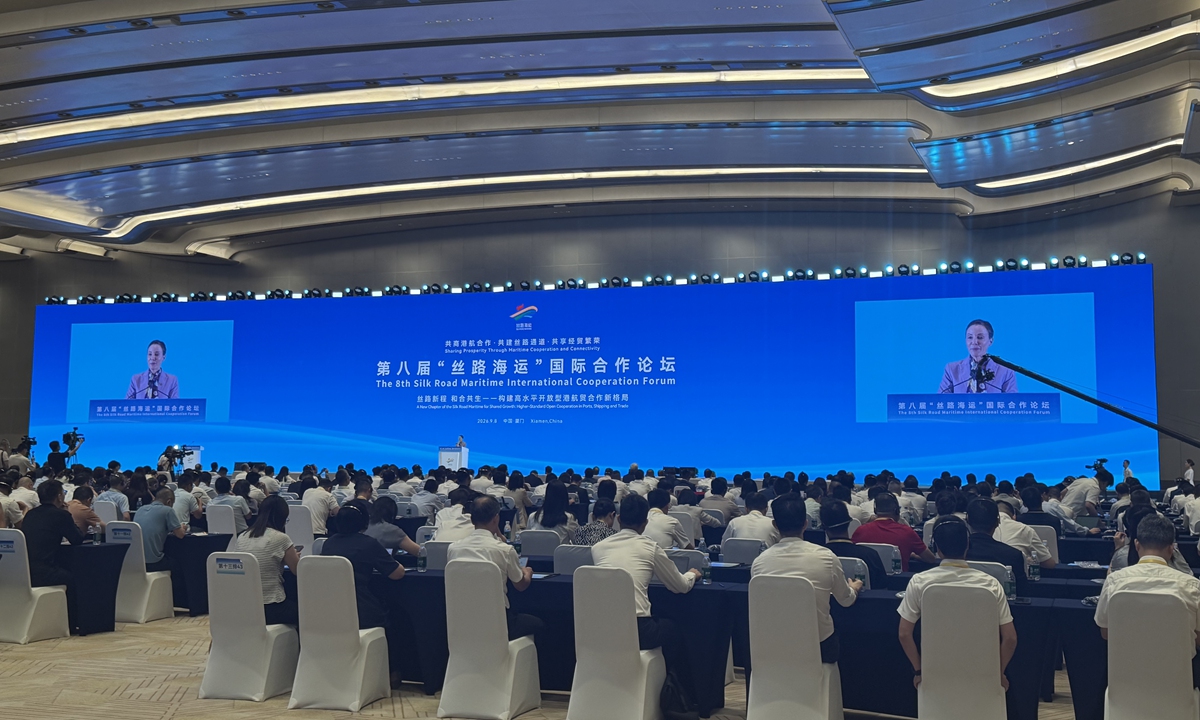
The 8th Silk Road Maritime International Cooperation Forum kicks off in Xiamen, East China's Fujian Province, on September 8, 2026. Photo: Zhang Weilan/GT
Permanent Secretary of Nigeria's Federal Ministry of Industry, Trade and Investment Chris Osa Isokpunwu stated that the forum's theme aligns closely with the current direction of Nigeria's economic development.
"For us, the Silk Road Maritime is not just about the movements of ships and cargo; it is more about how to better connect us with the global economy, attract more investment, and create sustainable development pathways to seek well-being for our people," he said, adding that Nigeria hopes to strengthen the technical capabilities of its local workforce through Silk Road Maritime cooperation and learn from China's remarkable development experience.
Jan Van der Borght, representative of the Antwerp-Bruges Port Authority, told the Global Times on Tuesday that this forum, together with the Silk Road Maritime Association, will be a very good cooperation mechanism and will also set a good example for cooperation between Europe and China.
He also mentioned that China's economic development is reflected not only in increased cargo volumes but also in the transformation of industrial value. China's AI, intelligent-driven technologies and products will open up the European market, and European ports must also transform toward digitalization to better promote China-Europe trade.
The forum also saw the launch of the Hunan-Fujian Silk Road Maritime sea-rail intermodal corridor, a move expected to connect inland China more efficiently with seaports on the coast. The corridor will help open the most convenient export route for central China, cutting logistics costs by 20 percent to 30 percent and shortening transport times by five to seven days.
In addition, the forum released the report on the integrated development of ports, shipping, and trade under the Silk Road Maritime Initiative, the blue book on Silk Road Maritime 2025-2026, the 2026-2028 Silk Road Maritime port-shipping development support policy and the Arctic waterway ship navigation collaborative service system.
A total of 12 new Silk Road Maritime routes were announced at the forum, 15 new members joined the association, and 11 cooperation projects were signed on-site, the Global Times learned.
At the forum's roundtable on Tuesday, a new initiative involving nearly 30 representatives of domestic and overseas ports, shipping lines, logistics firms, technology companies, and research institutions was adopted. It outlines five areas of cooperation: expanding connectivity networks, deepening the integration of port-shipping-trade resources, advancing digital and smart empowerment, promoting green development, and building a shared ecosystem for prosperity.
As global trade continues to evolve, China is accelerating efforts to integrate ports, shipping, and trade through more efficient and intelligent logistics networks. A key platform in this push is the Silk Road Maritime, the country's first comprehensive international logistics service platform centered on maritime shipping under the BRI.
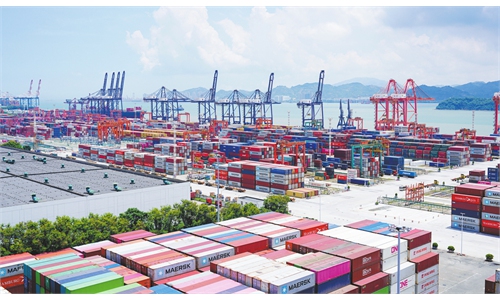
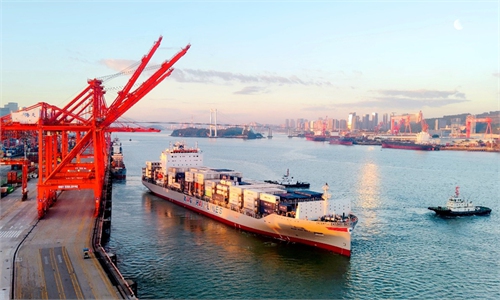
Launched in South China's Fujian Province in 2018, Silk Road Maritime has expanded rapidly. The number of shipping routes making up the Silk Road Maritime network stands at 160, connecting 153 sea ports across 50 countries and regions, and 393 members across industries including shipping, energy, manufacturing and the internet.
Zhang Jingquan, a professor at the School of International Relations of Jinan University, told the Global Times on Tuesday that after years of development, the Silk Road Maritime is expected to provide strong support for high-quality BRI cooperation and the high-quality development of the marine economy.
It has evolved into an important platform for opening up to the outside world, with growing strengths in route organization, port coordination, logistics services and digital empowerment.
Forum organizers said that the platform will further integrate international resources and explore new models linking ports, cities, industries and trade, with the goal of building a smarter and more resilient maritime cooperation ecosystem.
RELATED ARTICLES