ARTS / CULTURE & LEISURE
2,500-year-old settlement unearthed in East China, sheds light on life in ancient Yue Kingdom
Photos: Courtesy of Zhejiang institute of cultural relics
Chinese archaeologists have uncovered a wealth of artifacts and remains at a 2,500-year-old settlement in Shaoxing, East China's Zhejiang Province, offering new clues to the social organization and water management of the ancient Yue Kingdom, which preceded the Qin Dynasty (221 BC-207 BC).The Nanshan Site, located in Yuecheng district of Shaoxing, is the largest Eastern Zhou Dynasty (770BC-256BC) settlement site discovered so far in the Shaoxing area. Shaoxing is believed to have been the capital of the ancient Yue State.
Covering about 120,000 square meters, the site contains cultural remains dating mainly to the Eastern Zhou period. Archaeological excavations at the site began in November 2021 and have now been completed after four and a half years of work.
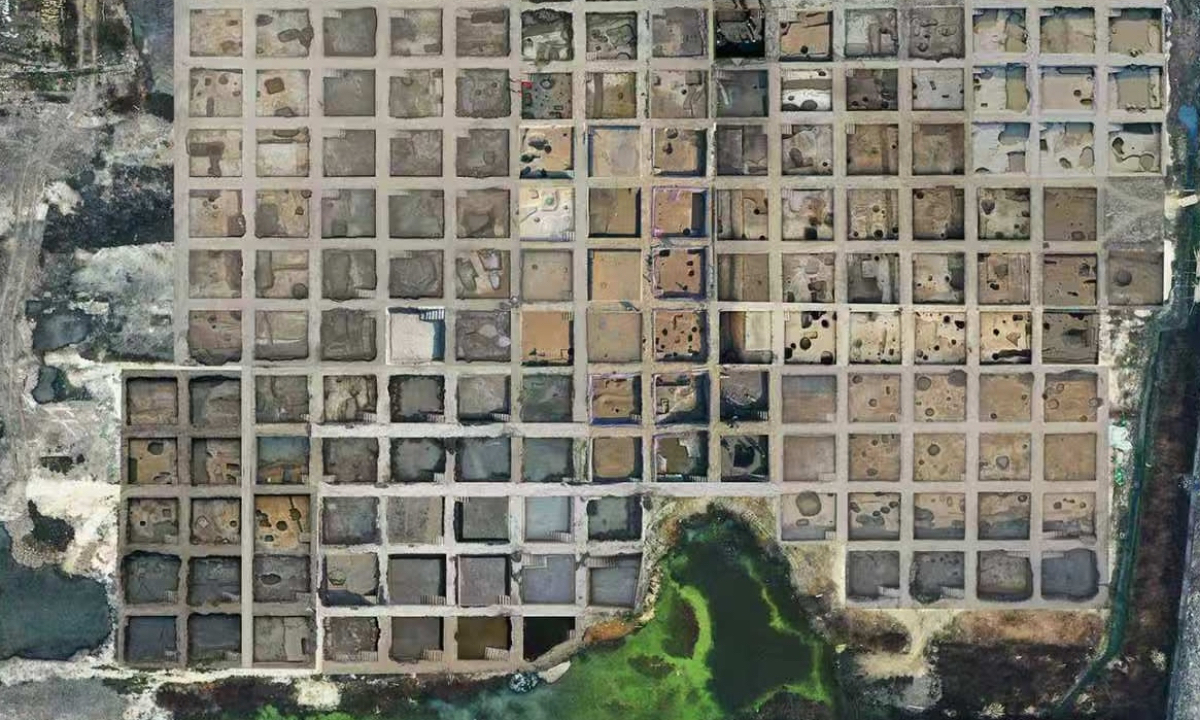
The excavation uncovered an area of 33,800 square meters, revealing seven loess platforms separated by ancient waterways, 11 house foundations, 2,296 ash pits, 327 ditches and 18 wells, according to Xu Xinmin, a researcher at the provincial institute of cultural relics and head of the excavation project.
The findings have helped archaeologists piece together the layout of a large settlement located near the capital of the Yue Kingdom, more than 2,500 years after it was built.
One of the site's most distinctive features is the combination of raised earthen platforms and an interconnected waterway system. The waterways separated and defined different platforms, with many running along north-south and east-west axes before connecting to a river on the eastern side of the site. The east-west waterways are about 10 to 20 meters wide, while the north-south waterways are about 5 meters wide, forming a three-level water network inside and outside the settlement.
Photos: Courtesy of Zhejiang institute of cultural relics
Rows of wooden stakes were found at waterway intersections and along the edges of the platforms, Xu said. Their distribution and alignment suggest that the ancient inhabitants used them to control waterways and manage water resources, providing evidence of the water-management practices of the Yue Kingdom.
The wells were relatively uniform in size, measuring about 1 to 1.5 meters in diameter and about 2 meters deep. They were divided into two main types: earthen wells and bamboo-lined wells, the latter featuring cylindrical well walls woven from bamboo and willow branches.
The excavations yielded a wide range of artifacts, including large quantities of pottery and bronze objects, along with smaller quantities of stone and lacquerware. Archaeologists also recovered abundant plant seeds and animal bones.
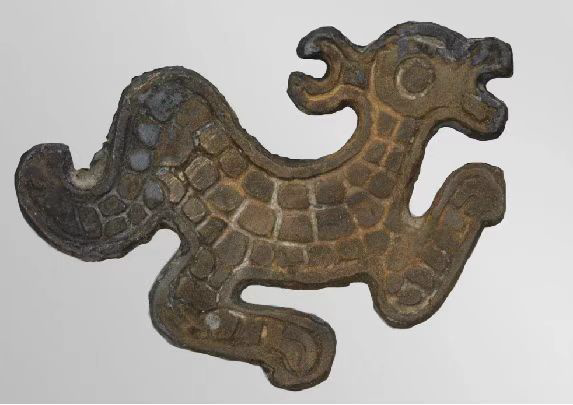
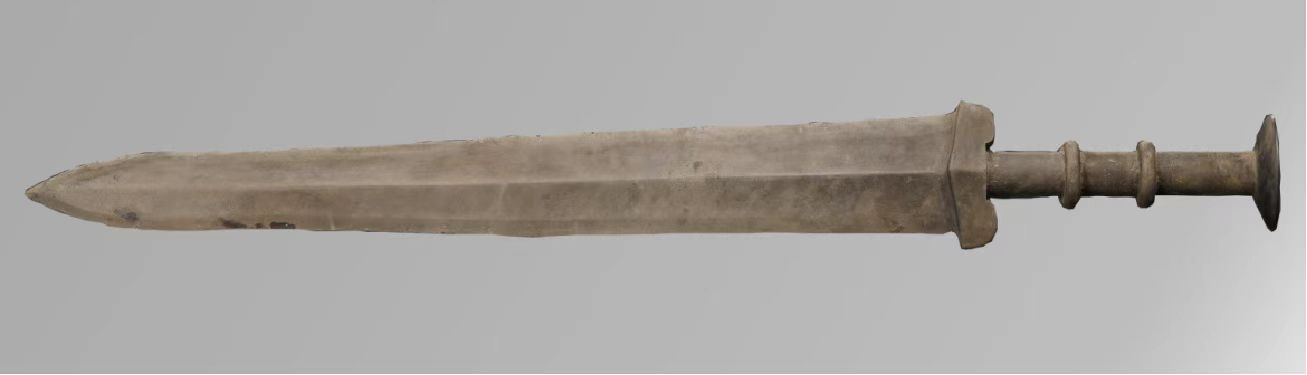
The bronze finds are particularly diverse, including weapons, musical instruments, agricultural implements, tools, and daily-use objects. Archaeologists also found two small bronze ding ritual vessels in the distinctive Yue style, as well as a number of dagger-axe-shaped objects.
Among the artifacts, a belt hook featuring finely engraved figures of people and animals stands out for its detailed design. The engraving is divided into two scenes, with clear lines depicting figures and animals in motion.
Scientific analysis of lead and tin objects from the site has also provided clues to ancient metal circulation.
Isotope analysis showed that the arsenic-containing lead used at the site came from local sources in Zhejiang, while the raw materials for two tin-rich lead-tin alloy objects are believed to have come from mountainous areas in southern China.
The findings provide new evidence for understanding the Yue Kingdom's exploitation and use of local lead resources during the early Warring States Period (475BC-221BC), as well as the movement of lead and tin materials between southern China and the lower reaches of the Yangtze River, Xu told the Global Times.
Archaeologists also recovered a large quantity of plant remains, including crops and weeds, through flotation and sorting. They included carbonized rice and millet, as well as seeds from winter melon, peach, Chinese torreya, plum, bottle gourd, kiwifruit, melon, grape and other plants.
According to Xu, the plant remains provide valuable evidence for understanding the subsistence economy and modes of production in the Yue Kingdom period.
The Nanshan Ruins are part of a growing body of archaeological discoveries related to the Yue Kingdom in Shaoxing. Along with other findings in Shaoxing, the Nanshan findings are helping archaeologists reconstruct the social organization of Shaoxing around 2,500 years ago.
They also help fill a long-standing gap in the archaeological study of the Yue Kingdom, where settlement sites have been relatively scarce, providing new material for understanding the kingdom's social structure and way of life, noted Xu.
Photos: Courtesy of Zhejiang institute of cultural relics
RELATED ARTICLES