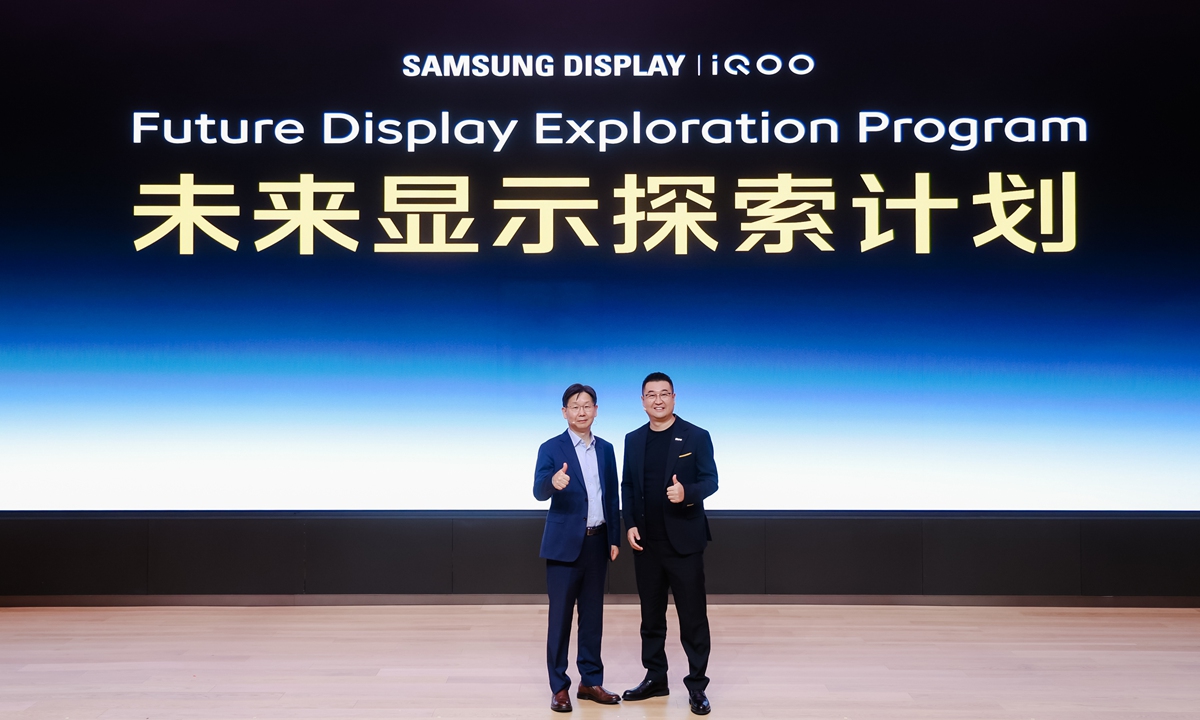
Samsung Display and iQOO
On Monday, Samsung Display and iQOO held a screen technology event at Samsung Display's headquarters in Yongin, South Korea. It was the first time that Samsung Display unveiled its latest technology at its headquarters jointly with a smartphone brand. At the event, the two companies announced that they will work together to build "the world's best screen." Among global brands currently using Samsung Display's flagship light-emitting material, iQOO has become the third, after Apple and Samsung — cementing a "big three" landscape in the global high-end screen phone market. The smooth, crystal-clear experience delivered by the 2K 165Hz Samsung Everest Screen also gives "the world's best screen" a more tangible meaning. More fundamentally, the cooperation means Chinese companies are finding their place on the global map of high-end display technology — moving from "participants" to "definers."
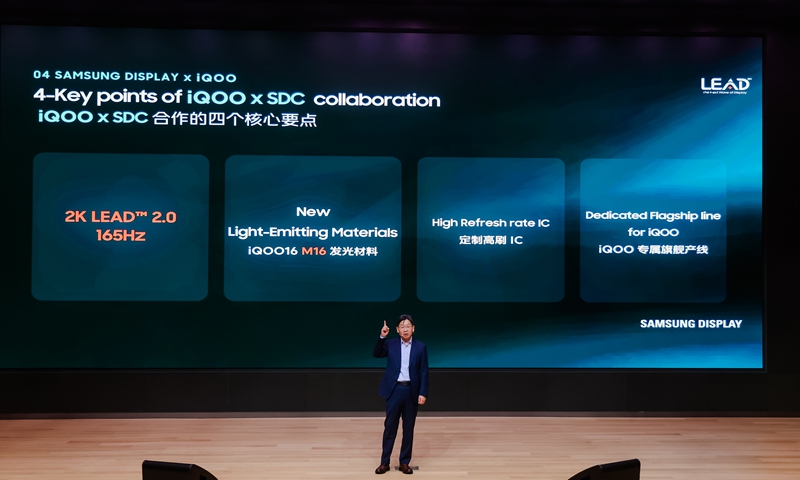
At the heart of the announcement is the 2K 165Hz Samsung Everest Screen that the iQOO 16 will debut globally. According to Luo Feng, vice president of products at iQOO, the screen was jointly defined, jointly engineered and jointly mass-produced by iQOO and Samsung Display, using Samsung's latest M16 light-emitting material and 2K LEAD 2.0, with iQOO deeply involved in the research, development and calibration of the light-emitting material, panel, IC, driver and manufacturing processes.
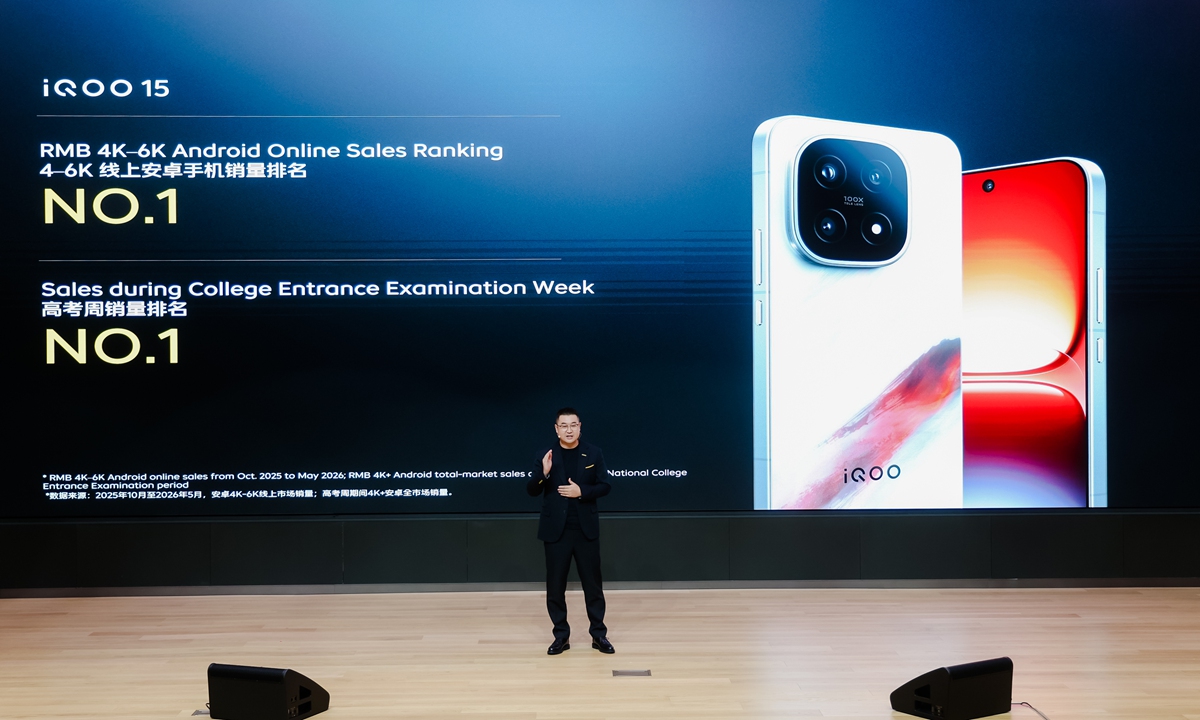
Luo Feng, vice president of products at iQOO
High definition, high refresh rate and low power consumption have long been a "single-choice" trade-off in the industry: a 2K panel must drive more than 9.12 million sub-pixels; at 165Hz, each frame leaves only about six milliseconds of charging response time; and power consumption still has to stay low — an equation most players have found impossible to solve. iQOO chose to venture into uncharted territory and turn this "single-choice" dilemma into an "all-choice" achievement: achieving 2K resolution, a 165Hz refresh rate and low power consumption at the same time..
The answer lies in the synergy of underlying technologies. Samsung's latest M16 light-emitting material delivers higher luminous efficiency, consuming less power at the same brightness; while the 2K LEAD 2.0 polarizer-free technology replaces the traditional polarizer with a nano-lithographic filter film, greatly improving light transmission efficiency and further cutting power consumption. Together, they make 2K at 165Hz and the industry's lowest power consumption achievable at the same time.
Ultimately, the screen of the iQOO 16 delivers industry-leading performance in image quality, smoothness and power efficiency simultaneously, making a 2K display look more fluid and clear than ever and giving users a premium viewing experience that is bright, crisp and dynamically sharp.
This was clearly no ordinary product warm-up. The signal it sends is that the power to define global high-end display technology is opening up from a few giants to more participants, and Chinese companies represented by iQOO are playing an increasingly important role in this shift.
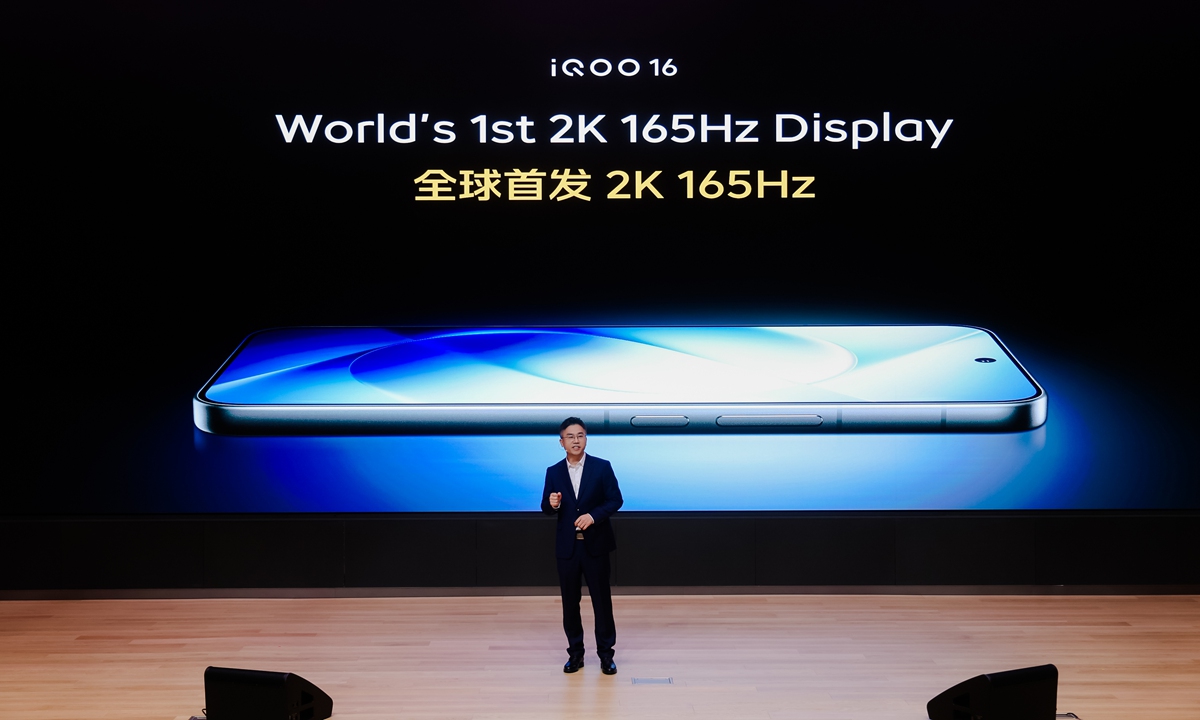
Li Wenxue, head of screen planning at iQOO
In the past, the last thing Chinese brands lacked in the global high-end technology supply chain was scale. But scale only buys a seat at the table — it does not buy the power to define. Becoming a "definer" requires deep understanding of user scenarios, and the ability to translate that understanding into technical requirements and final products. iQOO's path in high-end screen technology is a case in point. HJ Lee, EVP and head of the product planning and marketing team at Samsung Display, said the technologies unveiled that day were not completed by Samsung Display alone. "The deep technical cooperation between the two companies, which began with the iQOO 15, has been further developed in this generation of products. Whenever we encountered difficulties, the iQOO team would say, 'Let's find a way together — it will always get solved,'" Lee said. As a result, the panel changed, the IC changed, the material changed, and the driving approach changed together. Li Wenxue, head of screen planning at iQOO, said Samsung Display excels at pushing display technology to its limits, while iQOO excels at turning technology into experiences users truly need. It is this combination of strengths that has turned 2K at 165Hz from a high-spec laboratory parameter into a top-tier flagship screen that is easy to use, stable and ready for mass production.
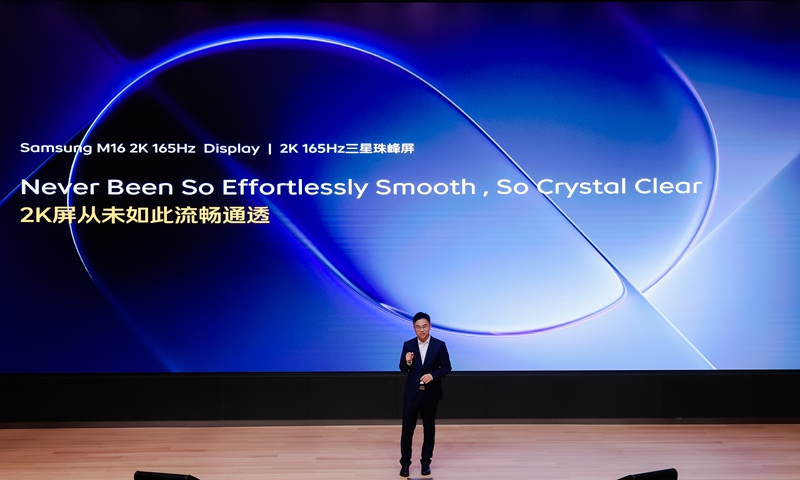
Li Wenxue, head of screen planning at iQOO
HJ Lee, EVP and head of the product planning and marketing team at Samsung Display
Getting to the position of "co-definer" with Samsung Display was no overnight achievement. Founded less than eight years ago as an emerging Chinese smartphone brand, iQOO has invested consistently in high-end screen technology. Over the past eight years, it has gone all-in on gaming performance, turning users' real needs on the gaming "battlefield" into breakthroughs in display technology: from the iQOO 8 Pro debuting a 2K screen, to the iQOO 13 launching the first-generation Everest Screen, to the iQOO 15 debuting the industry's first M14 light-emitting material and ranking first in Android smartphone sales in the fiercely competitive 4,000-6,000 yuan price segment. Now, with the iQOO 16, iQOO and Samsung Display have moved from joint definition to joint R&D, and from laboratory breakthroughs to stable mass production, bringing the "Everest" of screens to users together.
It is fair to say that iQOO, once a junior player in the smartphone industry, is growing into an emerging force that cannot be ignored in the high-end market. Currently, the three global brands using Samsung's flagship light-emitting material are Apple, Samsung and iQOO — a sign that iQOO has entered the core circle of global high-end display technology.
With the iQOO 16 about to be released, what ordinary users will experience is: the clarity brought by 2K resolution, the responsiveness brought by a 165Hz refresh rate, the visibility brought by industry-leading brightness, and the endurance brought by lower power consumption. For Chinese tech companies, this is not just an upgrade of a screen, but a change of role on the global frontier of tech innovation — from following and participating to jointly defining and co-leading.
