Zhuque-2E rocket launches 10 satellites into space, as China’s private rocket completes 1st large-scale satellite internet constellation deployment
By Du Qiongfang and Published: Sep 15, 2026 08:48 PM

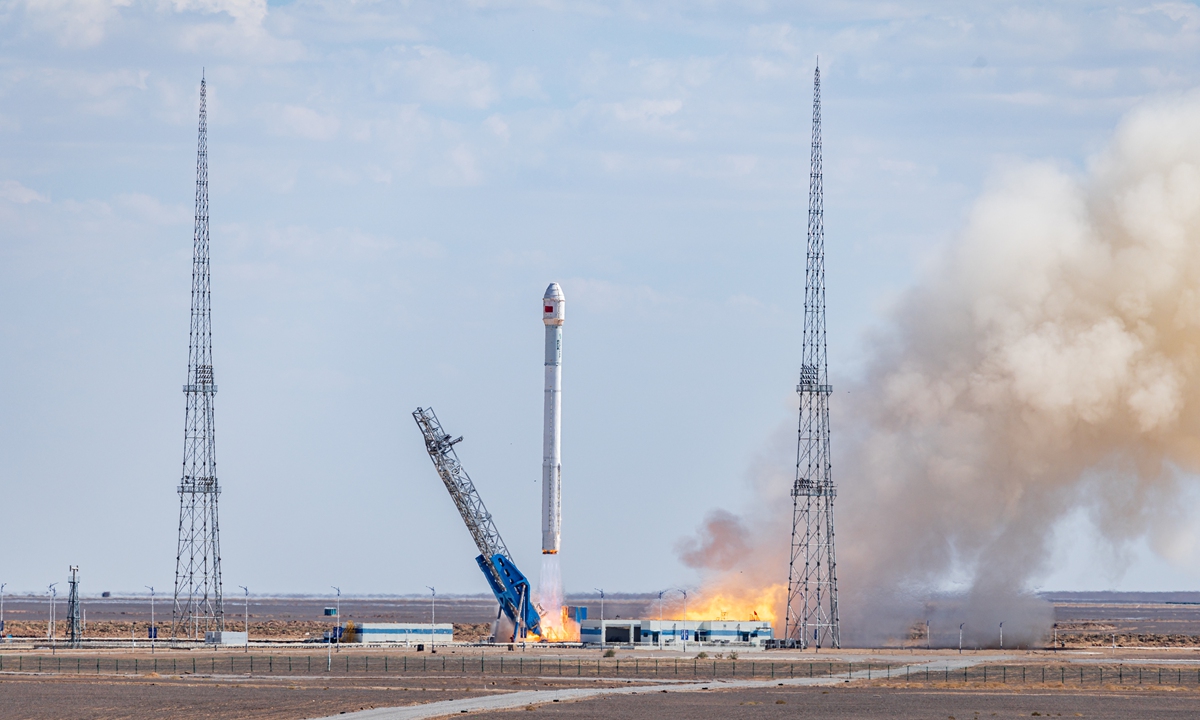
A Zhuque-2E Y7 carrier rocket is successfully launched from the Dongfeng commercial space innovation pilot zone in Northwest China on Tuesday. Photo: Courtesy of LandSpace
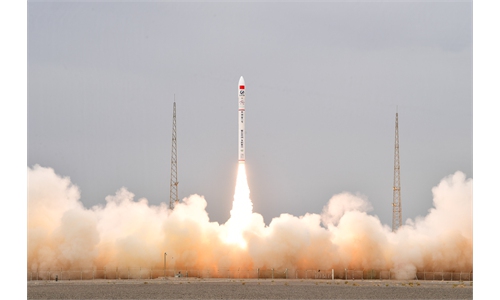
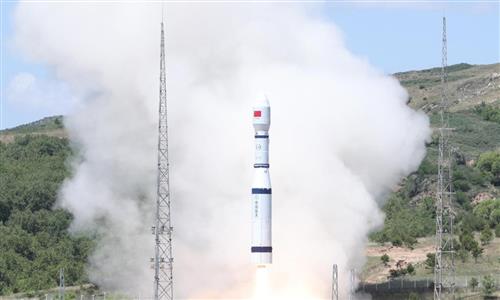
China on Tuesday successfully launched a Zhuque-2E Y7 carrier rocket from the Dongfeng commercial space innovation pilot zone in Northwest China, sending 10 Qianfan Constellation satellites into preset orbits. This marks the first time a Chinese private rocket has been tasked with the deployment of a large-scale satellite internet constellation, underscoring the significant role of private space companies in the development of national-level space infrastructure.The carrier rocket developed by Beijing-based private aerospace firm LandSpace ignited and lifted off from the launch pad at the Dongfeng commercial space innovation pilot zone at 2:26 pm on Tuesday, successfully placing the 19th batch of satellites for the Qianfan Constellation, China's first giant low-orbit commercial satellite constellation developed by the Shanghai-based SpaceSail, into their preset orbits, the Global Times learned from the developer of the carrier rocket on Tuesday.
According to Ma Haijing, general manager of the marketing department of LandSpace, the mission marks the first large-scale satellite internet constellation deployment mission undertaken by a private Chinese commercial space company, signaling that China's private commercial space sector has officially entered a new stage of batch constellation deployment.
The mission successfully carried out the entire engineering process, including coordinated multi-satellite launch operations, batch satellite deployment, and the passivation and deorbiting of the rocket's final stage, generating valuable data for high-density constellation deployment while balancing deployment efficiency with space debris mitigation requirements, meaning that private space companies have become deeply involved in the development of national-level space infrastructure, Ma told the Global Times on Tuesday.
According to Ma, the Zhuque-2 series had completed nine flights as of May, making it the most extensively flight-tested liquid-propellant rocket developed by a Chinese private space company. The successful deployment of the 10 communications satellites into a 900-kilometer orbit highlights the improved variant's advanced capabilities in launch capacity, propulsion, stage separation and precision guidance and control, Ma said.
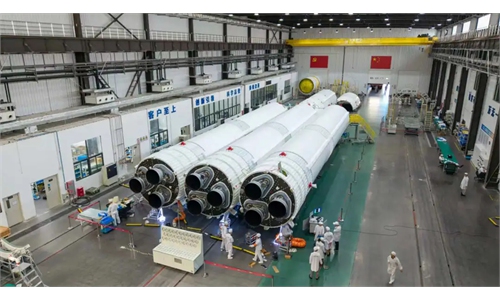
With a two-stage configuration but payload capabilities comparable to those of a three-stage rocket, the Zhuque-2 improved variant is one of LandSpace's main launch vehicles and is being developed alongside the company's reusable carrier rocket Zhuque-3. Extensive technology and component sharing between the two variants is expected to cut costs and speed up development, the Science and Technology Daily reported on Tuesday.
Ma said that the two types of rockets are designed to meet different mission requirements at different stages and are not simply substitutes for each other. The Zhuque-2 improved variant is a key vehicle for LandSpace's current regular commercial launch missions, while the Zhuque-3 is designed to meet future demand for greater payload capacity and higher launch frequency, according to Ma.
As China's low-orbit satellite internet sector enters the stage of large-scale constellation deployment, satellite development, mass production and launches are becoming increasingly integrated across the industry, Ma said, noting that satellite constellation deployment is an ongoing process that places higher demands on launch vehicles in terms of launch frequency, mission coordination and sustained supply capacity.
Satellite internet constellation deployment is not simply about loading more satellites onto a rocket, but demands close coordination and meticulous management throughout the entire mission, Ma said.
For this mission, LandSpace conducted extensive preparations covering rocket-satellite interfaces, flight procedures, ground testing and launch operations. Extensive ground testing and tighter system coordination help manage the mission's complexity in advance and ensure stable execution of each stage, Ma said.
RELATED ARTICLES