Illustration Chenxia/GT
As global trade becomes more fragmented due to growing protectionism in the world, ASEAN is taking new steps to make trade across the region increasingly easier.
ASEAN officials recently discussed the preparatory work for the early entry into force of the Second Protocol to Amend the ASEAN Trade in Goods Agreement (ATIGA), also known as the upgraded ATIGA. The move reflects ASEAN's continued efforts to unlock the potential of its regional market.
Home to nearly 700 million people, the region brings together a diverse group of emerging economies, including Vietnam which recorded 8.4 percent year-on-year GDP growth in the second quarter of 2026. The greater opportunity lies in bringing these economies closer together as a massive market, creating new room for trade and growth within ASEAN.
This can be seen in ASEAN's efforts to strengthen trade links within the region. Singapore's Deputy Prime Minister Gan Kim Yong said in a Facebook post on Saturday that bringing the upgraded ATIGA into force earlier would allow goods to move more easily across borders and help businesses access to markets across the whole region. These changes reflect ASEAN's consistent efforts to make its regional market more connected.
The move comes at a time when global trade is facing greater uncertainty, with businesses and economies adjusting to a more complex international trade environment. Against this backdrop, ASEAN's bid to further connect its regional market is a practical path forward, reflecting the opportunities that remain within the region. If the upgraded ATIGA enters into force earlier, it could ramp up trade links not only within ASEAN but also between ASEAN and its economic partners.
China is one of ASEAN's important economic partners. It has remained ASEAN's largest trading partner for 17 consecutive years, while ASEAN has been China's largest trading partner for six consecutive years. As ASEAN works to strengthen connections within its own market, its economic links with other Asian economies are also expanding.
Some observers describe the development of the China-ASEAN free trade area as moving from the "1.0" stage, which centered on goods trade and tariff reductions, to "2.0", which broadened cooperation into services and investment, and "3.0", which extends cooperation into areas such as the digital and green economies. These successive upgrades have helped deepen economic relations between China and ASEAN.
The China-ASEAN free trade arrangement is not an isolated case. More broadly, China, ASEAN and some other Asia-Pacific economies are connected through the Regional Comprehensive Economic Partnership (RCEP), forming part of a wider network of free trade arrangements in the region.
The upgraded ATIGA shows that this network is not fixed, but continues to evolve as economies adapt to new opportunities and emerging technologies.
With some economies around the world turning to more protectionist measures, East and Southeast Asia are continuing to strengthen trade connections. The region has developed an extensive network of free trade arrangements, which continue to evolve facilitated by new industries and emerging technologies.
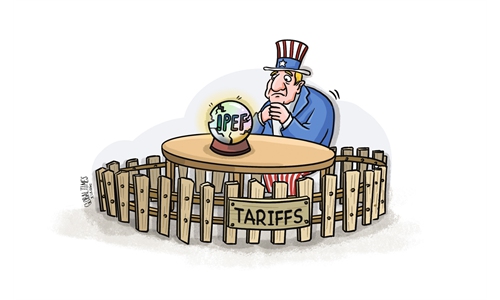
This contrast highlights two different approaches: raising tariffs and trade barriers by certain countries versus liberating trade by strengthening free trade agreements by many others.
Behind the change is a deeper transformation in global supply chains. As many developing economies continue to grow and create larger domestic markets, intra-Asian trade is gaining momentum. In this context, further trade liberalization is becoming increasingly relevant. As some economies turn toward protectionism, more trade opportunities will emerge in Asia.
For ASEAN, deeper trade integration is sure to create additional room for economic growth. The potential benefits of open trade may become more apparent as regional markets become more closely connected and new trade fronts are opened up.
The upgraded ATIGA may be only one part of the broader evolution of the free trade trend in East and Southeast Asia. Amid greater uncertainty in global trade, the direction of this evolution - and the opportunities it may bring - will be worth watching.
The author is a reporter with the Global Times. bizopinion@globaltimes.com.cn
RELATED ARTICLES