PHOTO / CHINA
Relocation, reconstruction project brings better lives to residents in E China's Yellow River floodplain
Published: Sep 21, 2026 09:33 AM
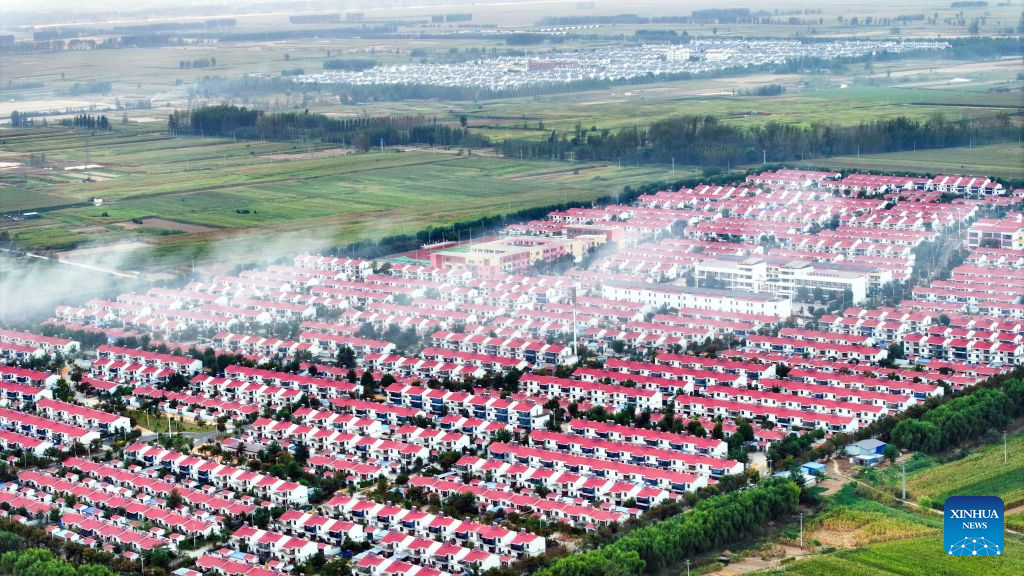
A drone photo taken on Sept. 17, 2026 shows a view of Xingdong New Village of Dongming County in Heze, east China's Shandong Province. The Yellow River, dubbed the Mother River of China, has long nourished the land in Heze, east China's Shandong Province, but recurring floods once posed a persistent threat to residents living on its floodplain. To protect local residents from flooding, a large-scale relocation and reconstruction project was launched in 2017 and completed in 2020.

Some 600,000 residents from the floodplain moved into newly built communities with improved housing and access to kindergartens, community clinics, elderly care centers and public spaces. In recent years, local authorities have also developed agriculture, rural processing and tourism-related industries to create more income opportunities for residents. (Xinhua/Chen Yehua)

A drone photo taken on Sept. 17, 2026 shows a view of Xingdong New Village of Dongming County in Heze, east China's Shandong Province. The Yellow River, dubbed the Mother River of China, has long nourished the land in Heze, east China's Shandong Province, but recurring floods once posed a persistent threat to residents living on its floodplain. To protect local residents from flooding, a large-scale relocation and reconstruction project was launched in 2017 and completed in 2020. Some 600,000 residents from the floodplain moved into newly built communities with improved housing and access to kindergartens, community clinics, elderly care centers and public spaces. In recent years, local authorities have also developed agriculture, rural processing and tourism-related industries to create more income opportunities for residents. (Xinhua/Chen Yehua)

Students attend a class at a school in Liuhe New Village of Juancheng County in Heze, east China's Shandong Province, Sept. 16, 2026. The Yellow River, dubbed the Mother River of China, has long nourished the land in Heze, east China's Shandong Province, but recurring floods once posed a persistent threat to residents living on its floodplain. To protect local residents from flooding, a large-scale relocation and reconstruction project was launched in 2017 and completed in 2020.

Some 600,000 residents from the floodplain moved into newly built communities with improved housing and access to kindergartens, community clinics, elderly care centers and public spaces. In recent years, local authorities have also developed agriculture, rural processing and tourism-related industries to create more income opportunities for residents. (Xinhua/Chen Yehua)

Students attend a class at a school in Liuhe New Village of Juancheng County in Heze, east China's Shandong Province, Sept. 16, 2026. The Yellow River, dubbed the Mother River of China, has long nourished the land in Heze, east China's Shandong Province, but recurring floods once posed a persistent threat to residents living on its floodplain. To protect local residents from flooding, a large-scale relocation and reconstruction project was launched in 2017 and completed in 2020. Some 600,000 residents from the floodplain moved into newly built communities with improved housing and access to kindergartens, community clinics, elderly care centers and public spaces. In recent years, local authorities have also developed agriculture, rural processing and tourism-related industries to create more income opportunities for residents. (Xinhua/Chen Yehua)


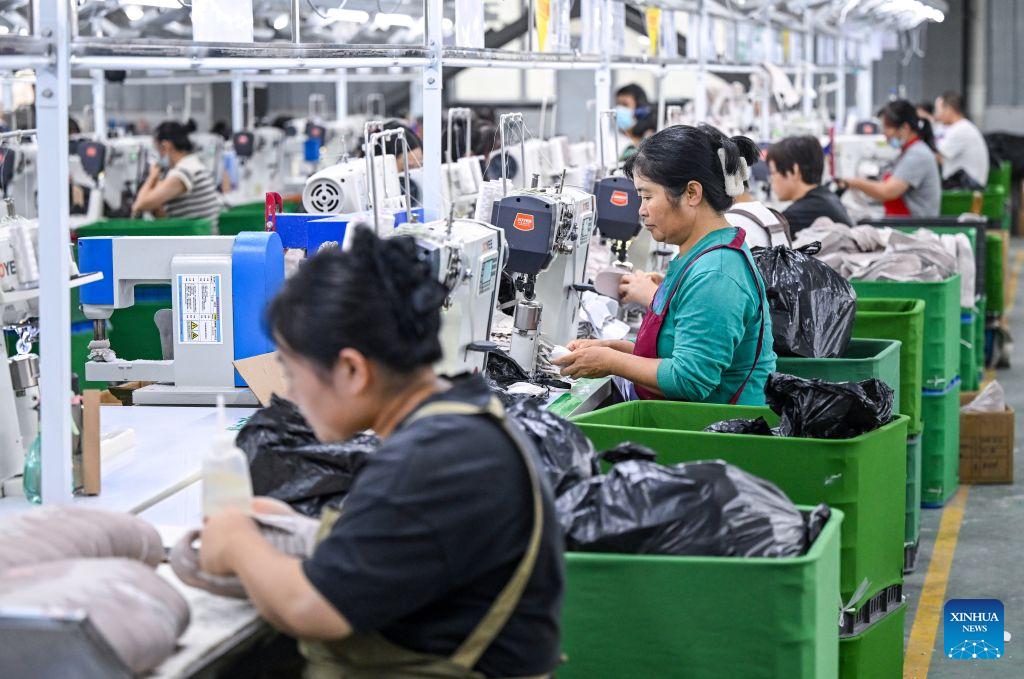
People work at a workshop of a shoe factory in Changxingji Township of Dongming County in Heze, east China's Shandong Province, Sept. 17, 2026. Many neighboring villagers are employed here. The Yellow River, dubbed the Mother River of China, has long nourished the land in Heze, east China's Shandong Province, but recurring floods once posed a persistent threat to residents living on its floodplain. To protect local residents from flooding, a large-scale relocation and reconstruction project was launched in 2017 and completed in 2020.

Some 600,000 residents from the floodplain moved into newly built communities with improved housing and access to kindergartens, community clinics, elderly care centers and public spaces. In recent years, local authorities have also developed agriculture, rural processing and tourism-related industries to create more income opportunities for residents. (Xinhua/Chen Yehua)

People work at a workshop of a shoe factory in Changxingji Township of Dongming County in Heze, east China's Shandong Province, Sept. 17, 2026. Many neighboring villagers are employed here. The Yellow River, dubbed the Mother River of China, has long nourished the land in Heze, east China's Shandong Province, but recurring floods once posed a persistent threat to residents living on its floodplain. To protect local residents from flooding, a large-scale relocation and reconstruction project was launched in 2017 and completed in 2020. Some 600,000 residents from the floodplain moved into newly built communities with improved housing and access to kindergartens, community clinics, elderly care centers and public spaces. In recent years, local authorities have also developed agriculture, rural processing and tourism-related industries to create more income opportunities for residents. (Xinhua/Chen Yehua)


Students clear a blackboard at a school of Liuhe New Village of Juancheng County in Heze, east China's Shandong Province, Sept. 16, 2026. The Yellow River, dubbed the Mother River of China, has long nourished the land in Heze, east China's Shandong Province, but recurring floods once posed a persistent threat to residents living on its floodplain. To protect local residents from flooding, a large-scale relocation and reconstruction project was launched in 2017 and completed in 2020.

Some 600,000 residents from the floodplain moved into newly built communities with improved housing and access to kindergartens, community clinics, elderly care centers and public spaces. In recent years, local authorities have also developed agriculture, rural processing and tourism-related industries to create more income opportunities for residents. (Xinhua/Chen Yehua)

Students clear a blackboard at a school of Liuhe New Village of Juancheng County in Heze, east China's Shandong Province, Sept. 16, 2026. The Yellow River, dubbed the Mother River of China, has long nourished the land in Heze, east China's Shandong Province, but recurring floods once posed a persistent threat to residents living on its floodplain. To protect local residents from flooding, a large-scale relocation and reconstruction project was launched in 2017 and completed in 2020. Some 600,000 residents from the floodplain moved into newly built communities with improved housing and access to kindergartens, community clinics, elderly care centers and public spaces. In recent years, local authorities have also developed agriculture, rural processing and tourism-related industries to create more income opportunities for residents. (Xinhua/Chen Yehua)