10 years on, Torch Innovation Precinct illuminates path for Australia-China sci-tech collaboration
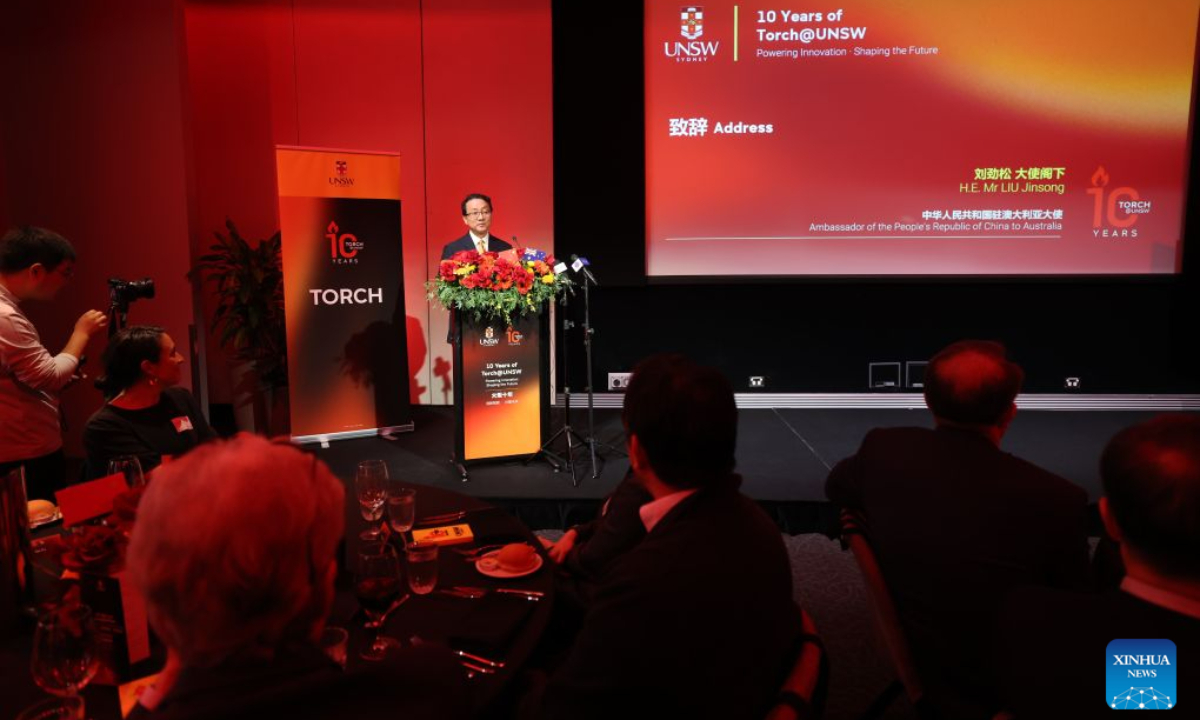
Chinese Ambassador to Australia Liu Jinsong speaks at a gala dinner to celebrate the tenth anniversary of Torch Innovation Precinct in Sydney, Australia, Sept. 22, 2026.(Xinhua/Gong Bing)
Representatives from government, academia, and industry in Australia and China expressed expectations for further Australia-China sci-tech cooperation during a series of events held on Tuesday to celebrate the tenth anniversary of a flagship initiative.Launched in 2016, the University of New South Wales (UNSW)'s Torch Innovation Precinct is the first overseas initiative based on the Chinese Torch innovation model that bridges academic research with industry.
Over the past decade, the precinct has carried out more than 280 cooperative projects in environmental protection, new energy, biomedicine and advanced materials, drawing in over 140 companies and generating a cumulative economic impact of around 140 million Australian dollars (about 99.5 million U.S. dollars), said Chinese Ambassador to Australia Liu Jinsong at a gala dinner on Tuesday evening.
Liu said he hoped the precinct would keep bridging Chinese and Australian research and industry, refine the pathway from lab to market, and help more discoveries leave the laboratory.
"Over the past decade, we've seen just how valuable this approach can be, because the challenges we face today are truly global. As we transition to a more sustainable future, as we protect our water resources and our environment, as we look after our food security, and critically, as we improve health and well-being for our aging populations, this Torch partnership is absolutely pivotal in addressing these shared challenges, not just for Australia and China, but for the entire globe," said Professor Attila Brungs, vice-chancellor and president of UNSW, at the gala dinner.
Brungs cited a UNSW team that has worked with its Chinese counterparts to develop renewable energy-powered desalination units, which can deliver safe drinking water to communities that need it most. The project has already completed one trial in China and three trials in Australia using China-manufactured units.
Combining Australia's research and innovation strengths with China's supply chain and manufacturing capabilities, the Torch Innovation Precinct is "the model of real collaboration" and "real synergy between Australia and China", Scientia Professor David Waite, who led the desalination project, told Xinhua.
Looking ahead, health and biotechnology are among the areas with great potential for collaboration between the two countries, Stephen Rodda, pro vice-chancellor for industry and innovation at UNSW, told Xinhua.
"Reflecting on other opportunities for the future, robotics and autonomous systems for dark factories that produce batteries, solar panels, and other products is such a wonderful thing to see when you actually visit China," he added.
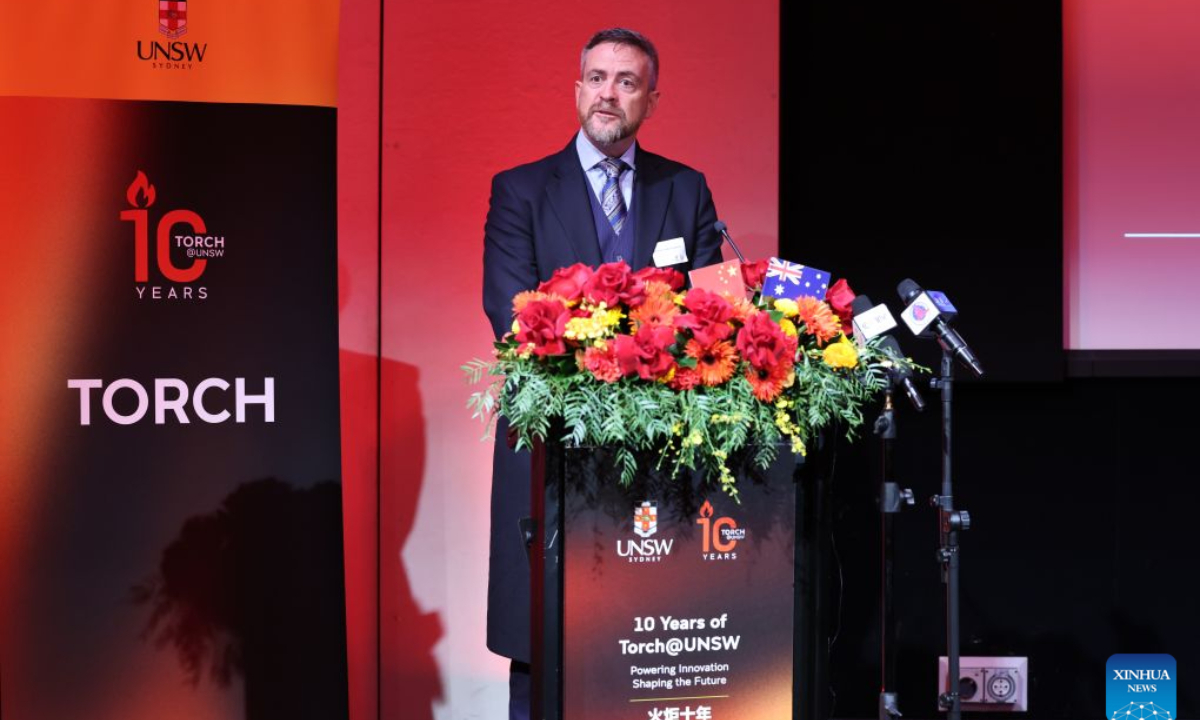
Attila Brungs, vice-chancellor and president of the University of New South Wales (UNSW), speaks at a gala dinner to celebrate the tenth anniversary of Torch Innovation Precinct in Sydney, Australia, Sept. 22, 2026.(Xinhua/Gong Bing)
