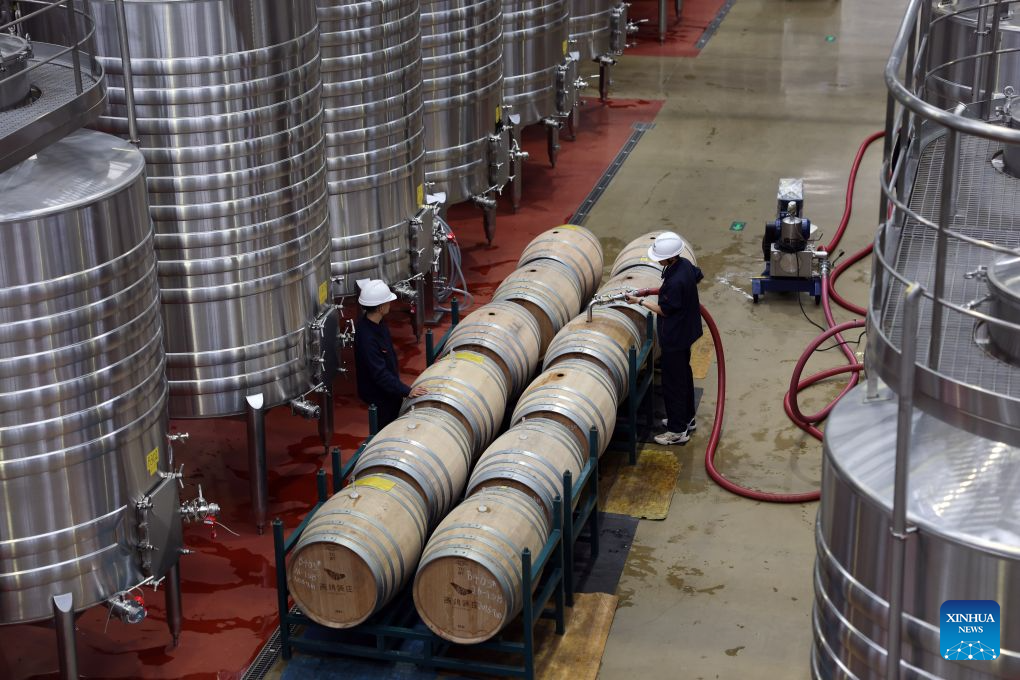
Workers operate at the fermentation workshop of Xige Estate in Qingtongxia, northwest China's Ningxia Hui Autonomous Region, Sept. 23, 2026. With its dry climate and abundant sunshine, Ningxia, particularly the vast area at the eastern foot of Helan Mountain, is widely considered a "golden zone" for viticulture and premium wine production. As of 2025, the region's wine grape planting and development area has reached more than 600,000 mu (40,000 hectares). It is home to 261 wine enterprises, including 130 wineries, and its annual wine bottling volume stands at 140 million bottles, which are sold to more than 40 countries and regions. In recent years, Ningxia's wine industry has built an industrial chain spanning planting, processing, cultural tourism and sales. It receives more than 3.7 million tourist visits annually, generates over 50 billion yuan (about 7.455 billion U.S. dollars) in comprehensive benefits and creates jobs for local residents, injecting vitality into local economic development. (Xinhua/Liu Yun)
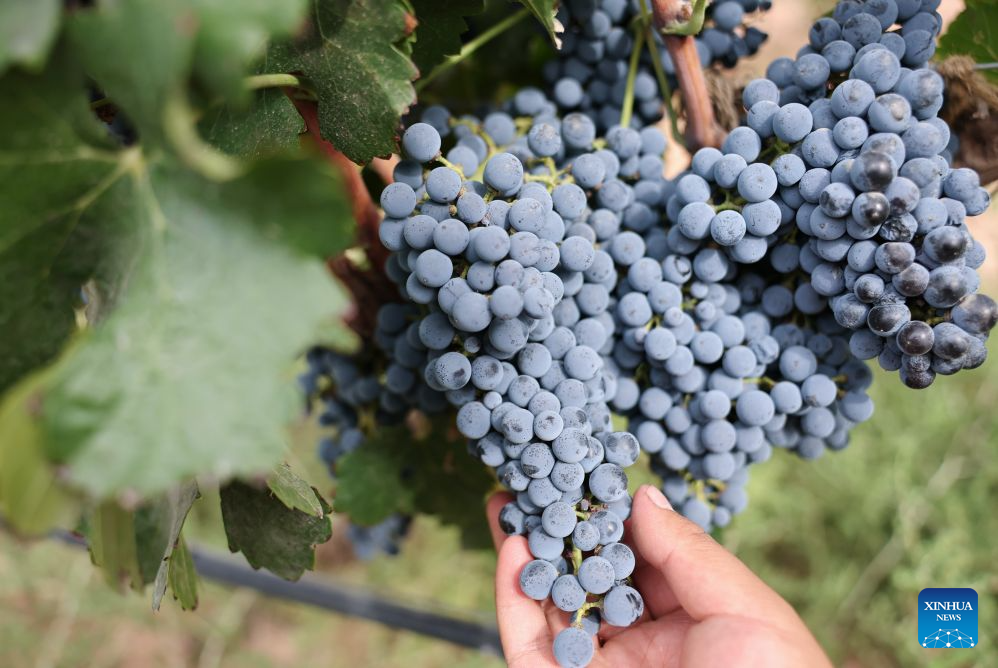
A staff member tends wine grapes at a vineyard of Xige Estate in Qingtongxia, northwest China's Ningxia Hui Autonomous Region, Sept. 23, 2026. With its dry climate and abundant sunshine, Ningxia, particularly the vast area at the eastern foot of Helan Mountain, is widely considered a "golden zone" for viticulture and premium wine production. As of 2025, the region's wine grape planting and development area has reached more than 600,000 mu (40,000 hectares). It is home to 261 wine enterprises, including 130 wineries, and its annual wine bottling volume stands at 140 million bottles, which are sold to more than 40 countries and regions. In recent years, Ningxia's wine industry has built an industrial chain spanning planting, processing, cultural tourism, and sales. It receives more than 3.7 million tourist visits annually, generates over 50 billion yuan (about 7.455 billion U.S. dollars) in comprehensive benefits and creates jobs for local residents, injecting vitality into local economic development. (Xinhua/Liu Yun)
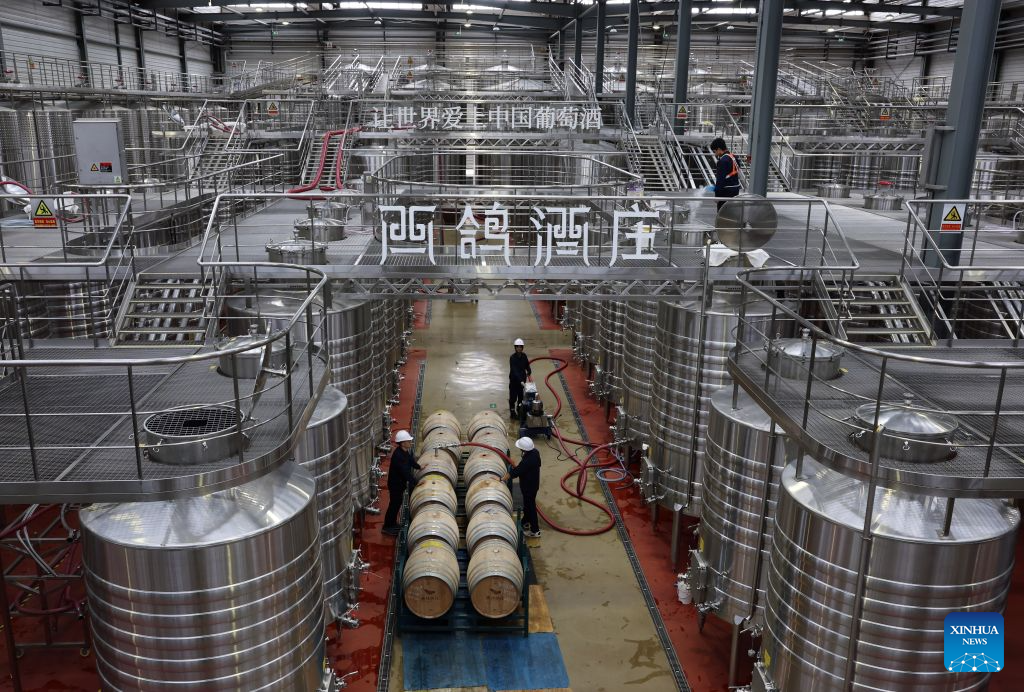
Workers operate at the fermentation workshop of Xige Estate in Qingtongxia, northwest China's Ningxia Hui Autonomous Region, Sept. 23, 2026. With its dry climate and abundant sunshine, Ningxia, particularly the vast area at the eastern foot of Helan Mountain, is widely considered a "golden zone" for viticulture and premium wine production. As of 2025, the region's wine grape planting and development area has reached more than 600,000 mu (40,000 hectares). It is home to 261 wine enterprises, including 130 wineries, and its annual wine bottling volume stands at 140 million bottles, which are sold to more than 40 countries and regions. In recent years, Ningxia's wine industry has built an industrial chain spanning planting, processing, cultural tourism, and sales. It receives more than 3.7 million tourist visits annually, generates over 50 billion yuan (about 7.455 billion U.S. dollars) in comprehensive benefits and creates jobs for local residents, injecting vitality into local economic development. (Xinhua/Liu Yun)
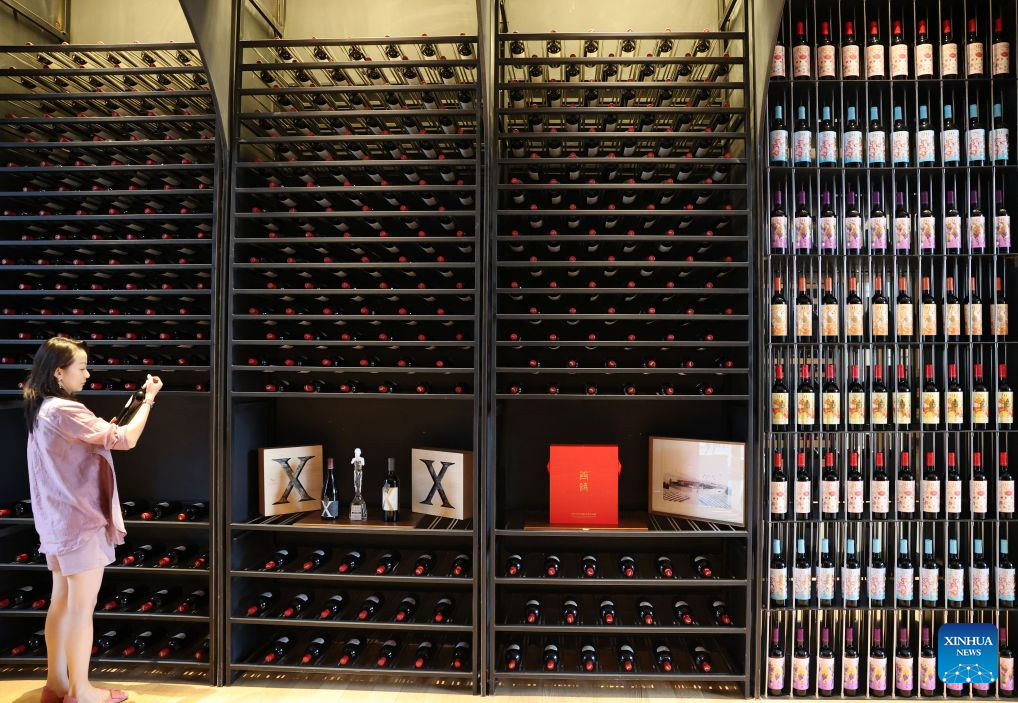
A woman checks a bottle of wine at an exhibition hall of Xige Estate in Qingtongxia, northwest China's Ningxia Hui Autonomous Region, Sept. 23, 2026. With its dry climate and abundant sunshine, Ningxia, particularly the vast area at the eastern foot of Helan Mountain, is widely considered a "golden zone" for viticulture and premium wine production. As of 2025, the region's wine grape planting and development area has reached more than 600,000 mu (40,000 hectares). It is home to 261 wine enterprises, including 130 wineries, and its annual wine bottling volume stands at 140 million bottles, which are sold to more than 40 countries and regions. In recent years, Ningxia's wine industry has built an industrial chain spanning planting, processing, cultural tourism, and sales. It receives more than 3.7 million tourist visits annually, generates over 50 billion yuan (about 7.455 billion U.S. dollars) in comprehensive benefits and creates jobs for local residents, injecting vitality into local economic development. (Xinhua/Liu Yun)
