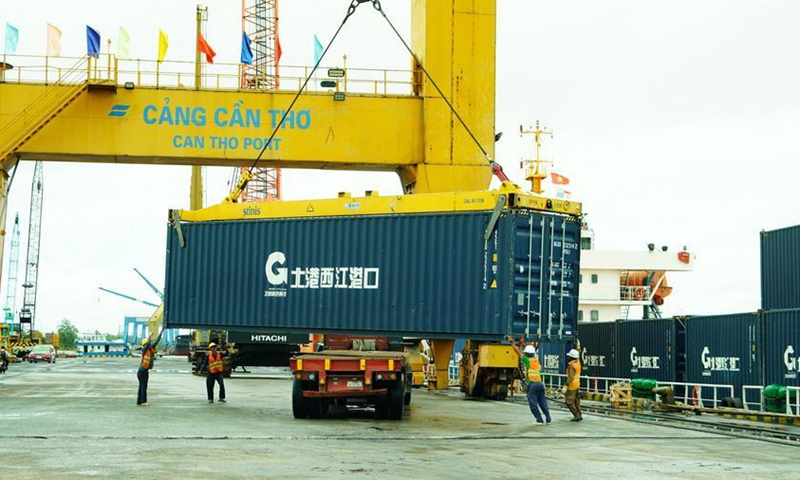
Workers unload a container from the first foreign trade vessel to sail through China's Pinglu Canal at Can Tho Port in Vietnam, Sept. 24, 2026. (Photo by Duong Huy/Xinhua)
In a light drizzle at Can Tho Port in southern Vietnam, cranes unloaded containers from the first foreign trade vessel to sail through China's newly opened Pinglu Canal.
The vessel's arrival marked the maiden voyage of a direct river-sea container route linking Nanning Port in south China's Guangxi Zhuang Autonomous Region with Can Tho in Vietnam's Mekong Delta.
The container vessel departed from Nanning Port on Sept. 16, sailed through the Pinglu Canal and arrived at Can Tho Port on Wednesday.
It carried 252 twenty-foot equivalent units of cargo, including wood panels, sodium sulfate and auto parts, mainly from western China.
The 134.2-km canal, stretching from Hengzhou in Guangxi to the Beibu Gulf, opened on Sept. 16. It is the closest maritime outlet for much of southwest China.
Designed for vessels of up to 5,000 tonnes, the canal shortens the inland waterway journey for goods from southwest China to the sea by more than 560 km compared with traditional routes through ports in Guangdong Province.
The return cargo includes 40 containers carrying about 1,000 tonnes of rice bran from southern Vietnam to customers in inland Guangxi.
"The advantages lie in two areas: delivery time and significantly lower freight costs," said Hua Xuechun, general manager of Mekong Delta Rice Bran Co., Ltd.
Hua said rice bran and other agricultural products are sensitive to transport time, and shorter journeys help maintain product quality and accelerate cargo turnover.
Vietnamese goods bound for southwest China previously had to be transshipped at several ports, while the new route allows them to travel from Can Tho to inland Guangxi with fewer transfers, he said.
Hua estimated that the route could cut transport costs by 20 to 30 percent compared with traditional arrangements.
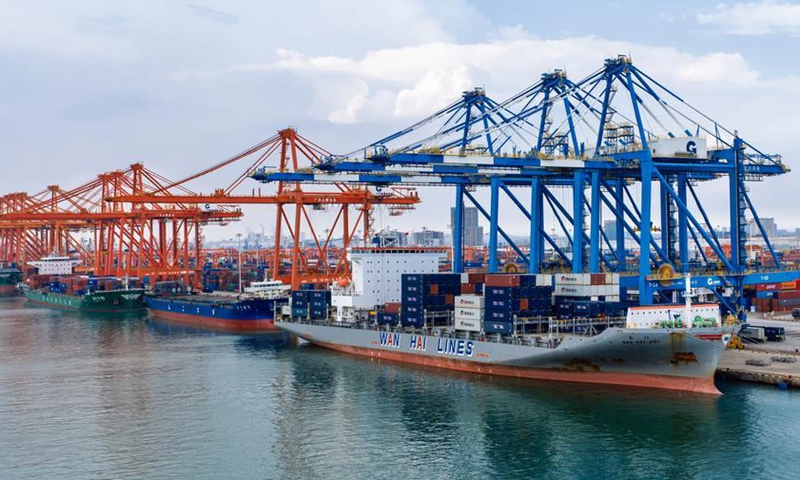
A drone photo taken on Sept. 7, 2026 shows cargo ships loading at the Qinzhou Port in Qinzhou, south China's Guangxi Zhuang Autonomous Region. (Xinhua/Zhang Ailin)
"This is the first time I have seen a vessel from an inland Chinese port arrive at Can Tho Port," said Hoang Xuan Nam, deputy head of the marketing and business department of Can Tho Port Joint Stock Company.
Nam, who has worked at the port for about 12 years, said the route had long been anticipated by people in Can Tho and across the Mekong Delta.
The Mekong Delta is one of Vietnam's main production areas for rice, aquatic products and fruit, while Can Tho is connected with surrounding farming areas by an extensive network of waterways.
Nam said agricultural products could be carried by barge from production areas to Can Tho Port for containerization, storage and cold-chain handling before being shipped to China.
The service could reduce road transportation and repeated cargo handling, helping exporters save time and keep agricultural products in better condition, he said.
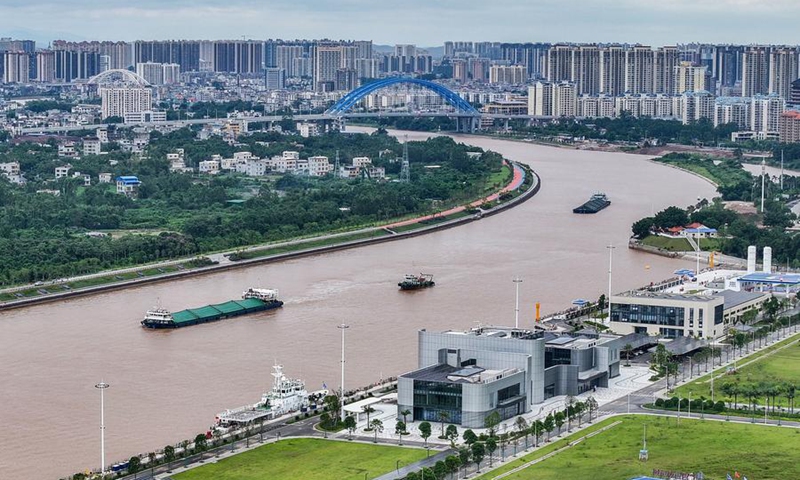
This photo taken on Sept. 4, 2026 shows vessels taking part in a comprehensive navigation drill on the Pinglu Canal in Qinzhou, south China's Guangxi Zhuang Autonomous Region. (Xinhua/Cao Yiming)
Le Cong Ly, vice chairman of the Can Tho municipal People's Committee, said the Pinglu Canal provides a more direct maritime outlet for Guangxi's inland waterway network, while the Nanning-Can Tho route extends that connection to the Mekong Delta.
The route gives businesses more options for moving goods between southwest China and southern Vietnam, he said.
Le Quang Trung, vice president of Vietnam Maritime Corporation, said Vietnamese goods destined for inland Chinese markets previously had to be transshipped through coastal ports, adding to transport time and logistics costs.
He said the new connection could help agricultural products from the Mekong Delta reach the Chinese market more efficiently and strengthen the region's links with neighboring markets through the Mekong River system.
