ARTS / CULTURE & LEISURE
When ancient machines meet AI: Rethinking science education and communication in the digital age
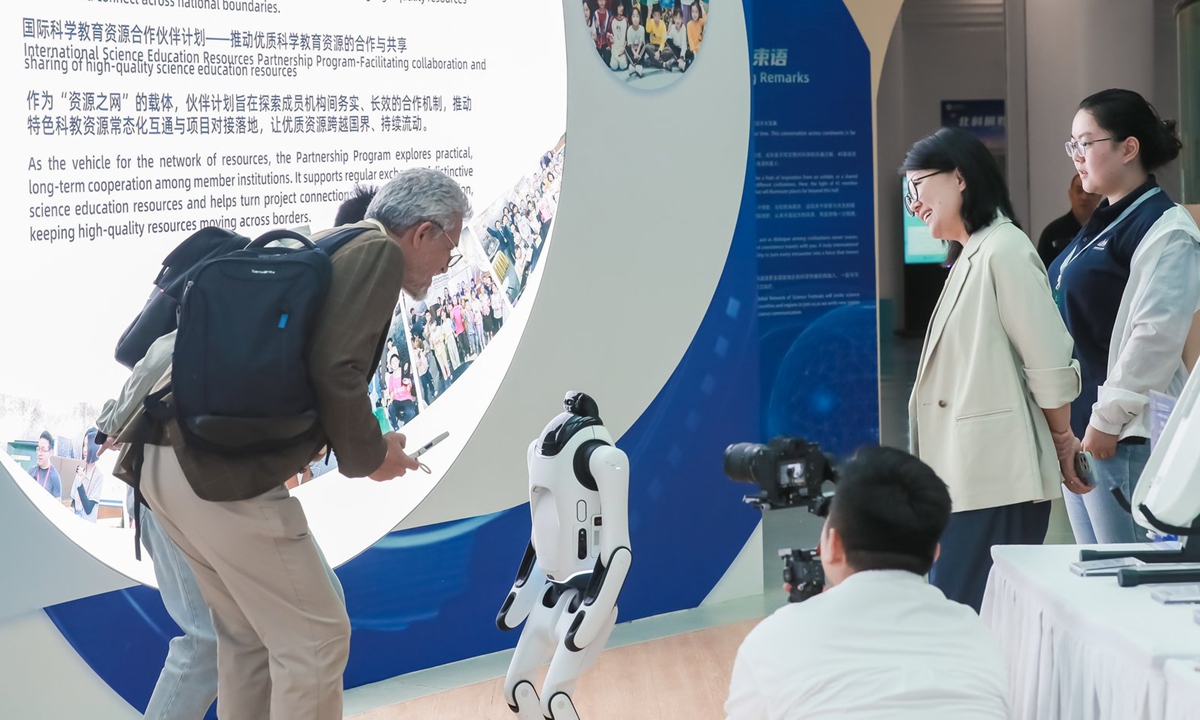
Visitors interact with a robot at the Science Education Exhibition Area of the 2026 Beijing International Week for Science Literacy. Photo: Courtesy of the organizers
Two thousand years ago, long before computers, chips or modern clocks existed, ancient Greek innovators had already created sophisticated mechanical devices with gears that could measure time and simulate celestial movements.Today, those ancient technological concepts are being presented alongside robots and artificial intelligence (AI) at the Beijing Science Center, where visitors can operate mechanical models, interact with AI-powered exhibits and explore how science has evolved across civilizations.
The scene recently unfolded at the 2026 Beijing International Week for Science Literacy (BIWSL). It brought together representatives from 11 countries, as well as international organizations, science museums, universities and science communication institutions, to discuss how science education and communication should develop in the AI era.
For many visitors, the attraction was not only the knowledge itself, but the chance to experience how science works.
Chen Mutong, a Beijing-based sophomore college student visiting the exhibition, told the Global Times that the interactive exhibits left the strongest impression on her.
"Before, I thought science was mainly about explaining a principle clearly. But after trying these exhibits myself, I suddenly felt a connection between the principle and my own experience," Chen said.
Experience before explanation
That shift, from simply presenting knowledge to encouraging participation, has become a direction explored by science institutions around the world.
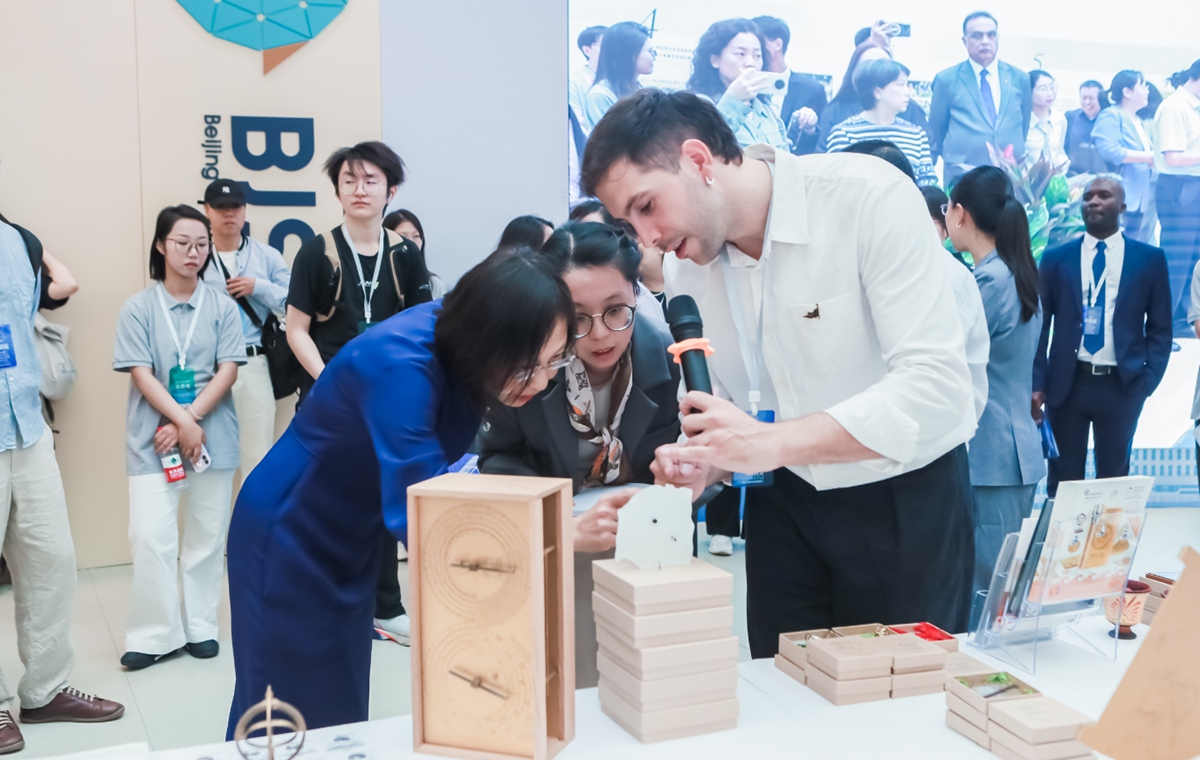
Panagiotis Kotsanas (front right), co-founder of the Kotsanas Museum of Ancient Greek Technology Photo: Courtesy of the organizers
"Experience should come before a large amount of information," Panagiotis Kotsanas, co-founder of the Kotsanas Museum of Ancient Greek Technology, told the Global Times during the exchange week.At his displaying area, visitors gathered around reconstructed ancient Greek devices, turning gears and watching pointers move as the mechanisms came to life. Kotsanas explained that these devices were designed to demonstrate how ancient Greeks used mechanical systems to measure time and study celestial movements.
Kotsanas said the goal of such exhibitions is not simply to help visitors remember technical details, but to allow them to understand the ideas behind ancient technologies.
"If you only read about it, it is difficult to truly understand how it works. But if you make it move, you can see how it works," he said.
"When you see a device working, you are understanding it. When you only look at it, you may just know that it exists," he added.
For this reason, the museum designs exhibits so that the objects themselves become part of the explanation.
Similar approaches could be seen across the exhibition hall. Some exhibits used games to explain complex scientific concepts, while others used digital technology to make topics such as biodiversity and cryptography easier for visitors to explore.
But behind these changes lies a broader challenge: When AI can provide answers within seconds, what role should science education continue to play?
"We have too much information now," Kotsanas said. "The question is not how to give people more information, but how to help them truly understand what they see."
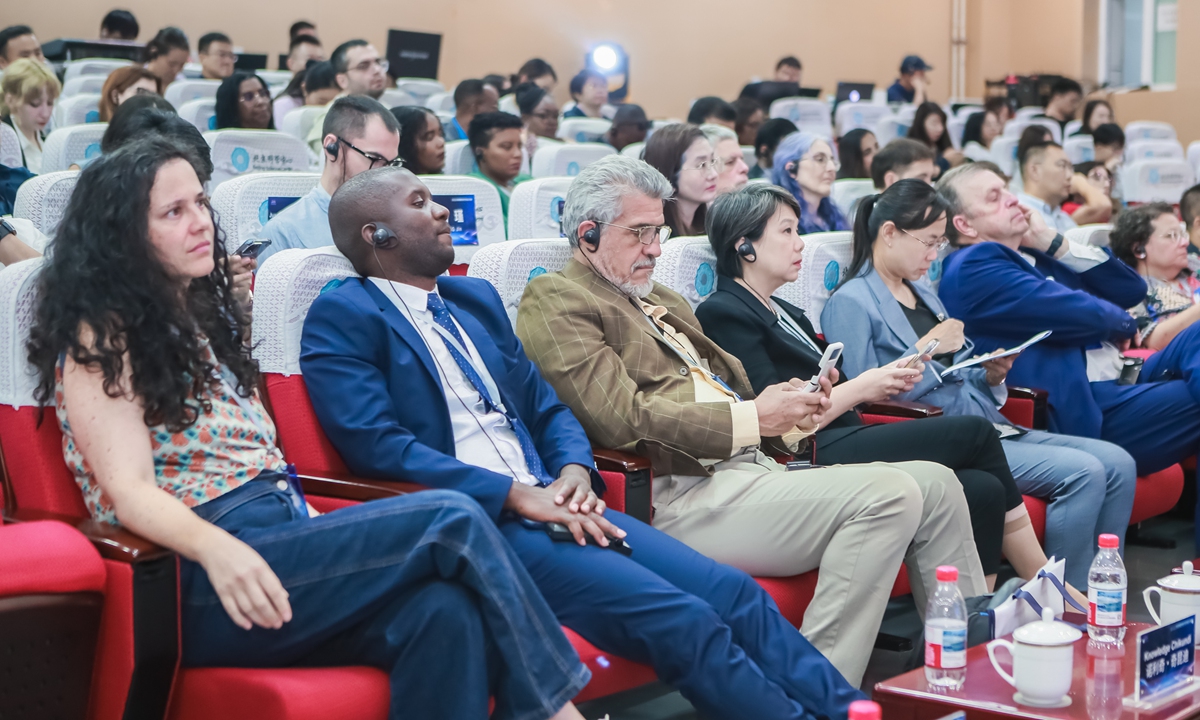
People attend the opening ceremony of the 2026 Beijing International Week for Science Literacy in Beijing on September 22, 2026. Photo: Courtesy of the organizers
Science beyond bordersThe question of how to make science meaningful in the AI era has become a global challenge.
Ganigar Chen, deputy director of the National Science Museum Thailand and vice president of the Asia Pacific Network of Science & Technology Centres, said science education should not only focus on delivering knowledge, but also helping people develop the ability to understand and engage with science.
"Different cultures have different ideas," Chen told the Global Times. "If we can exchange these ideas, visitors in China, Thailand or other countries can have access to more and better science education resources."
For Chen, one important area is how science education can serve younger generations.
"We need to help the next generation imagine the future, but also try to shape the future in a sustainable way," she said.
A similar shift is taking place in science centers around the world.
Guy Rabin, president and CEO of TELUS Spark Science Centre in Canada, said science centers are no longer simply places that provide information, but public spaces that help people understand evidence, build trust and engage in dialogue.
"In an age of information abundance, people do not need more fragmented knowledge. They need the ability to understand how evidence is formed, judge whether information is reliable, and think through complex issues," Rabin said.
This challenge has become even more significant as AI changes the way people access information.
For Guo Zhe, executive vice president of the China Association of Natural Science Museums and director-general of the China Science and Technology Museum, the rise of AI is also forcing curators of science exhibitions to rethink their role.
"Science education should not stop at simply delivering knowledge and providing answers," Guo said. "Instead, it should help cultivate creativity, independent judgment and the ability to face uncertainty."
Back in the exhibition hall, visitors continued moving between ancient machines and modern technologies. Some stopped to operate centuries-old mechanical models, while others watched robots and AI applications in action.
For many science communication professionals, the role of science education is evolving from simply delivering answers to helping people understand how knowledge is developed, evaluate information and continue asking questions. From ancient mechanical devices to modern AI applications, exhibits spanning different eras are ultimately serving the same purpose: helping people better understand the world around them.
RELATED ARTICLES