BRASIL 247 / MORE
From farms to hospitals: how fungi and bacteria in Brazil’s AgTech Valley are transforming agriculture and medicine
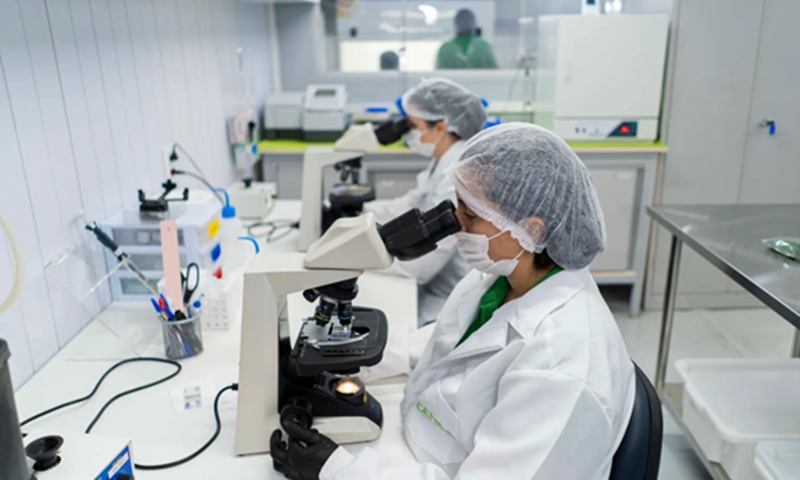
Photo: Gênica/Handout
In the heart of São Paulo state, a technology ecosystem known as the "AgTech Valley" is emerging as one of Brazil's main centers for agricultural innovation. According to Brasil 247, the region, inspired by the innovation model associated with California's Silicon Valley, brings together more than 1,000 agribusiness-focused companies alongside universities, research centers, entrepreneurs and investors. At the center of this transformation are bioinputs.
Bioinputs are products developed from living microorganisms, including fungi and bacteria found in nature. Instead of relying exclusively on synthetic chemicals to fight pests or supply nutrients, biological technologies use natural organisms to perform functions such as controlling insects, protecting crops against diseases and making nutrients trapped in the soil available to plant roots.
Gênica, a Brazilian company founded in Piracicaba in 2015 by a University of São Paulo professor and a serial entrepreneur, is one of the companies operating within this ecosystem. Its model combines knowledge of farmers' practical problems with laboratory research.
During an institutional presentation as part of a press trip organized by ApexBrasil, Gênica Portfolio and New Business Manager Luiz André Pinto and Research and Industrial Operations Director Gerson Marquesi said Piracicaba's concentration of research institutions, companies and infrastructure was a key reason for establishing operations there.
"Here there is a concentration of startups, companies, universities and government research centers. Several factors create this environment, especially logistics. Here we are close to the University of São Paulo, Embrapa, Campinas and São Paulo. Once established, people keep coming and the hub only grows. It is a combination of initiatives, but also a little luck in bringing all these pillars together here," Pinto said.
The tropical challenge
Brazilian agriculture operates under conditions that differ significantly from those of Europe and the US. In tropical regions, farmers can harvest as many as three crops from the same land in a single year. In the absence of a severe winter to interrupt the reproductive cycles of insects and fungi, pests can remain active throughout the year.
This has historically contributed to heavy reliance on chemical crop protection products. Continuous and intensive use, however, increases evolutionary pressure on pests, accelerating resistance to chemical molecules.
"Chemical molecules that last 20 or 30 years in Europe or the US, with more than 70 percent or 80 percent effectiveness, lose their effectiveness in two or three years here in Brazil because cultivation is very intense. When a new molecule appears, farmers start using it in every application, on 100 percent of the area, and the molecule loses effectiveness very quickly," Marquesi said.
Biological products are being developed not as an immediate replacement for all chemicals, but as an additional tool. Microorganisms can act through complex mechanisms. Trichoderma fungi, for example, can compete with and parasitize other fungi responsible for diseases in the soil.
A bridge to medicine
The development of bioinputs also depends on advanced laboratory equipment. At the Department of Genetics of USP in Piracicaba, which has around 90 years of history, Professor Carlos Alberto Labate leads work at the Functional Plant Genetics Laboratory, using equipment that can cost more than $1 million.
Among the instruments are advanced mass spectrometers capable of identifying up to 12,000 proteins in about 15 minutes. Researchers use the technology to investigate biological mechanisms that allow plants to withstand drought or disease.
The same equipment also has applications in medicine. Hospitals and medical institutions use USP's laboratory infrastructure to investigate different forms of cancer and rapidly identify severe infections in hospitalized patients.
"In the case of humans, we take a small amount of blood from someone in the ICU and put it into the equipment. The laser produces a characteristic spectrum for each species. In this way, in a hospital, within two hours you can obtain the information about which bacterium is causing the infection and administer the exact antibiotic, instead of waiting for long tests."
Using nature's own defenses
Researchers at USP are also studying ways to stimulate plants' natural immune systems rather than directly attacking pathogens.
Labate explained that when certain fungi attack leaves, they begin by degrading pectin, a substance found in plant cell walls. Scientists are studying compounds generated during this process as signals that can activate defensive mechanisms before a pathogen arrives.
"These small sugars act as a signal to the cell nucleus that someone is chewing the pectin. The nucleus then reacts and activates a genetic-expression program that reinforces the cell wall. The idea is to apply these compounds before the fungus arrives. When it comes, the cell wall will be much stronger. The advantage is that we are not attacking the fungus, we are not selecting for the most resistant ones, as chemicals do; we are protecting the plant."
Gênica's research model
Gênica says its research strategy begins with a defined agricultural function rather than with the collection of large numbers of microorganisms whose possible applications are initially unknown.
The company invests about 10 percent of its revenue in research and development and uses artificial intelligence, bioinformatics and in-house DNA sequencing to identify microorganisms with targeted functions.
"We start from the agronomic function. If I want a fungicide or need to increase nitrogen fixation, that defines where I am going to look. We use selective media from the beginning. So, instead of having a thousand candidates and not knowing what they are useful for, I already start with a hundred nitrogen fixers. This greatly accelerates product development," Marquesi said.
The company is also developing what it describes as a third generation of biological products. In these products, farmers would not necessarily apply living microorganisms directly to crops.
Instead, bacteria are grown in large fermentation tanks so they can produce compounds with defensive properties. The organism itself can then be removed, leaving its metabolite as the active ingredient.
"It is a product under registration where we do not deliver the living organism. At the end of fermentation, we kill the bacterium and only the metabolite, the substance, is the active ingredient. Through this fermentation process, we can produce more than 35 grams per liter of these compounds with antifungal effects. Whether or not the bacterium survives in the environment does not matter; the active ingredient is there and delivers an incredible curative effect."
Reducing dependence on imported fertilizers
Brazil is one of the world's largest agricultural producers but remains highly dependent on imported fertilizers, particularly nitrogen, phosphorus and potassium.
Phosphorus represents a specific challenge. Soils in Brazil's Cerrado region can contain significant quantities of the nutrient, but high acidity and aluminum content can chemically bind phosphorus and make it unavailable to plants.
Labate said microorganisms capable of solubilizing phosphorus could help increase fertilizer efficiency.
Gênica expects biological products and improved soil management to reduce fertilizer requirements over the coming years.
"For nitrogen in grasses, which is a major challenge in sugarcane and corn, I believe we are on a path to achieving a reduction of 40 percent to 50 percent within a five-year horizon by improving use efficiency. In the case of phosphorus, I apply two or three times more than I need because the soil fixes so much. If I have organisms that help make this phosphate available, I can reduce phosphorus use by 20 percent to 40 percent. It is not spontaneous generation, it is use efficiency," Marquesi said.
Tropical agriculture and climate change
Research into biological products is also gaining importance as global temperatures rise.
Brazil has spent decades developing technologies to produce crops in acidic soils and under high temperatures. Researchers argue that experience accumulated in tropical agriculture could become increasingly relevant as climate change affects agricultural systems in temperate regions.
Labate said Brazil also has large areas of underused pastureland that could support expanded agricultural output without requiring further deforestation.
"Australia has been drying out over the last hundred years because of climate change. In England, they are facing 40 degrees in the summer, which is unbearable and a huge challenge for production. Brazil has about 70 million hectares of underused pasture. With these regeneration technologies, Brazil has the capacity to produce much more, without limitations and without entering the Amazon, without destroying the forest. We have learned to produce in a tropical environment, and farmers have understood the importance of using biologicals. Whenever you give them the choice, Brazilian farmers will choose the biological."
The proximity between Labate's laboratory at USP and Gênica's research center illustrates how Piracicaba's AgTech Valley connects basic science with industrial development.
At the university, researchers investigate proteins, metabolites, genes and fundamental mechanisms in plants. A few kilometers away, companies can turn promising biological candidates into prototypes, develop fermentation processes, test formulations in the field and design industrial processes capable of producing thousands of liters.
The relationship also works in the opposite direction, as problems identified by farmers can become research questions for laboratories.
"We need to bring new technologies, in the case of biologicals, together with chemicals, to have better solutions for the problems in agriculture. It is not about stopping the use of chemicals; we need them. The idea is to bring more weapons to face the problems we have in agriculture," Labate said.
Current research extends beyond pest control. It includes improving water-use efficiency, increasing nitrogen fixation and utilization, releasing phosphorus trapped in the soil, accessing alternative potassium sources, stimulating plants' natural defenses and producing metabolites that act directly against pathogens.
In Piracicaba, these research lines converge around the same objective: identifying mechanisms already present in nature, understanding how they work and transforming them into agricultural technologies capable of increasing productivity, reducing losses and progressively cutting part of Brazil's dependence on imported agricultural inputs.
(Reported by Brasil 247 on September 29, 2026)
