AI
China's generative artificial intelligence (AI) user base exceeded 700 million by the end of the first half of 2026, with the adoption rate reaching above 50 percent, according to the Generative Artificial Intelligence Application Development Report (2026) released by an institute under the China Internet Network Information Center on Tuesday.
The report also showed that in the past six months, 38.7 percent of Chinese internet users had bought intelligent devices online, including wearables and computer, communication, and consumer electronics (3C) digital products.
Among them, wearables and 3C digital products were the main entry points, with 20.2 percent having bought smart wearables such as smartwatches, fitness bands, wireless earphones and smart glasses, while 18.2 percent had bought smartphones, tablets or other 3C devices.
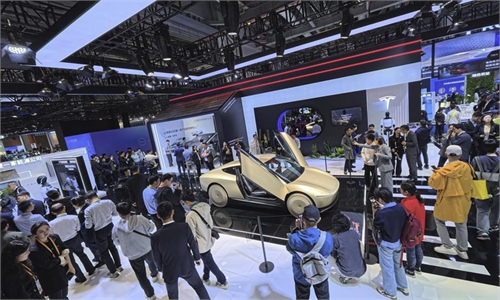
Meanwhile, the report highlighted increasingly diverse generative AI applications, which are accelerating the potential of "smart consumption" led by intelligent devices.
Intelligent Q&A has become a major application of generative AI, with 76 percent of users saying they turn to it to answer questions. The shares using it for images and video, for text, and for work summaries, meeting minutes or slide decks were 47.8 percent, 37.6 percent, and 32.5 percent, respectively, the report noted.
The use of generative AI as a life assistant and a smart office tool has also recorded significant growth. Measured by the number of times users accessed different generative AI apps, usage of general-purpose AI assistants and AI productivity tools both rose more than 100 percent year-on-year.
According to the report, China has built a globally leading AI industrial ecosystem, with layered policy support, full-stack technical advances and financing that is rising in both scale and quality.
In the first six months of 2026, China recorded 1,255 AI-related investment and financing deals, accounting for 78 percent of the full-year total in 2025. The combined value was about 250.14 billion yuan, equivalent to 182 percent of the full-year amount in 2025, the report noted.
Meanwhile, Chinese open-source models such as DeepSeek and Qwen have been steadily gaining influence, underscoring that the country's open-source ecosystem is thriving, according to the report.
The report also highlighted breakthroughs in key technologies, including continued improvements in China's underlying AI computing power, faster advances in homegrown AI chips and computing clusters, accelerated iteration of core algorithm architectures, and significant improvements in models' reasoning capabilities and efficiency.
Global Times
RELATED ARTICLES