BUSINESS / PRESS RELEASE
China’s innovation on display in the Asian Games esports arena
At a multi-sport tournament, innovation is often easy to recognize: faster equipment, smarter systems, more sophisticated technology. At the 2026 Asian Games, however, innovation is also appearing in a less conventional place – inside a virtual world.
The Aichi-Nagoya Asian Games have brought together about 11,000 athletes from 45 countries and regions, creating not only a stage for competition but also a window into the technological development, cultural exchanges and youth trends shaping Asia.
Chinese elements can be found in many different forms around the Games, from traditional martial arts to digital esports, and from international broadcasting to the construction of major event facilities. Chinese teams have taken part in producing the international broadcast signal for the Games, while Chinese technical expertise has also been involved in the design, development, manufacturing and assembly of the main cauldron tower for the opening ceremony.
Yet beyond the visible examples of technology and manufacturing lies another form of innovation that may be even closer to the everyday lives of younger people: digital culture.
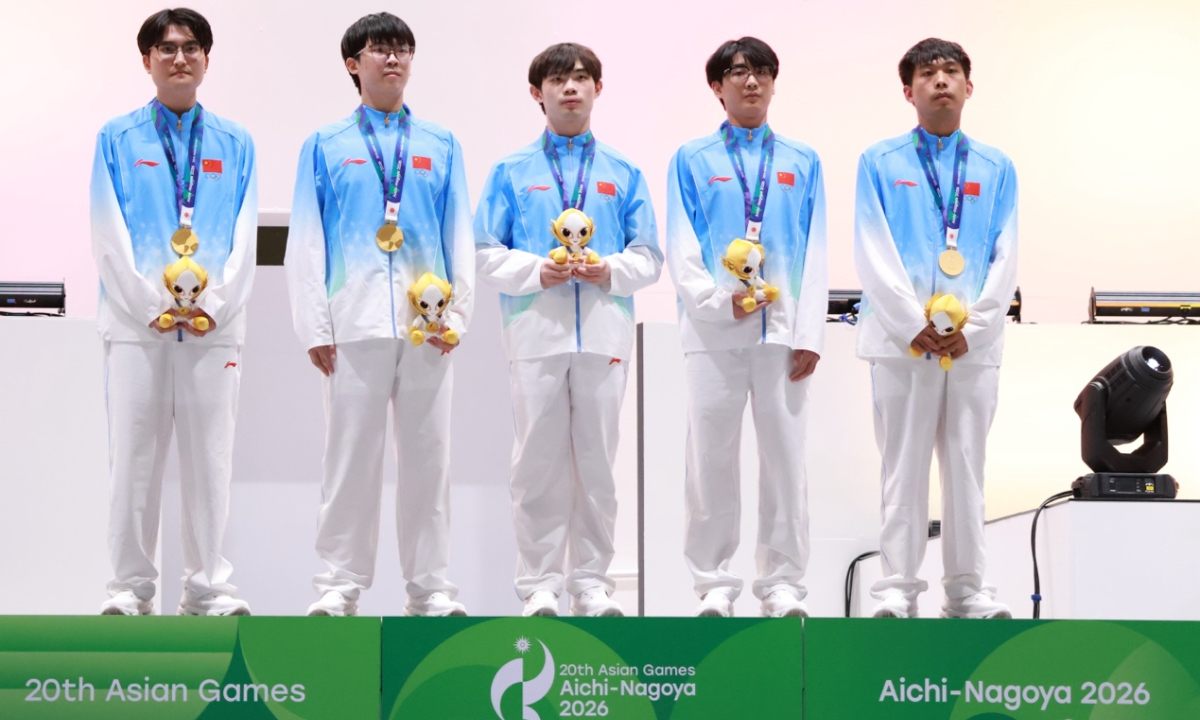
On September 24, at Aichi Sky Expo, China defeated Thailand 3-0 in the Naraka: Bladepoint final, with Sui Xiangyun, Tan Xujie, Wang Tongrong, Wang Feng and Xu Kunbin representing China. The victory delivered China’s first esports gold medal of the Games and the inaugural Asian Games gold in the Naraka: Bladepoint. Thailand took silver, while Vietnam and Chinese Taipei shared bronze.The result was more than another medal for China.
It offered a glimpse of how Chinese innovation is changing: Traditional culture is no longer limited to being displayed or observed. It can be transformed into game mechanics, visual design and competitive rules, becoming part of a digital environment in which young people actively participate.
When traditional culture meets digital technology
Traditional martial arts remain one of the most recognizable expressions of Chinese culture at the Asian Games. Sword, spear, staff and other weapons appear in carefully choreographed movements, combining physical strength with visual elegance.
But for today’s younger generations, traditional culture reaches audiences through far more channels than stages, museums and books.
Digital technology has changed the way people encounter culture. A young person overseas who wants to learn about traditional Chinese weapons might once have turned to a book, documentary or museum exhibition. Today, that first encounter could just as easily happen during a game.
Naraka: Bladepoint is one example.
Built around a Chinese-inspired martial arts and wuxia aesthetic, the game combines close-quarters combat with a battle royale format. It has turned weapons, martial arts movements and elements of traditional Chinese aesthetics into the language of a modern competitive game.
That combination was also reflected in its journey to the Asian Games.
During the qualification process for Aichi-Nagoya 2026, teams from 15 Asian countries and regions competed for eight places in the main event. China, Indonesia, Thailand, the Philippines, Vietnam, and Malaysia eventually qualified. The eight-team field represented a competitive ecosystem that had developed well beyond a single tournament.
That ecosystem matters because it creates a sustained connection between players from different cultural backgrounds. The Asian Games have provided the most visible stage for that connection, but the interaction did not begin in Nagoya and will not end there.
Digital encounter through martial arts
After Team China’s victory, coach Weng Bo recalled the excitement among his players from the moment they arrived at the training base.
They were excited because representing their country, he said, was “a responsibility, and also an honor.”
Player Tan Xujie remembered the final somewhat differently.
China and Thailand had already met during the group stage, but the Thai team looked stronger at the beginning of the final.
“We believed in ourselves,” Tan said. “We have trained for so long, and it was all for this moment, so we all performed.”
Thailand reached the final after defeating Vietnam 3-2 in a closely contested semifinal.
For Thai coach Kittirat Buaphan, the appeal of Naraka: Bladepoint began long before the Asian Games.
“When I first played Naraka: Bladepoint, I thought it was very fresh,” he said. “It was different from other games I had played. Even after playing many times, I still like it.”
He first encountered the game after a friend invited him to play, and later learned more about it through media coverage in Thailand.
Coming to the Asian Games and meeting teams from across Asia was itself an important part of the experience, Kittirat said.
When asked about the aesthetic and cultural elements behind the game, his answer was brief.
“Very beautiful,” he said. “Thai audiences also like it.”
Those few words point to a broader change in the way cultural exchange takes place.
It does not always happen inside a museum or through an official cultural program. For some young people, it can happen through a match, a tournament or a conversation with a player from another country.
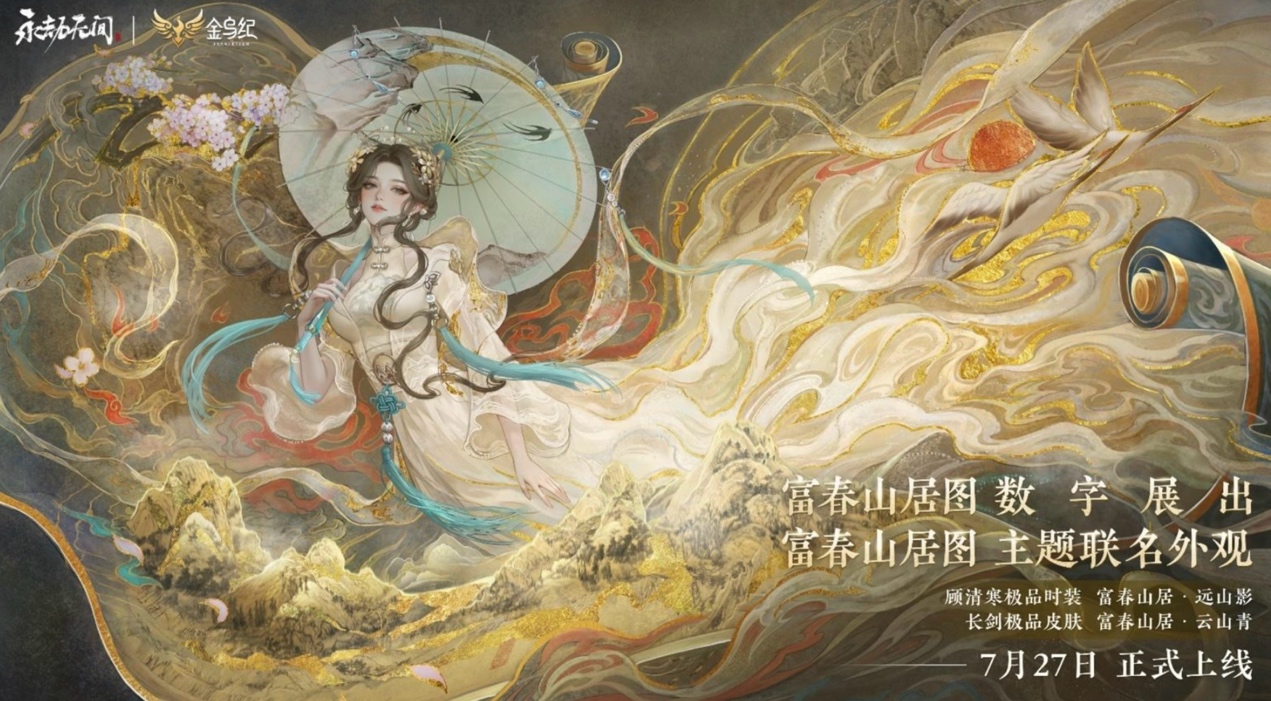
The cultural elements in Naraka: Bladepoint go beyond simply adding a “Chinese style” to a game. Its cultural development programs have explored traditional Chinese ceramics, Bai embroidery, Dali clay cats and traditional folk prints, while drawing on resources connected with museums and cultural institutions.
In this process, an artifact no longer has to remain a static object behind glass.
A traditional object can be digitally redesigned and placed in a virtual world. A historical garment can become part of a character’s appearance. An ancient weapon can be visually reimagined and placed in a competitive environment familiar to younger players.
Culture therefore gains another form of expression. And games offer something that traditional exhibitions often cannot: interaction.
Players do not simply look at a weapon. They can use it. They do not merely see a traditional aesthetic. They can move through a world built around it. They do not only read about martial arts. They can experience a digital interpretation of combat through the movements of a character.
Traditional culture thus moves from something that is “observed” to something that can be “participated in.”
From players to participants in cultural exchange
The international competitive ecosystem surrounding Naraka: Bladepoint has pushed this interaction beyond the game itself.
Players have moved between different regional scenes, competing against each other repeatedly rather than meeting only once at an international event.
Indonesian player Froztivus, for example, became one of the recognizable players in the overseas competitive scene before coming to China to compete in the professional league. His career illustrates a form of cross-border movement that is becoming increasingly common in esports: Players are not simply consumers of a foreign game. They can become part of the game’s competitive culture.
Vietnamese players have followed a similar path.
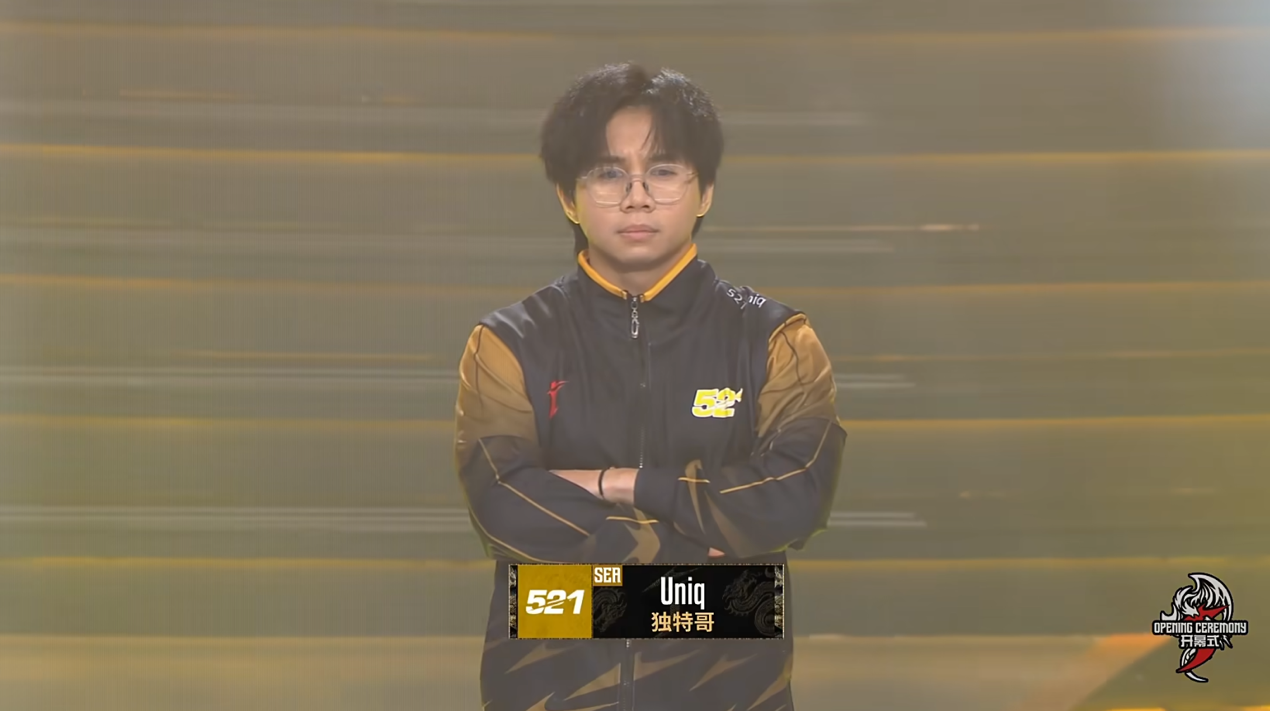
Player 521.Uniq has represented the Southeast Asian scene at international competitions and has repeatedly competed against players from China and other regions. His competitive record includes appearances at the Naraka: Bladepoint World Championship and Asian competitions, reflecting the increasingly interconnected nature of the game’s international ecosystem.
The significance of this movement goes beyond statistics.
When overseas players travel to China for competition, they encounter not only a game, but also a broader cultural environment shaped by language, literature, wuxia traditions, visual aesthetics and everyday life.
At the same time, Chinese players encounter teammates and opponents with different experiences and cultural backgrounds. In that sense, “going global” becomes less of a one-way process.
Chinese developers create a game inspired by Chinese martial arts and aesthetics. Overseas players enter that world and interpret it through their own experiences. Chinese and foreign players then meet repeatedly through competition.
Culture is no longer simply something being “exported.” It becomes something that people encounter together.
Beyond the Asian Games
This is where Naraka: Bladepoint sits at an interesting intersection of China’s technological and cultural innovation.
On one side is hard technology. Chinese technical teams have contributed to the production of international sports broadcasts, major event facilities and digital content, bringing technological capabilities to a global sporting stage.
On the other is cultural innovation. Martial arts, weapons, clothing and traditional aesthetics are being given new forms through digital technology.
Naraka: Bladepoint connects the two.
It is a Chinese-developed digital product and a competitive esports title. It relies on real-time computing, network technology and game engines, while simultaneously translating Chinese martial arts and wuxia aesthetics into a competitive language that young people around the world can understand.
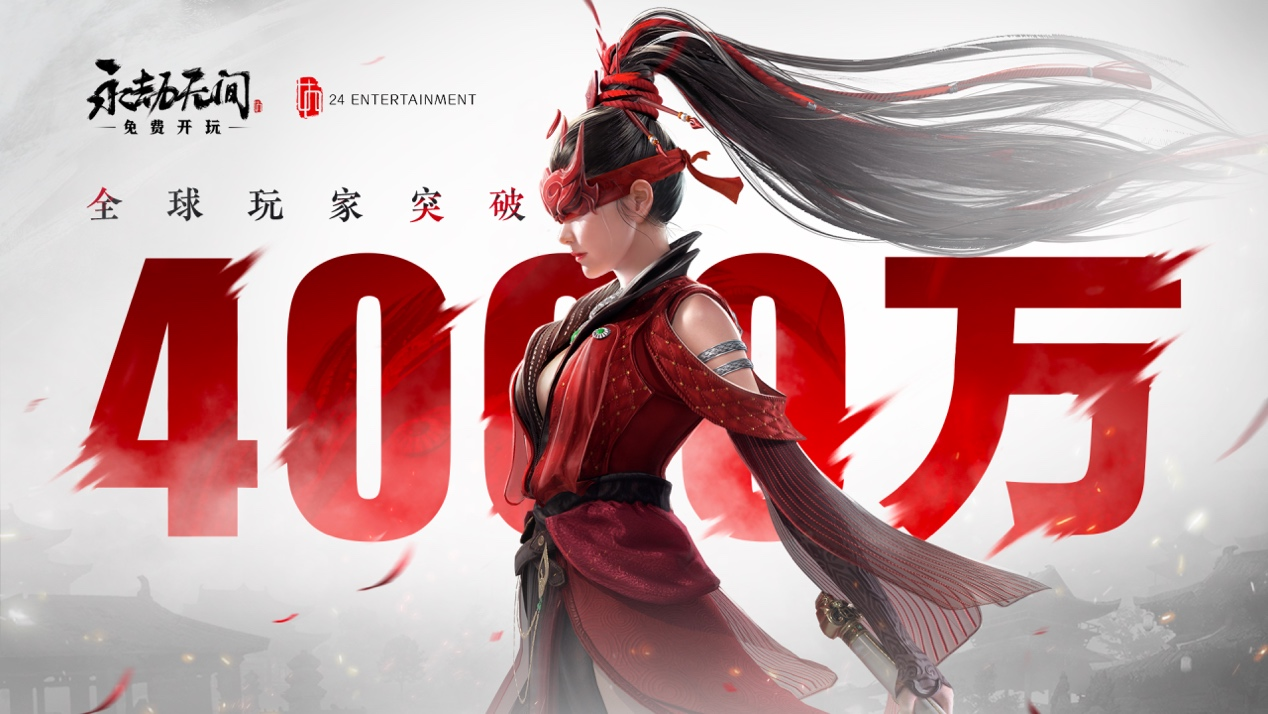
The game has also developed an international competitive structure extending across multiple regional scenes. Publicly disclosed figures have put its global player base at more than 40 million, while its professional ecosystem includes competitions across Asia and other regions.
Its appearance at the Asian Games adds another dimension.
For the first time, Naraka: Bladepoint has appeared as an official esports title at the continental multi-sport event, putting a Chinese-developed game inspired by traditional culture on the same broad sporting stage as established physical disciplines.
The significance lies not simply in the fact that a Chinese game won a gold medal.
It is that a digital product rooted in Chinese cultural elements became a place where athletes and players from different parts of Asia could meet, compete and communicate.
That offers a different way to understand what innovation means in China today.
Innovation is not only about building more advanced machines or developing new technologies. It can also mean finding new ways to express culture.
It is not only about taking a product overseas. It can also mean creating something that people in other countries voluntarily enter, learn, compete in and make their own.
The Asian Games are, at their core, a sporting event. But their significance extends beyond the medal table.
Around the venues at the Asian Games, Chinese innovation can be seen in the technology supporting a major international event. In the martial arts arena, traditional culture continues to speak through physical movement. And inside the digital worlds of esports, those same cultural elements are being reshaped for a generation that grew up with screens, networks and interactive entertainment.
From the physical arena to the digital jianghu, the boundary between technology and culture is becoming less distinct.
And perhaps that is one of the clearest new perspectives offered by the Asian Games: China’s innovation story is no longer expressed through a single form. It can be seen in manufacturing and technology, but also in the ability to turn traditional culture into new experiences – and to create digital spaces where people from different cultural backgrounds can meet.
China’s gold medal in Naraka: Bladepoint will remain in the Asian Games record.
But beyond the medal, the tournament has shown something less tangible: A Chinese cultural idea can travel not only through a physical object or a formal exhibition, but through a digital world in which people from across Asia choose to enter, play and compete together.
The Aichi-Nagoya Asian Games have brought together about 11,000 athletes from 45 countries and regions, creating not only a stage for competition but also a window into the technological development, cultural exchanges and youth trends shaping Asia.
Chinese elements can be found in many different forms around the Games, from traditional martial arts to digital esports, and from international broadcasting to the construction of major event facilities. Chinese teams have taken part in producing the international broadcast signal for the Games, while Chinese technical expertise has also been involved in the design, development, manufacturing and assembly of the main cauldron tower for the opening ceremony.
Yet beyond the visible examples of technology and manufacturing lies another form of innovation that may be even closer to the everyday lives of younger people: digital culture.
On September 24, at Aichi Sky Expo, China defeated Thailand 3-0 in the Naraka: Bladepoint final, with Sui Xiangyun, Tan Xujie, Wang Tongrong, Wang Feng and Xu Kunbin representing China. The victory delivered China’s first esports gold medal of the Games and the inaugural Asian Games gold in the Naraka: Bladepoint. Thailand took silver, while Vietnam and Chinese Taipei shared bronze.The result was more than another medal for China.
It offered a glimpse of how Chinese innovation is changing: Traditional culture is no longer limited to being displayed or observed. It can be transformed into game mechanics, visual design and competitive rules, becoming part of a digital environment in which young people actively participate.
When traditional culture meets digital technology
Traditional martial arts remain one of the most recognizable expressions of Chinese culture at the Asian Games. Sword, spear, staff and other weapons appear in carefully choreographed movements, combining physical strength with visual elegance.
But for today’s younger generations, traditional culture reaches audiences through far more channels than stages, museums and books.
Digital technology has changed the way people encounter culture. A young person overseas who wants to learn about traditional Chinese weapons might once have turned to a book, documentary or museum exhibition. Today, that first encounter could just as easily happen during a game.
Naraka: Bladepoint is one example.
Built around a Chinese-inspired martial arts and wuxia aesthetic, the game combines close-quarters combat with a battle royale format. It has turned weapons, martial arts movements and elements of traditional Chinese aesthetics into the language of a modern competitive game.
That combination was also reflected in its journey to the Asian Games.
During the qualification process for Aichi-Nagoya 2026, teams from 15 Asian countries and regions competed for eight places in the main event. China, Indonesia, Thailand, the Philippines, Vietnam, and Malaysia eventually qualified. The eight-team field represented a competitive ecosystem that had developed well beyond a single tournament.
That ecosystem matters because it creates a sustained connection between players from different cultural backgrounds. The Asian Games have provided the most visible stage for that connection, but the interaction did not begin in Nagoya and will not end there.
Digital encounter through martial arts
After Team China’s victory, coach Weng Bo recalled the excitement among his players from the moment they arrived at the training base.
They were excited because representing their country, he said, was “a responsibility, and also an honor.”
Player Tan Xujie remembered the final somewhat differently.
China and Thailand had already met during the group stage, but the Thai team looked stronger at the beginning of the final.
“We believed in ourselves,” Tan said. “We have trained for so long, and it was all for this moment, so we all performed.”
Thailand reached the final after defeating Vietnam 3-2 in a closely contested semifinal.
For Thai coach Kittirat Buaphan, the appeal of Naraka: Bladepoint began long before the Asian Games.
“When I first played Naraka: Bladepoint, I thought it was very fresh,” he said. “It was different from other games I had played. Even after playing many times, I still like it.”
He first encountered the game after a friend invited him to play, and later learned more about it through media coverage in Thailand.
Coming to the Asian Games and meeting teams from across Asia was itself an important part of the experience, Kittirat said.
When asked about the aesthetic and cultural elements behind the game, his answer was brief.
“Very beautiful,” he said. “Thai audiences also like it.”
Those few words point to a broader change in the way cultural exchange takes place.
It does not always happen inside a museum or through an official cultural program. For some young people, it can happen through a match, a tournament or a conversation with a player from another country.
The cultural elements in Naraka: Bladepoint go beyond simply adding a “Chinese style” to a game. Its cultural development programs have explored traditional Chinese ceramics, Bai embroidery, Dali clay cats and traditional folk prints, while drawing on resources connected with museums and cultural institutions.
In this process, an artifact no longer has to remain a static object behind glass.
A traditional object can be digitally redesigned and placed in a virtual world. A historical garment can become part of a character’s appearance. An ancient weapon can be visually reimagined and placed in a competitive environment familiar to younger players.
Culture therefore gains another form of expression. And games offer something that traditional exhibitions often cannot: interaction.
Players do not simply look at a weapon. They can use it. They do not merely see a traditional aesthetic. They can move through a world built around it. They do not only read about martial arts. They can experience a digital interpretation of combat through the movements of a character.
Traditional culture thus moves from something that is “observed” to something that can be “participated in.”
From players to participants in cultural exchange
The international competitive ecosystem surrounding Naraka: Bladepoint has pushed this interaction beyond the game itself.
Players have moved between different regional scenes, competing against each other repeatedly rather than meeting only once at an international event.
Indonesian player Froztivus, for example, became one of the recognizable players in the overseas competitive scene before coming to China to compete in the professional league. His career illustrates a form of cross-border movement that is becoming increasingly common in esports: Players are not simply consumers of a foreign game. They can become part of the game’s competitive culture.
Vietnamese players have followed a similar path.
Player 521.Uniq has represented the Southeast Asian scene at international competitions and has repeatedly competed against players from China and other regions. His competitive record includes appearances at the Naraka: Bladepoint World Championship and Asian competitions, reflecting the increasingly interconnected nature of the game’s international ecosystem.
The significance of this movement goes beyond statistics.
When overseas players travel to China for competition, they encounter not only a game, but also a broader cultural environment shaped by language, literature, wuxia traditions, visual aesthetics and everyday life.
At the same time, Chinese players encounter teammates and opponents with different experiences and cultural backgrounds. In that sense, “going global” becomes less of a one-way process.
Chinese developers create a game inspired by Chinese martial arts and aesthetics. Overseas players enter that world and interpret it through their own experiences. Chinese and foreign players then meet repeatedly through competition.
Culture is no longer simply something being “exported.” It becomes something that people encounter together.
Beyond the Asian Games
This is where Naraka: Bladepoint sits at an interesting intersection of China’s technological and cultural innovation.
On one side is hard technology. Chinese technical teams have contributed to the production of international sports broadcasts, major event facilities and digital content, bringing technological capabilities to a global sporting stage.
On the other is cultural innovation. Martial arts, weapons, clothing and traditional aesthetics are being given new forms through digital technology.
Naraka: Bladepoint connects the two.
It is a Chinese-developed digital product and a competitive esports title. It relies on real-time computing, network technology and game engines, while simultaneously translating Chinese martial arts and wuxia aesthetics into a competitive language that young people around the world can understand.
The game has also developed an international competitive structure extending across multiple regional scenes. Publicly disclosed figures have put its global player base at more than 40 million, while its professional ecosystem includes competitions across Asia and other regions.
Its appearance at the Asian Games adds another dimension.
For the first time, Naraka: Bladepoint has appeared as an official esports title at the continental multi-sport event, putting a Chinese-developed game inspired by traditional culture on the same broad sporting stage as established physical disciplines.
The significance lies not simply in the fact that a Chinese game won a gold medal.
It is that a digital product rooted in Chinese cultural elements became a place where athletes and players from different parts of Asia could meet, compete and communicate.
That offers a different way to understand what innovation means in China today.
Innovation is not only about building more advanced machines or developing new technologies. It can also mean finding new ways to express culture.
It is not only about taking a product overseas. It can also mean creating something that people in other countries voluntarily enter, learn, compete in and make their own.
The Asian Games are, at their core, a sporting event. But their significance extends beyond the medal table.
Around the venues at the Asian Games, Chinese innovation can be seen in the technology supporting a major international event. In the martial arts arena, traditional culture continues to speak through physical movement. And inside the digital worlds of esports, those same cultural elements are being reshaped for a generation that grew up with screens, networks and interactive entertainment.
From the physical arena to the digital jianghu, the boundary between technology and culture is becoming less distinct.
And perhaps that is one of the clearest new perspectives offered by the Asian Games: China’s innovation story is no longer expressed through a single form. It can be seen in manufacturing and technology, but also in the ability to turn traditional culture into new experiences – and to create digital spaces where people from different cultural backgrounds can meet.
China’s gold medal in Naraka: Bladepoint will remain in the Asian Games record.
But beyond the medal, the tournament has shown something less tangible: A Chinese cultural idea can travel not only through a physical object or a formal exhibition, but through a digital world in which people from across Asia choose to enter, play and compete together.
