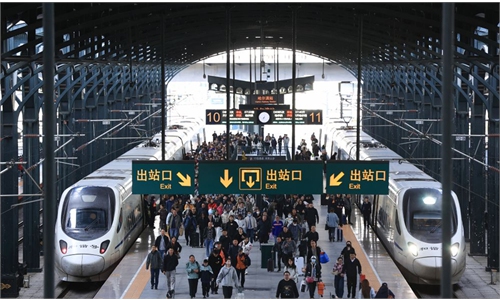
NW China's county of 50,000 receives 100,000 tourists in one day during National Day holiday; school dorms opened for visitors
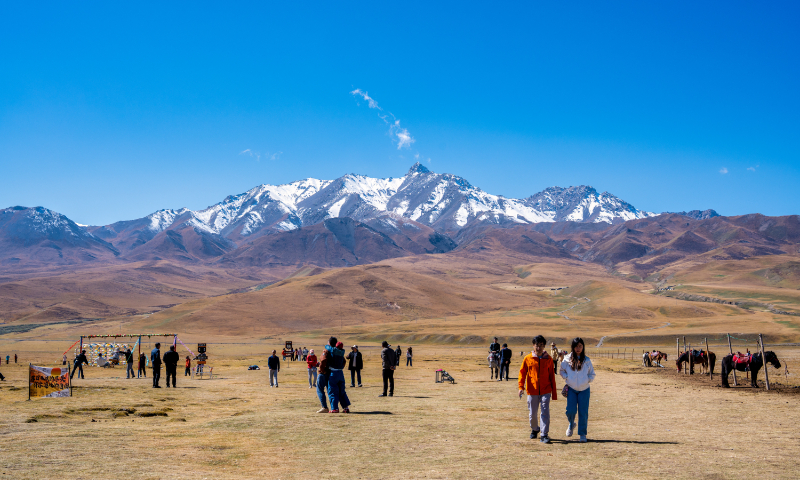
Tourists enjoy scenery of the Qilian Mountains alongside Highway No.9 in Qilian county, Northwest China’s Qinghai Province, on October 1, 2026. Photo: VCG
The quiet Qilian county in Northwest China's Qinghai Province woke up to a soft invasion during the National Day holiday: A place with a population of only about 50,000 suddenly found itself receiving more than 100,000 visitors in a single day, according to media reports.
While all the county's more than 400 hotels and guesthouses were fully booked, nearly 500 people were accommodated in publicly provided beds on Saturday, according to local cultural and tourism authorities. Some tourists told the Global Times on Monday that "it's like winning the lottery" to find accommodation there.
Nearly 35,000 vehicles entered the county on Saturday, bringing more than 100,000 people into the area, Feng Lingling, head of the local tourism bureau, was quoted as saying in the media reports.
Some may have simply passed through, but even if only a small portion of them stayed, the county's accommodation capacity would still have been insufficient, Feng said.
Nearly 500 people were accommodated free of charge in local school dormitories arranged by the Qilian tourism bureau.
The accommodation crunch in Qilian eased on Monday. A staff member from the local tourism bureau told the Global Times that the situation had improved.
"So far, we have received no calls from tourists seeking emergency accommodation," the staff member said on Monday.
A tourist surnamed Huang told the Global Times on Monday that her family was lucky enough to secure the last available room at a hotel in Qilian on Saturday.
"I kept refreshing booking apps for about three hours until I finally found an available room and immediately made a reservation," Huang said, adding that her family had made a temporary detour to Qilian on Saturday. "When we later saw the news about how difficult it was to find accommodation that day, we felt like we had won the lottery."
As rooms ran out, the Qilian tourism bureau activated its emergency response plan. It coordinated with the local education department to open dormitories at two schools as free temporary shelters, accommodating 453 people. Between Saturday and 2:30 am on Sunday, the bureau handled 510 calls for help involving more than 800 visitors, according to media reports.
A widely circulated video showed Feng and other tourism bureau staff members making beds and carrying luggage for tourists at a school dormitory on Saturday night.
"We carefully packed away all the students' belongings first, then laid out brand-new quilts provided by the emergency department," Feng said.
A netizen was quoted as saying in the media reports that his family spent three hours searching for a room before a local resident told them to call the tourism bureau for emergency accommodation.
"Registration was quick. Men and women were housed separately. Within half an hour, we went from having nowhere to stay to a heated dorm room," the netizen said.
Many other visitors shared similar experiences, and social media was filled with thank-you messages and praise for the local team's hands-on response.
The sudden influx was driven by the viral popularity of Highway No.9. The scenic route has attracted widespread attention online this year, drawing large numbers of tourists to Qilian during the National Day holiday, although the county's traditional peak tourism season is usually July and August, the media reports said.
Similar overcrowding was reported at other popular tourist destinations during the National Day holiday.
In Dunhuang, Northwest China's Gansu Province, visitors packed the slopes of Mingsha Mountain and Crescent Spring Scenic Area so densely that netizens joked that the scene looked like "beans spilled across the ground." Even camel rides required visitors to wait at makeshift "traffic lights."
Behind the scenes of holiday crowds lies a broader shift in travel patterns. Meituan data showed that bookings for trips covering two or more destinations jumped 70 percent year on year during the Mid-Autumn Festival and National Day holidays, while multi-city itineraries combining flights and high-speed rail increased 14 percent during the holiday. Travelers are increasingly linking multiple destinations in a single trip, sometimes bringing sudden surges of visitors to places that may not be prepared for the influx.
RELATED ARTICLES