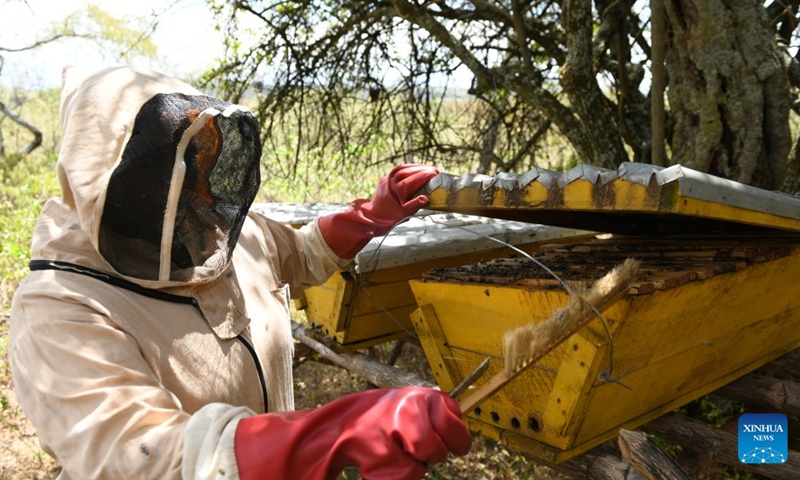
A member of the Lelkolo women's group checks on the beehives in Kenya's Baringo County on Sept. 15, 2026. Photo: Xinhua
Grace Cheserem, chairperson of the Lelkolo women's group in Kenya's Baringo County, still remembers her first honey harvest in 2022.
Wearing a protective veil, she carefully opened a beehive, hearing little more than her own breathing as she pulled out the first comb. The golden honey glistened in the sunlight, drawing cheers from the women gathered around her.
In local communities, beekeeping had long been regarded as men's work. Traditional hives were often placed high in trees, making honey harvesting physically demanding, while beekeeping was once considered taboo for women.
Today, the 21-member women's group has learned to manage beehives and harvest honey themselves, and has begun running their own honey business.
In 2025, the group harvested 612 kg of honey and earned about 500,000 Kenyan shillings (around 3,850 U.S. dollars) from sales.
Behind the change is agricultural extension officer Aholipama Chelagat Rutto, who brought beekeeping techniques she learned in China to the local community.
In 2017, Rutto traveled to China's Changsha, a central Chinese city, to attend a training program on bee production and oil-crop yield improvement, organized by China's Ministry of Commerce and undertaken by a local agricultural science and technology institution.
Before the trip, Rutto's knowledge of beekeeping was largely theoretical. "I learned some things at school, such as the history, life cycle and behavior of bees, but I had not learned beekeeping production in depth," she said.
In China, she received systematic training in apiary construction, colony breeding and hive management, and learned techniques for pest and disease control, honey maturity assessment and honey extraction.
One technique that particularly impressed her was artificial colony splitting. "Previously, beekeepers in Kenya would usually just put a hive there and wait for bees to move in," she said. "In China, I learned how to actively divide one colony into several colonies."
After returning to Kenya, Rutto began sharing what she had learned with local women. "I wanted them to gain more skills and become economically independent," she said.
In Baringo, where women often shoulder responsibilities including fetching water, doing household chores, and caring for children, Rutto saw beekeeping as a practical option for earning additional income. "It takes relatively little of their daily time and can provide income," she said.
Rutto began promoting modern hives, including Langstroth hives, together with protective clothing and specialized tools.
Compared with traditional hives, the equipment lowered the barriers to beekeeping and honey harvesting. Langstroth hives could be placed closer to the ground, while protective clothing and specialized tools enabled women to gradually handle the entire process themselves, from inspecting colonies to harvesting honey, according to Rutto.
As the women gradually mastered beekeeping techniques, changes also began to take place within their households.
"When the men saw that we were actually capable of doing the work, they also really accepted it," Cheserem said. "Now both my husband and I can share household responsibilities."
"We use the money from selling honey to buy livestock such as chickens and goats and to supplement our household expenses," Cheserem added.
For her, the more important change is that she no longer worries as much about paying her children's school fees. She now owns 10 beehives and has started managing her own household apiary.
For women in the area, beekeeping has also provided an alternative livelihood as crop farming becomes increasingly uncertain.
Faith Kittony, secretary of the women's group, said drought has severely affected some parts of the area this year, causing large reductions in crops such as maize and beans.
"Without the income from beekeeping, our lives would be very difficult," Kittony said, adding that beekeeping has become something they can rely on in the face of climate uncertainty.
As the women's beekeeping operation expanded, the group opened a shop selling its own honey and launched its own brand, attracting residents from neighboring villages who wanted to learn from their experience.
"People from nearby villages come and ask us how we did it and how they can start beekeeping," Kittony said.
Rutto is now introducing the idea of value-added honey processing to the group, encouraging the women to move beyond selling raw honey and explore other bee products.
"Next year, I plan to train them to make other bee products, such as body lotion, lip balm and beeswax products," she said.
Rutto has continued to apply and share the knowledge she acquired during her training in China. So far, she has passed the beekeeping techniques on to about 84 beekeeping groups in the county.
Looking back, Rutto said her biggest gain was being able to pass on the knowledge she acquired in China to more people.
"If I keep the knowledge only to myself, its value is very limited. Knowledge becomes truly valuable when it is shared with others," she added.
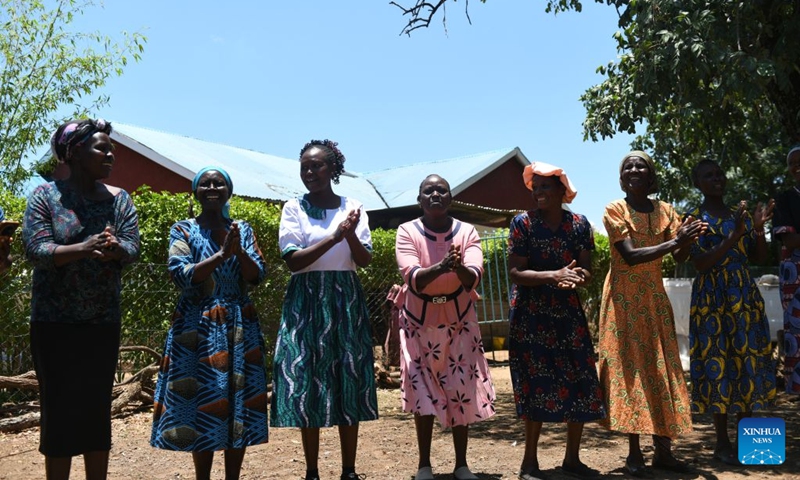
Members of the Lelkolo women's group sing at the beekeeping base in Kenya's Baringo County on Sept. 15, 2026. Photo: Xinhua
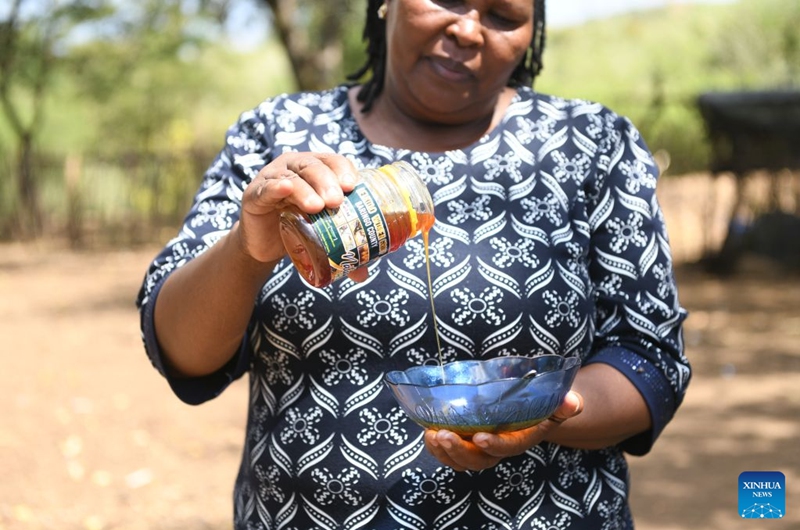
A member of the Lelkolo women's group displays honey in Kenya's Baringo County on Sept. 15, 2026. Photo: Xinhua
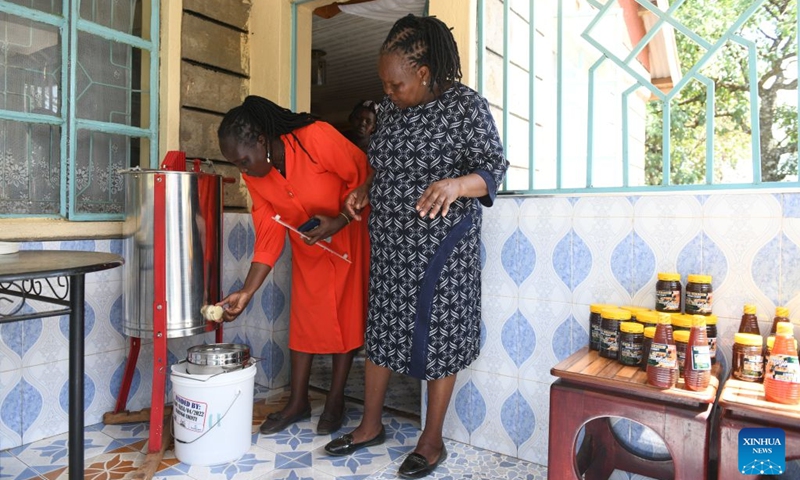
Members of the Lelkolo women's group extract honey in Kenya's Baringo County on Sept. 15, 2026. Photo: Xinhua
