Beibu Gulf Port opens direct bauxite import corridor from Guinea to China's Chongqing
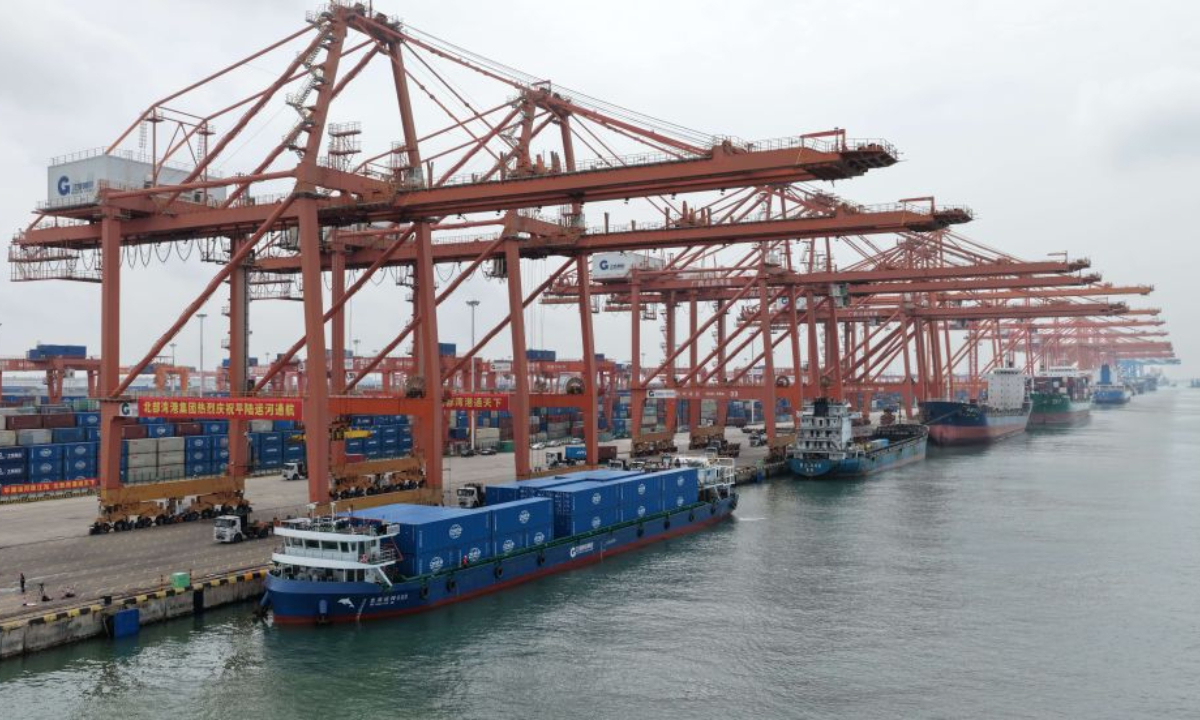
This photo taken on Sept. 16, 2026 shows the Qinzhou Port area of Beibu Gulf Port in Qinzhou, south China's Guangxi Zhuang Autonomous Region. (Xinhua/Zhang Ailin)
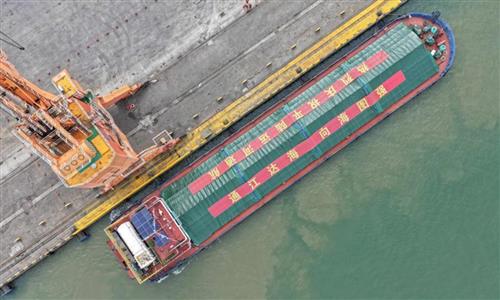
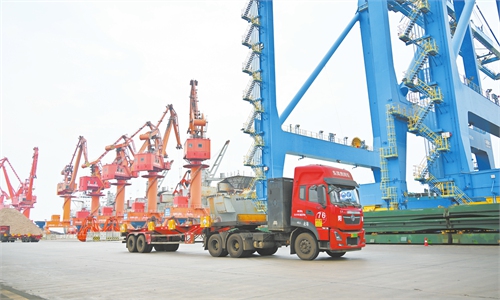
A vessel carrying 168,000 tons of bauxite from Guinea recently berthed at Fangchenggang Port in South China's Guangxi Zhuang Autonomous Region, with the first batch of cargo shipped by rail to Wanzhou, Southwest China's Chongqing, on October 3, providing a reliable supply of raw materials for a mineral production base in the city.
This direct import corridor marks a new breakthrough in the joint efforts of Guangxi and Chongqing to advance the New International Land-Sea Trade Corridor, serve inland industrial hinterlands, and shore up the security and stability of industrial and supply chains, said the Beibu Gulf Port Group on Wednesday.
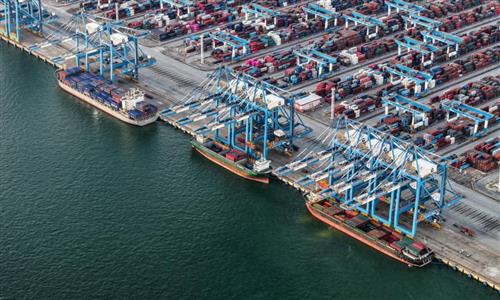
The Beibu Gulf Port comprises three individual ports located in the coastal cities of Beihai, Qinzhou, and Fangchenggang in Guangxi, and serves as a crucial transit point for interconnectivity between western China and Southeast Asia, according to Xinhua News Agency.
According to the port, the new bauxite logistics route provides a pioneering, innovative sea-rail intermodal model spanning overseas mines to Beibu Gulf Port entry to direct rail service to Chongqing. Compared with the traditional river-sea intermodal route via the Yangtze River, it cuts overall transit time by roughly 25 days, delivering a marked improvement in both the quality and efficiency of supply chain support.
The project is both a practical step by the New International Land-Sea Trade Corridor to strengthen its capacity for securing bulk materials and a vivid example of two-way connectivity and mutual empowerment between the Corridor and the Yangtze River Economic Belt, said the port.
The new model gives full play to the complementary strengths of land and sea routes, reinforces the hub function of the Beibu Gulf international gateway port in serving the Chengdu-Chongqing manufacturing base, and opens up a safe and reliable backbone logistics corridor for bulk raw materials for industrial enterprises in southwest China, the port noted.
Beibu Gulf Port said that it will seize the opportunity presented by the commissioning of the Pinglu Canal and refine its multimodal transport service system for bulk industrial raw materials, in a bid to help inland industrial enterprises cut costs, raise efficiency and secure stable production, and accelerate the building of a new regional logistics landscape that is efficient, smooth, safe, stable and mutually complementary.
"Traditionally, the movement of bulk commodities in and out of Southwest China has relied heavily on the Yangtze River, the country's 'golden waterway.' The new route provides a parallel and complementary logistics pathway beyond the Yangtze," Bian Yongzu, executive deputy editor-in-chief of Modernization of Management magazine, told the Global Times on Wednesday.
With the Pinglu Canal becoming operational, the corridor will be able to work with even greater flexibility, which holds strategic value for safeguarding the industrial chain security of Southwest China, the expert noted.
As of Tuesday, the sea-rail intermodal service of the New International Land-Sea Trade Corridor had moved more than 1 million 20-foot equivalent units (TEUs) of container cargo this year, further strengthening the corridor's capacity to keep logistics flows open and unimpeded, the Xinhua News Agency reported on Tuesday.
Data shows that so far this year, 120,000 TEUs of outbound cargo were shipped by rail from Chongqing to Qinzhou Port for sea transit, up 31.7 percent year-on-year, with industrial exports such as auto parts, construction machinery and tires surging 95 percent.
In the opposite direction, 53,000 TEUs of industrial raw materials were moved by rail from Qinzhou Port to Chongqing, up 28.7 percent, and shipments of industrial minerals including quartz sand, spodumene and zinc concentrate nearly tripled, according to Xinhua.
RELATED ARTICLES