China seeks public comment for labor protection rules covering flexible workers such as food-delivery riders
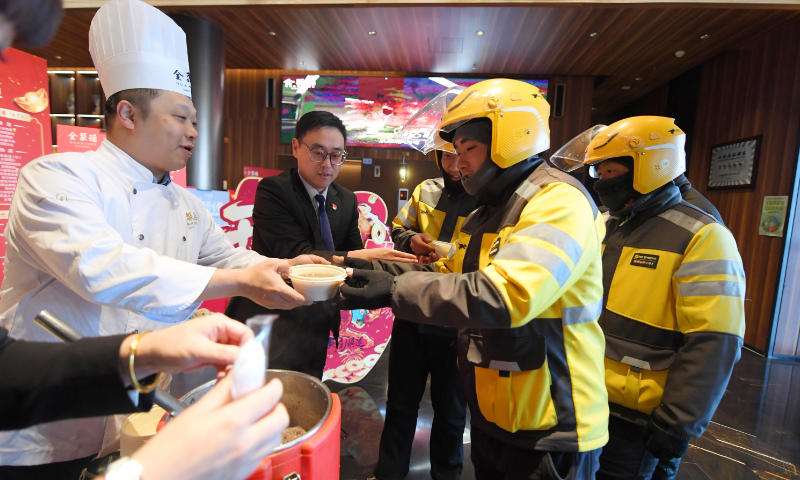
Food delivery riders sample porridge offered by a restaurant during a break between pickups in Beijing on January 26, 2026. Photo: VCG
China released draft measures on Thursday on the protection of the rights and interests of workers in new forms of employment - such as drivers of ride-hailing services and delivery workers - for a public comment period that runs through November 8. It is the first time that China has sought to use regulations to bring flexible workers, who are under enterprise labor management but do not fully meet the legal test for an employment relationship, into the labor-law protection system.The rule targets a workforce that represents a major part of China's labor force. The number of workers in new forms of employment was estimated to have surpassed 200 million as of the end of December 2025, meaning that they accounted for nearly 30 percent of China's total employment, according to official data.
The draft defines workers in new forms of employment as people who rely on internet platforms, provide labor according to platform rules and instructions, and are paid for that labor, according to the document released by China's Ministry of Human Resources and Social Security (MOHRSS) on Thursday.
The groups most directly affected include ride-hailing drivers, food-delivery riders, couriers and similar platform workers, as defined in the draft.
The draft sets out basic labor rights including equal employment and free choice of occupation, labor remuneration, rewards and penalties, working hours and labor intensity, rest, occupational safety and health, protection in severe weather, vocational training, social insurance, personal information protection, and collective consultation, read the draft document.
It also establishes a floor for the working conditions of workers in new forms of employment. It clarifies the content of basic labor rights protection, regulates labor rules and algorithms, smooths channels for resolving labor disputes, specifies the supervisory duties of relevant departments, and sets out legal liability for violations of the measures.
China previously rolled out an occupational injury protection pilot for workers in new forms of employment in July 2022, with plans to cover workers nationwide from July this year.
Recent data released by the MOHRSS showed that since the pilot was launched, it had expanded to 17 provinces and 11 platform companies by the end of June 2026, with cumulative enrolment exceeding 29.9 million people.
Workers in these new forms of employment are highly mobile. A delivery rider, for example, often takes orders on several platforms at once and may work only seasonally. Traditional work-related injury insurance, which relies on monthly contributions, a fixed contribution base and a formal employment relationship, has proved difficult to apply to this group, according to media reports.
Under the pilot program and through practical trials by the platforms, a more flexible model has been developed. Individual workers pay nothing, while the platforms cover the cost through charges calculated per order and settled monthly.
Global Times
RELATED ARTICLES