ARTS / CULTURE & LEISURE
China-Australia team identifies 360-million-year-old lungfish species, recalling the ‘Himalayan fossil hoax’
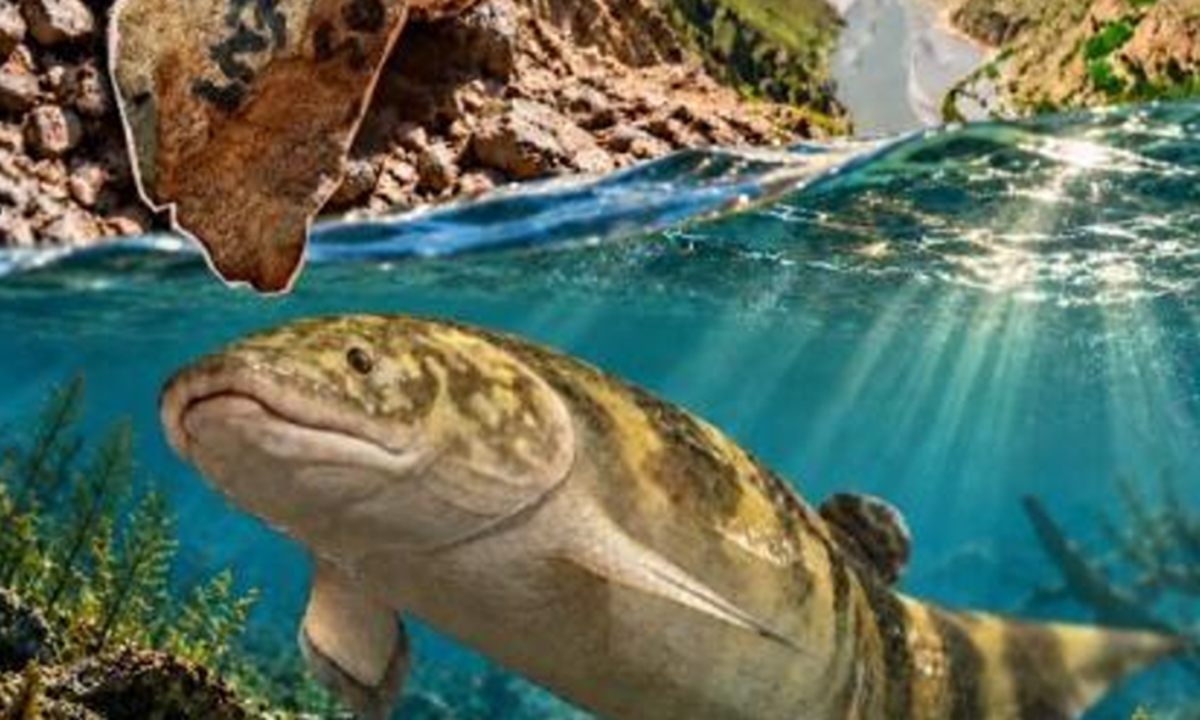
Reconstruction of Talentichthys kuragh and its fossil locality Photo: China News Service
Chinese and Australian researchers have identified a new genus and species of lungfish in a fossil collected in northern Pakistan dating back about 360 million years, offering new clues to ancient life in the Himalaya-Karakoram region.
A team led by Lu Jing, a researcher at the Chinese Academy of Sciences, together with Australian collaborators, named the new species Talentichthys kuragh. According to China News Service, this is the first lungfish fossil from the Himalayan region to be studied since the 1966 claim came under scrutiny.
In 1966, Indian paleontologist Vishwa Jit Gupta claimed to have discovered a lungfish fossil in the southern Himalayan foothills. In the late 1980s, Australian paleontologist John Talent challenged the origins of several fossils reported by Gupta. One lungfish specimen was traced to a quarry in Scotland, casting doubt on its claimed Himalayan provenance.
According to Lu, the fossil was collected by Talent and colleagues in northern Pakistan in 1975 and later sent to the Australian National University. Mostly embedded in rock, it remained difficult to study for decades.
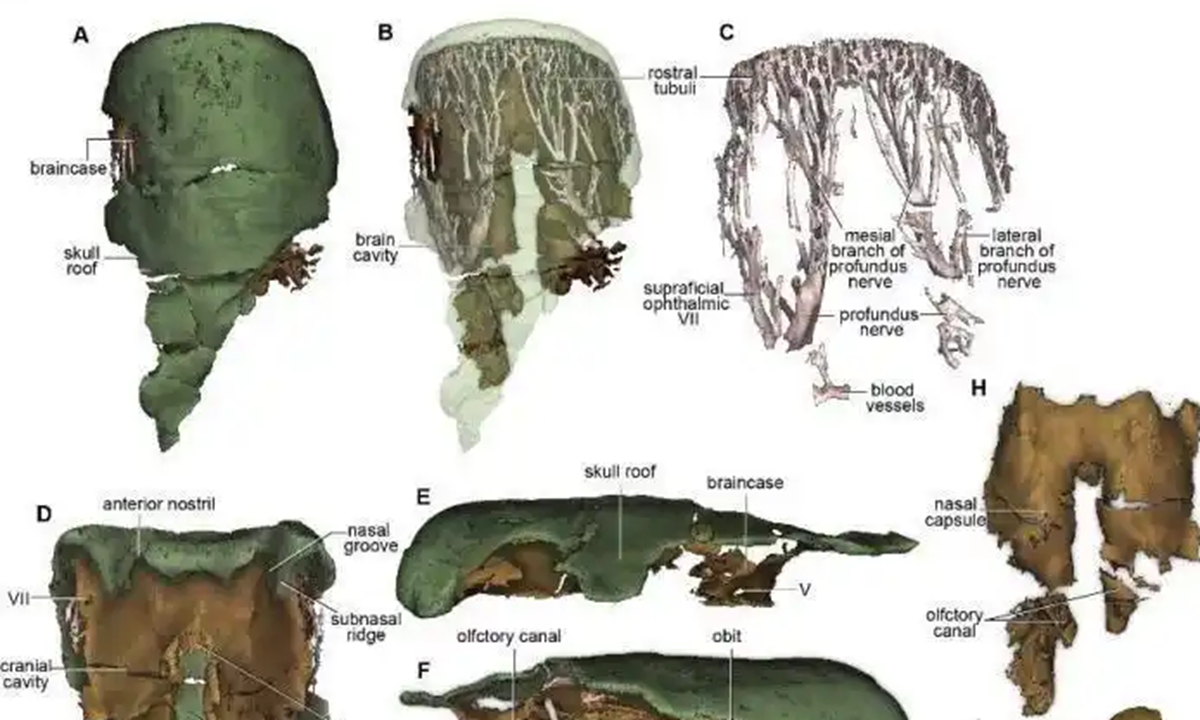
Lu used high-resolution CT scanning to examine the fossil without physically removing it from the limestone block, which measures only about 7 centimeters long. Digital reconstruction revealed hidden skull structures and features characteristic of lungfish, allowing the team to identify a previously unknown genus and species.
Reconstruction of Talentichthys kuragh and its fossil locality Photo: China News Service
The discovery also adds to scientists' understanding of a group of fish with a long evolutionary history. Lu explained that lungfish are among the closest living relatives of four-limbed vertebrates, including humans. Although lungfish never evolved to live on land, they can breathe air and have other adaptations that help them survive in environments where water levels can fluctuate. Today, only six living species remain in Africa, South America and Australia. Around 360 million years ago, however, lungfish were much more widespread, with fossils found on multiple continents.
The new species has several skull features that distinguish it from other known Devonian lungfish. However, researchers have not yet determined precisely where it fits in the group's evolutionary history. Lu said that finding more fossils at the site, especially specimens preserving more of the skull and lower jaw, would help clarify its relationship to other ancient lungfish and provide a fuller picture of prehistoric fish life in the region.
Zhu Zifeng, a Beijing-based paleontological research expert, told the Global Times on Sunday that the skull features preserved in the specimen give researchers a basis for comparing it with lungfish found in other parts of the world. These comparisons may help clarify how the newly identified species relates to other Devonian lungfish and whether its distinctive features reflect a separate evolutionary branch.
According to Zhu, the finding also raises questions about the geographic distribution of lungfish during the Devonian Period, about 360 million years ago, when these fish inhabited a much wider range of environments than they do today.
"Fossils from different regions can help researchers trace where lungfish lived and how their lineages were related, but those conclusions depend on reliable geological context and comparable anatomical evidence," he said.
"Further discoveries in the Himalaya-Karakoram region could help establish whether Talentichthys kuragh represents a lineage with a broader distribution or a more localized branch of lungfish evolution," he added.
RELATED ARTICLES