AI Illustration: Chen Xia/Global Times
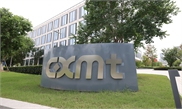
South Korea's stock market offered a telling snapshot on Tuesday. Shares of Samsung Electronics and SK hynix fell about 7 percent and 10 percent respectively, as some local media reports linked the declines to concerns in South Korea over the latest technological advances by China's CXMT.
The backdrop was provided by reports of CXMT's plan to launch a next-generation DDR5 RDIMM server-geared memory chip that leverages 4F² DRAM architecture by the end of 2026. For South Korea, home to some of the world's leading memory chipmakers, China's continued advances raise a question: what will China's artificial intelligence (AI) expansion mean for the future of the global semiconductor landscape?
China's progress does not mean that the advantages South Korean companies have built over decades will disappear overnight. Samsung Electronics and SK hynix have built deep capabilities in memory chips through long-term technological investment and manufacturing experience, with strengths in advanced DRAM development, large-scale production and relationships with major customers.
But signs are emerging that the competitive landscape is gradually evolving. Chinese companies such as CXMT are moving into more advanced technologies and are making progress at their own pace. This could put some pressure on established players in a market where scale and technological advancement remain essential to competitiveness.
The competitive pressure facing South Korean chipmakers is unfolding against a broader shift in the global memory market. AI-driven demand is increasing the need for advanced memory products, with supply constraints emerging in some segments as high-performance computing continues to expand. Against this backdrop, the progress of companies such as CXMT could add to global supply capacity and diversify the sources of memory chips available to the market.
Past experiences suggest that strong market demand often attracts new competitors, as the prospect of growth encourages companies to invest and innovate. In semiconductors, that dynamic can reinforce itself: greater competition drives further technological progress. Over time, South Korean chipmakers may find themselves operating in a more competitive global market - the inevitable result of an industry with strong growth prospects and attractive returns.
Yet the competitive dimension is only part of the story. The progress of memory chips reflects a broader wave of technological development in China. The reported advances in 4F² DRAM architecture offer one example of this wider trend. Such technological progress is contributing to the expansion of China's AI industry, which is creating growing demand across the technology supply chain and new opportunities for suppliers of key components such as semiconductors.
The opportunities created by this expansion will not be confined to Chinese companies such as CXMT; global suppliers can also benefit. As China's AI industry continues to develop, South Korean chipmakers could find new opportunities by meeting the rising demand it creates.
The importance of China's market for South Korea's tech industry is already reflected in trade data. South Korea's exports to China saw triple-digit growth in September, with semiconductors among the key contributors. The figures show how closely the performance of South Korean technology companies is tied to demand from China. As China continues to advance in technology and expand its AI industry, the market opportunities created by this demand are likely to remain significant.
For South Korea, the rise of China's AI industry presents a dual reality: stronger competition and new market opportunities. These two forces are not contradictory. A growing technology market can create room for more competitors while also generating demand that benefits more suppliers across the industry.
The question for South Korea's semiconductor industry is not simply how to respond to China's technological progress in a passive manner, but how to participate in the growth it is generating. As China's AI ecosystem expands, South Korean companies that engage with this growing market could find new opportunities.
The author is a reporter with the Global Times. bizopinion@globaltimes.com.cn
RELATED ARTICLES