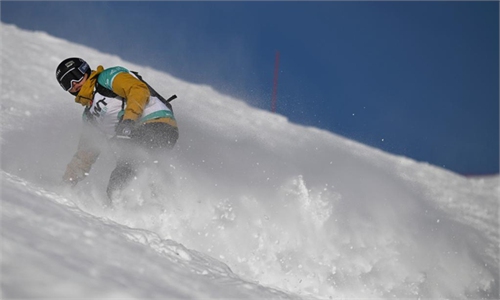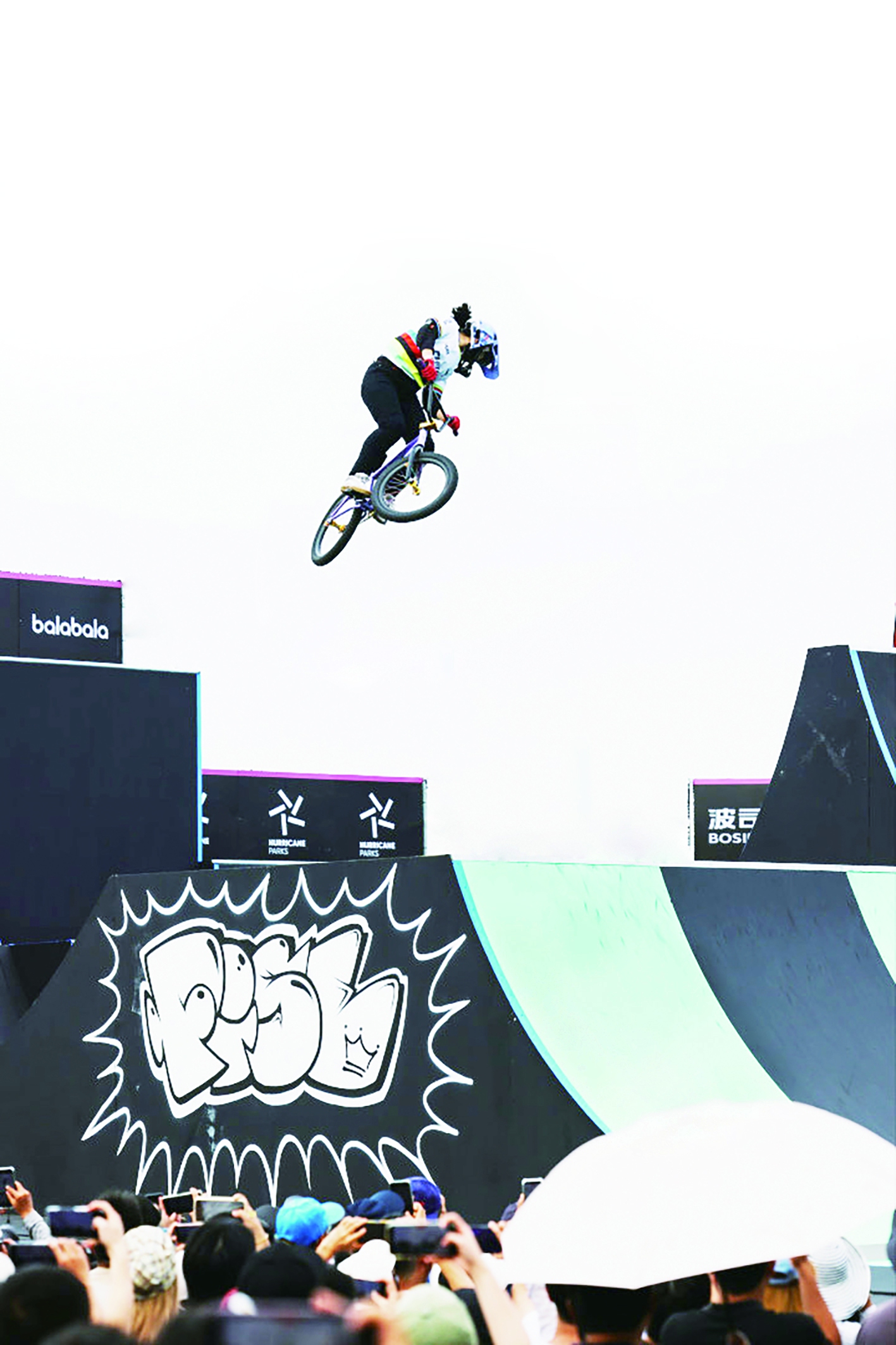
Sun Sibei of China competes in the UCI BMX Freestyle World Cup event on October 18, 2026 in Shanghai.Photo: Courtesy of organizers
When the 2026 West Bund Urban Sports Carnival and FISE World Series Shanghai concluded on October 18, the four-day event drew 400,000 visits to the Gate M West Bund Dream Center, up 20.5 percent year on year and a 72 percent rise compared with non-event periods, according to the organizers.
The 2026 edition, held along the Huangpu River, adopted a free-admission, fully open format for the first time, bringing BMX freestyle, skateboarding and other urban sports into a setting shared with waterfront walkways, commercial spaces and public recreational activities.
For Chen Anda, deputy general manager of Shanghai West Bund Development Group Co Ltd who oversees the operation of the event, the change was more about opening the gates to a larger audience.
"When you organize an event inside an enclosed venue, the organizer naturally wants people to stay inside, while surrounding businesses want them to come out," Chen told the Global Times. "Those interests can conflict. This time, we are trying to move from competition to cooperation."
The experiment comes as Shanghai prepares to host an event for the Olympic qualifying series in May 2028, a qualification pathway to that year's Los Angeles Olympics.
For West Bund, the FISE Shanghai offered a chance to test how an open competition area could work before a larger international event arrives.
But it also raised questions about how to balance spectator experience, commercial operations, and public-access-related issues.
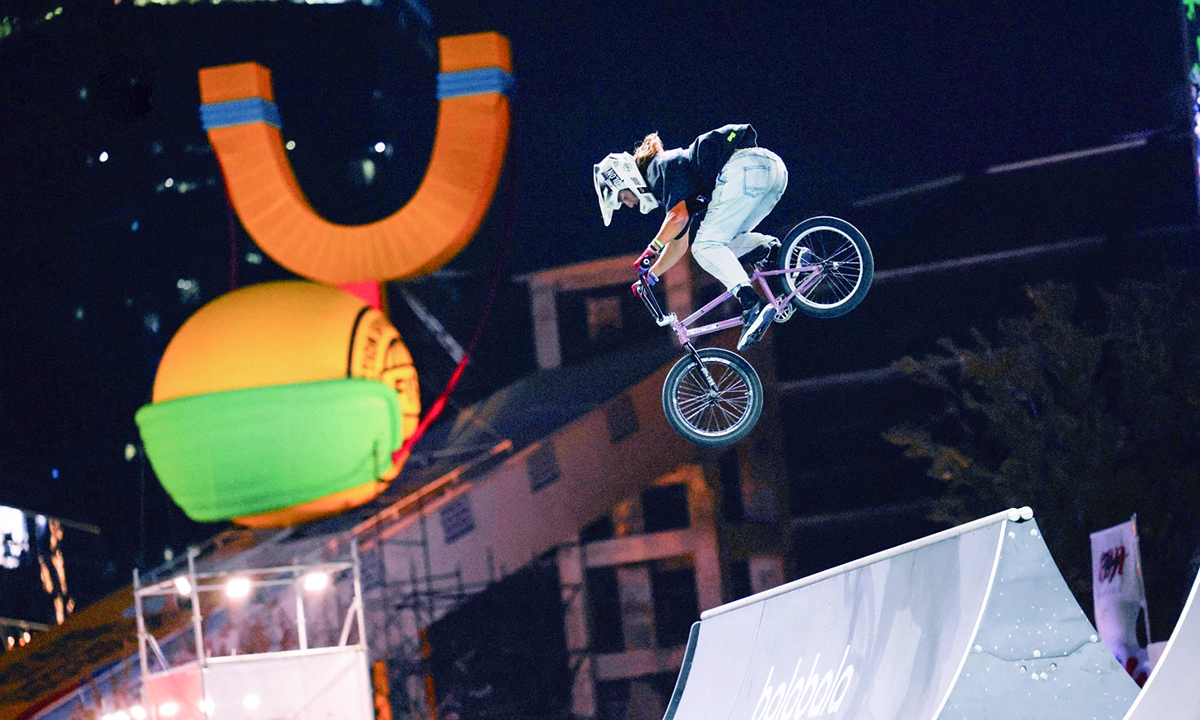
An athlete competes in a BMX event in Shanghai on October 17, 2026. Photo: Courtesy of organizers
Rethinking the venue
Street-based sports competitions are not new. In China, the Athletics Street Tour has brought high-level track and field events to urban landmarks, including Hangzhou's Wulin Square and the plaza beside the Big Air Shougang venue in Beijing.
Internationally, athletics events have also used city squares and other public spaces to bring spectators closer to athletes.
What distinguishes the West Bund experiment is its attempt to connect the competition with an existing commercial district and an extended waterfront public space.
The previous two editions of FISE Shanghai were also held along the Huangpu River, but their competition areas were relatively enclosed.
This year, spectators could watch from different points along the waterfront, while nearby shops and restaurants became part of the wider event environment.
Chen explained that a conventional enclosed venue has limits in terms of spectator capacity and the quality of services it can provide.
At West Bund, the existing commercial spaces around the Gate M West Bund Dream Center became part of the event's supporting infrastructure. Their platforms also offered different viewing angles, allowing spectators to watch competitions while having a cup of coffee or a meal. "We hope the competition, the spectator experience and the wider event experience can come together as an integrated experience," Chen said. Yet opening a venue does not automatically make its different functions work together.
Learning to share
Chen said the open format required coordination among three groups responsible for urban operations, event operations and the shopping complex.
This revealed a practical tension behind the open format as the same space had to accommodate spectators seeking a good view, organizers overseeing safety and businesses trying to serve customers.
Similarly, commercial benefits are not guaranteed. A large crowd does not necessarily translate into increased spending, and organizers had not established how much additional revenue the open format would generate for nearby businesses.
Chen said the approach should be viewed in the longer term. "For these sports, including BMX and skateboarding, we believe they are still in the growth phase," he said. "From the perspective of developing an event brand and its wider ecosystem, allowing more people to encounter the competition up close and without barriers can be more beneficial to its long-term development."
Beyond competition
For West Bund, the broader ambition is to connect major competitions with everyday participation in sport. An event can attract attention, but sustaining a sport requires more than a few days of competition. Training facilities, clubs, young participants and regular activities all play a role.
Chen said West Bund also planned to expand sports facilities along its waterfront public spaces.
The challenge is to identify sports that can fit naturally into urban environments, rather than assume every sport is suited to every public space.
The question of participation also matters to the wider development of urban sports in China.
Song Yulin, general manager of Hurricane Asia Co Ltd, said the sector still faced a challenge in how it was perceived by the general public.
Some people hear the term "extreme sports" and immediately think of high-risk activities such as wingsuit flying, she said. While urban disciplines such as skateboarding, BMX and inline skating offer a different kind of challenge. Song said she hopes successive events and action sports parks will help more people understand these sports and their athletes, while encouraging more children to take part in them. Elite events such as the FISE World Series, can accelerate that process, Chen said, but stressed that participants - not just professional athletes - are fundamental to any sport's development.
Getting ready
The International Olympic Committee announced in May that Shanghai is among the four cities that will host stops for the expanded series on the road to the Los Angeles Olympics in 2028. Chen said the lessons from FISE Shanghai could help the organizers prepare, particularly in managing spectator flows, coordinating commercial operations and responding to unexpected situations.
For Chen, the longer-term goal is not simply to host more events, but to build an environment in which sports, communities and businesses can develop alongside one another.
"Urban sports originally grew out of grassroots communities," he said. The growth of a sport is a process of building and nurturing that ecosystem."
RELATED ARTICLES