Hong Kong seeks bigger role in Belt and Road financial cooperation: InvestHK official
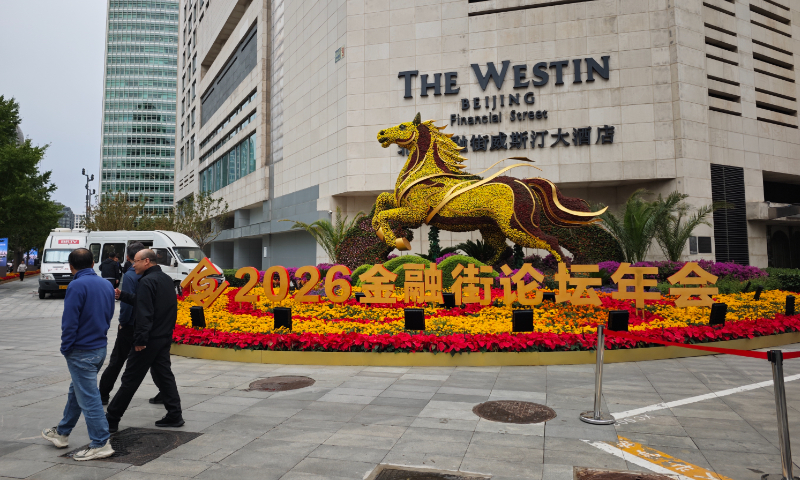
Photo taken on October 20, 2026 shows the landscape design of the Annual Conference of Financial Street Forum 2026 in Beijing. Photo: Yin Yeping/Global Times
Hong Kong is looking to help Belt and Road countries access offshore yuan bonds and loans to lower borrowing costs and support infrastructure development, while connecting the Chinese mainland financial institutions and technology providers with overseas markets, Associate Director-General of Investment Promotion at Invest Hong Kong King Leung told the Global Times in an exclusive interview at the Annual Conference of Financial Street Forum 2026 in Beijing.
Leung said some Central Asian countries face particularly high borrowing costs, with local business leaders telling Hong Kong representatives that interest rates in their markets could reach 25 percent.
"By having yuan bonds, this can drastically lower the cost of borrowing, or cost of capital," Leung said, adding that offshore yuan financing and loans could help accelerate infrastructure development in these countries.
Such financing could support projects including off-grid power solutions using solar and wind energy combined with energy storage, he said, noting that mainland companies with advanced technological capabilities could establish their international headquarters in Hong Kong to manage their global expansion and provide solutions tailored to local needs.
Hong Kong has a dedicated Belt and Road Office to help establish connections with countries participating in the initiative. In recent months, the Hong Kong Special Administrative Region (HKSAR) government has stepped up engagement with emerging markets, including Central Asian countries such as Kazakhstan and Uzbekistan, Leung said.
The HKSAR Chief Executive John Lee also led a delegation to Central Asia in recent months to explore cooperation opportunities, he noted.
Meanwhile, Hong Kong representatives led delegations to Southeast Asia and Gulf Cooperation Council countries, with commercial discussions already underway. While not all these discussions involve governments, Leung said the outreach had gained good traction, with local partners welcoming Chinese technology and capital.
The approach reflects Hong Kong's role in connecting the mainland with international markets, while leveraging its own financial strengths under the principle of "one country, two systems," Leung said.
Hong Kong's financial development should align with the national agenda, including the latest 15th Five Year Plan, while taking advantage of its distinctive regulatory arrangements and close links with international markets, he said.
One area where Hong Kong can contribute is digital assets. Leung described the city as a "sandbox" for experimenting with different applications of digital assets, citing its regulatory independence under the "one country, two systems" framework.
He said the Hong Kong Monetary Authority had issued two licenses this year to firms seeking to issue stablecoins, including one backed by Standard Chartered Bank and another by HSBC.
Although stablecoins are not permitted on the Chinese mainland, Leung noted that different forms of digital money were being explored, including the digital yuan, or e-CNY, and tokenized deposits.
Hong Kong's experience with tokenized green bonds also offers opportunities for international cooperation, particularly in emerging markets seeking to advance their green transitions.
Leung said Hong Kong had been a pioneer in issuing tokenized green bonds, with the first such government issuance taking place in 2023. Distributed ledger technology, including blockchain, can improve data tracking and transparency, helping monitor the use of funds and identify potential greenwashing, he said.
Such initiatives are particularly relevant to developing economies, where financial innovation can help mobilize funding for sustainable development, he said.
Leung, who oversees financial services related to investment promotion at Invest Hong Kong, said he attended the Financial Street Forum for the first time this year to meet financial leaders and gain a better understanding of the direction of financial sector development on the mainland.
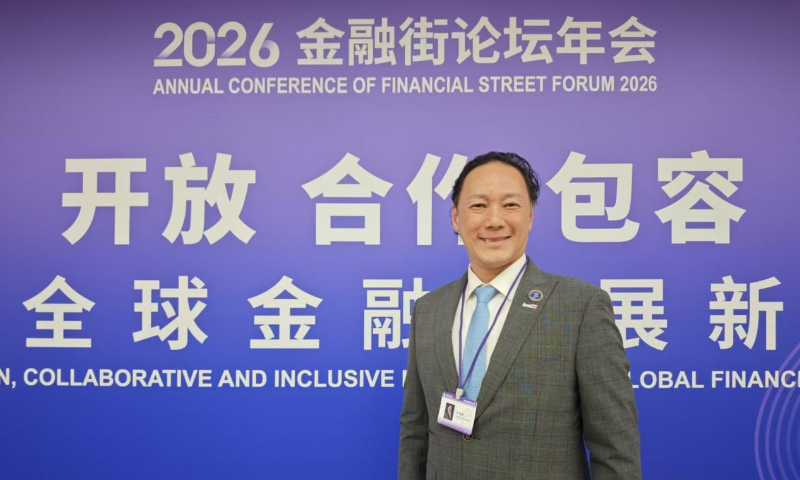
Associate Director-General of Investment Promotion at Invest Hong Kong King Leung attends the Financial Street Forum in Beijing on October 20, 2026. Photo: Yin Yeping/Global Times
He highlighted the forum's discussions on green finance, financial innovation and digital green bonds as a mechanism for promoting the green transition, particularly in Global South countries.Beyond financing, fintech offers another avenue for cooperation with emerging markets, Leung said.
The InvestHK official said business leaders and sovereign wealth funds in these markets consistently identified fintech as one of the leading emerging sectors receiving government attention, and many also cited Chinese experience in promoting financial inclusion.
Leung pointed to Shenzhen based digital bank WeBank, which uses technology to serve customers who might not previously have had bank accounts and provide small loans. WeBank has established a fintech unit in Hong Kong in recent years to export its technological capabilities to other emerging markets.
Leung described Hong Kong's role as a bridge for mainland fintech companies seeking international opportunities.
Hong Kong's approach was to understand the needs of emerging markets and help provide both capital and technological expertise through cooperation with overseas financial institutions and mainland companies, said Leung.
"It's a win-win situation for all," Leung said.
RELATED ARTICLES