BUSINESS / PRESS RELEASE
United Family Healthcare boosts patient care with AI in digestive oncology
Earlier this year, a routine colonoscopy at Beijing United Family Hospital led to a potentially life-changing discovery for a 73-year-old American patient. Given the patient’s long history of gastroesophageal reflux disease, doctors recommended an additional gastroscopy, which unexpectedly revealed an adenoma of the duodenal papilla that had caused no obvious symptoms.
Further examinations showed significant dilation of the patient’s pancreatic and bile ducts, indicating a high-risk precancerous lesion that had gone largely unnoticed. After weighing the options, the patient decided to undergo treatment at Beijing United Family Hospital rather than return to the US for surgery.
About six months ago, the hospital’s minimally invasive team performed a complete endoscopic resection of the lesion. The procedure required no open surgery and caused minimal trauma, removing the high-risk lesion and helping prevent its progression to cancer while avoiding the burden of major surgery.
For United Family Healthcare (UFH), this was not a coincidence, but a reflection of its continued pursuit of medical innovation and its close attention to patient experience and health risks. Founded in 1997, UFH aims to become a leading technology-enabled integrated health and life science system that delivers exceptional care and empowers people.
That spirit of innovation and openness was on full display at the New-Horizon Academic Conference on Digestive Oncology and the 4th Non-Governmental Hospital Gastroenterology - Endoscopic Surgery Forum, held on Saturday at Beijing United Family Hospital.
As AI and endoscopic robotics advance, doctors are gaining access to new tools to support clinical practice. Through cross-regional and international exchanges, the forum focused on a shared goal: integrating emerging technologies into clinical practice to improve patient care.
Promoting international exchange in medical AI
Under the theme “Do good and do well with love - Series of Academic Events on Comprehensive Cancer Care and AI-Driven Precision Diagnosis and Treatment,” the forum brought together leading experts from the Chinese mainland, the Hong Kong Special Administrative Region, the US, Singapore, Japan and South Korea.
Li Wen, chair of Internal Medicine and Gastroenterology at Beijing United Family Hospital, said the forum adopts a “small and focused” approach, centering on AI and endoscopic robotics and exploring how AI can advance the early detection, precision treatment and management of digestive cancers.
"This conference points to a future direction for using AI in the life-cycle management of digestive cancers. Our priority is to help fellow professionals, as well as everyone interested in digestive diseases and cancer, understand the latest developments in China and abroad," Li said in an interview on the sidelines of the forum.
Jiang Bo, head of the Internal Medicine Department and Director of the Digestive Disease Center at Beijing Tsinghua Changgung Hospital, Tsinghua University, said the forum, organized by UFH, provided a high-level platform for Chinese and international medical experts to exchange knowledge and experience.
Participants exchanged views on clinical cases and discussed a range of topics, including advances in endoscopic robotics, AI-assisted early diagnosis and clinical decision-making for digestive cancers, and the development of patient-centered AI infrastructure in healthcare.
“Through this forum, I found that China’s integration of AI into healthcare is far more advanced than we had expected, and that AI is already being used in actual clinical practice. This really surprised me,” said Sang Ho Lee, a professor of nephrology at Kyung Hee University College of Medicine in South Korea.
Lee noted that healthcare systems differ from country to country, and AI systems must be adapted to local healthcare environments to be effective. He added that China’s experience had inspired him and left a deep impression.
AI-powered clinical companion system AMU
At the forum, UFH’s independently developed AMU clinical companion system was the focus of the first keynote presentation.
“One of the greatest values of AI lies in returning time to doctors and bringing genuine care back to patients,” Li said.
To address challenges such as the time doctors spend documenting consultations and the complexity of patients’ medical histories, UFH developed AMU as an upgraded system building on its existing AI-powered voice-based electronic medical record function.
Before consultations, AMU can automatically organize patients’ medical histories, including records from other hospitals, identify key risks and generate visualized data to help doctors quickly understand a patient’s condition. During consultations, it uses speech recognition to generate structured medical records and provides diagnostic and treatment suggestions, with references to authoritative medical literature. After consultations, it can generate multilingual summaries, helping reduce language barriers when communicating with international patients.
For cancer patients requiring long-term management, the system can also integrate treatment records and provide regular follow-up reminders, supporting more comprehensive care throughout the treatment process.
“AMU not only improves doctors’ experience, but also benefits patients, making it a win-win application of AI in clinical practice. This is a meaningful development, and we hope to see AI’s clinical applications continue to advance and deliver even greater benefits,” Jiang said.
By integrating AI into clinical practice, UFH aims to improve efficiency while allowing doctors to devote more attention to patient care, providing more precise, continuous and patient-centered services to people from diverse backgrounds, including international patients.
According to Li, the system has been deployed across all 11 UFH hospitals nationwide, including those in Beijing, Shanghai, Guangzhou, Shenzhen, Tianjin and Qingdao.
Patient-centered care for international patients
Drawing on its international service experience, medical expertise and multidisciplinary collaboration, Beijing United Family Hospital is equipped to serve patients from around the world. UFH’s healthcare network handles more than one million patient visits annually, including nearly 100,000 visits by international patients.
For a 28-year-old British man weighing 240 kilograms, with a waist circumference of 203 centimeters and a body mass index (BMI) of 77 kg/m², losing weight had been a struggle for years. In December 2025, he came to Beijing United Family Hospital in search of a new treatment option. Following an assessment by a multidisciplinary team (MDT), the hospital performed an endoscopic gastric bypass stent placement procedure using a technology developed in China.
The minimally invasive procedure was performed entirely through a gastroscope and took just 10 minutes. It required no open surgery and did not damage the gastrointestinal tract. At a follow-up visit one week later, the patient’s weight had dropped by 11 kilograms.
“I feel that I have regained control of my life,” the patient said.
Such cases reflect UFH’s commitment to patient-centered care. Digestive diseases often involve multiple specialties, while under traditional models, patients may have to navigate different departments on their own.
“Beijing United Family Hospital brings together specialists in gastroenterology, digestive surgery and oncology, alongside traditional Chinese medicine and pediatrics, enabling multidisciplinary teams to develop treatment plans tailored to each patient’s condition and reduce the need for patients to move between departments,” Li noted.
AI is also supporting more personalized care. According to Li, it can help doctors synthesize input from different specialties, providing useful references for clinical decision-making.
Jiang also praised the patient care experience at UFH, noting that public hospitals are often overcrowded, creating a stark contrast with UFH’s more patient-centered approach.
“UFH requires at least 40 minutes for each patient consultation. With AI support, doctors can spend more time communicating with patients, gaining a fuller understanding of their conditions and individual needs, and developing personalized treatment plans,” Jiang said.
Li added that China’s large population and diverse clinical settings give the country distinct advantages in integrating AI into healthcare. These conditions have helped accelerate the development and clinical application of new technologies, while the work of Chinese healthcare institutions such as UFH in this field has increasingly gained recognition from international peers.
“We hope to use international academic forums like this to share our clinical experience and explorations with colleagues around the world. Through mutual learning and exchange, we can promote the wider clinical application of AI and medical technologies and bring benefits to more patients,” he said.
Further examinations showed significant dilation of the patient’s pancreatic and bile ducts, indicating a high-risk precancerous lesion that had gone largely unnoticed. After weighing the options, the patient decided to undergo treatment at Beijing United Family Hospital rather than return to the US for surgery.
About six months ago, the hospital’s minimally invasive team performed a complete endoscopic resection of the lesion. The procedure required no open surgery and caused minimal trauma, removing the high-risk lesion and helping prevent its progression to cancer while avoiding the burden of major surgery.
For United Family Healthcare (UFH), this was not a coincidence, but a reflection of its continued pursuit of medical innovation and its close attention to patient experience and health risks. Founded in 1997, UFH aims to become a leading technology-enabled integrated health and life science system that delivers exceptional care and empowers people.
That spirit of innovation and openness was on full display at the New-Horizon Academic Conference on Digestive Oncology and the 4th Non-Governmental Hospital Gastroenterology - Endoscopic Surgery Forum, held on Saturday at Beijing United Family Hospital.
As AI and endoscopic robotics advance, doctors are gaining access to new tools to support clinical practice. Through cross-regional and international exchanges, the forum focused on a shared goal: integrating emerging technologies into clinical practice to improve patient care.
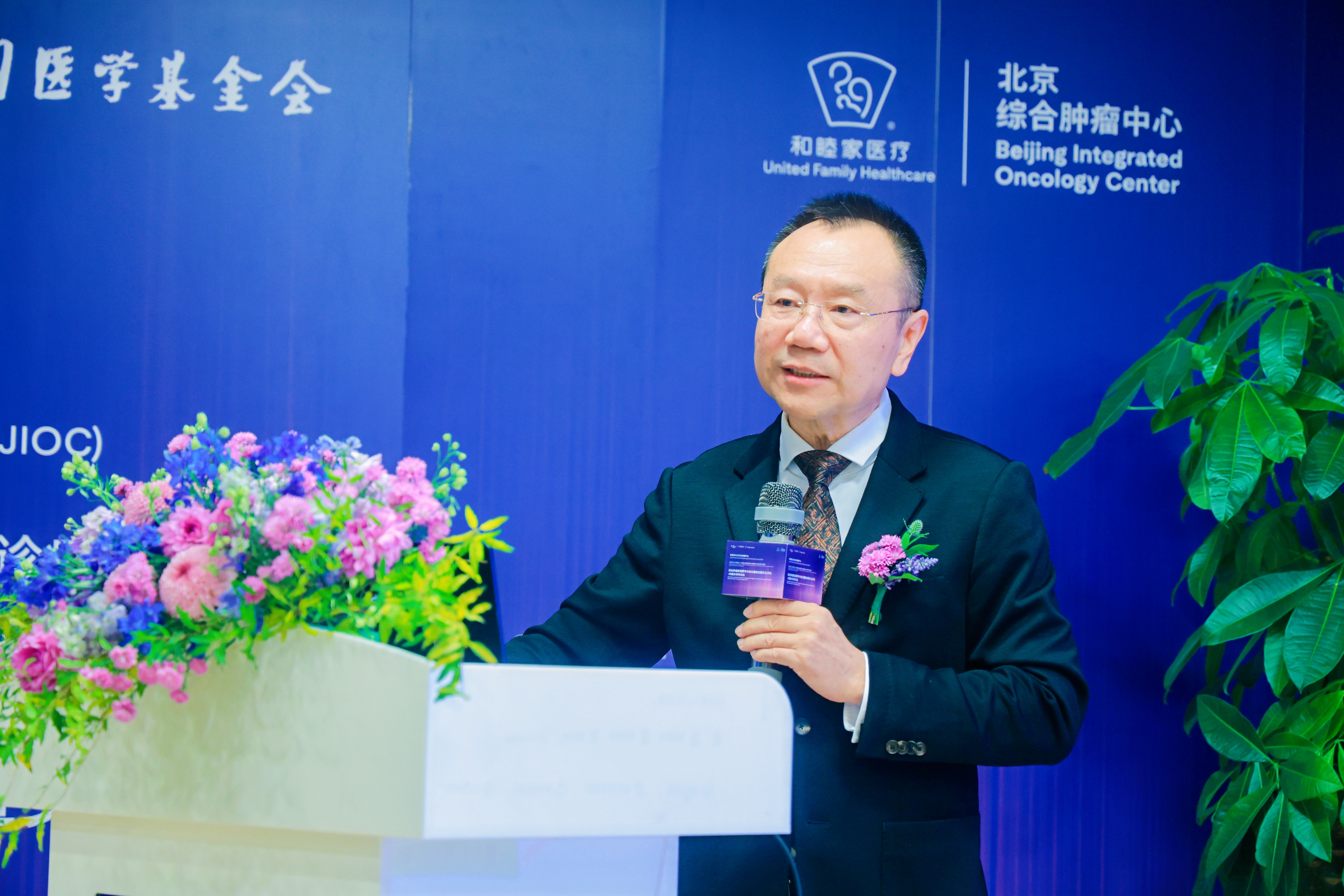
Jiang Bo, head of the Internal Medicine Department and Director of the Digestive Disease Center at Beijing Tsinghua Changgung Hospital, speaks at the forum on October 24, 2026. Photo: United Family Healthcare
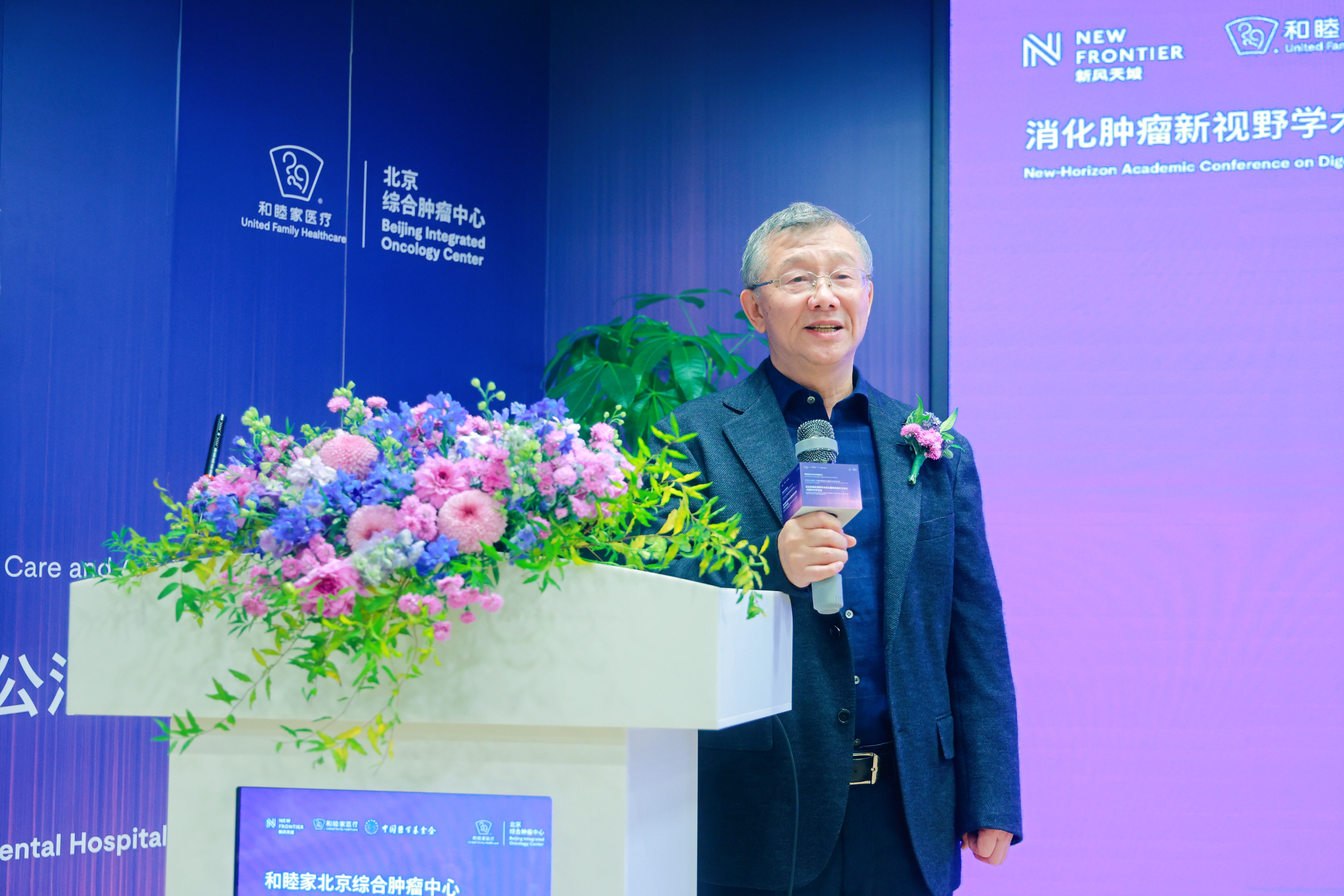
Li Wen, chair of Internal Medicine and Digestive Disease Center at Beijing United Family Hospital speaks at the forum on October 24, 2026. Photo: United Family Healthcare
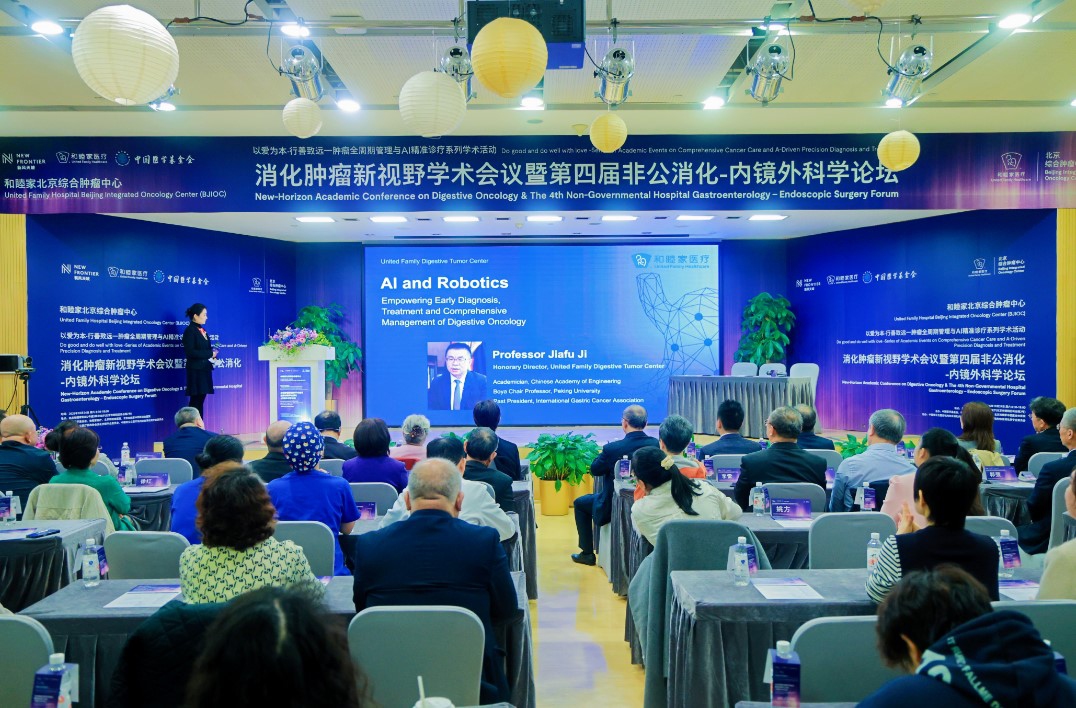
The New-Horizon Academic Conference on Digestive Oncology and the 4th Non-Governmental Hospital Gastroenterology - Endoscopic Surgery Forum were held at Beijing United Family Hospital on October 24, 2026. Photo: United Family Healthcare
Promoting international exchange in medical AI
Under the theme “Do good and do well with love - Series of Academic Events on Comprehensive Cancer Care and AI-Driven Precision Diagnosis and Treatment,” the forum brought together leading experts from the Chinese mainland, the Hong Kong Special Administrative Region, the US, Singapore, Japan and South Korea.
Li Wen, chair of Internal Medicine and Gastroenterology at Beijing United Family Hospital, said the forum adopts a “small and focused” approach, centering on AI and endoscopic robotics and exploring how AI can advance the early detection, precision treatment and management of digestive cancers.
"This conference points to a future direction for using AI in the life-cycle management of digestive cancers. Our priority is to help fellow professionals, as well as everyone interested in digestive diseases and cancer, understand the latest developments in China and abroad," Li said in an interview on the sidelines of the forum.
Jiang Bo, head of the Internal Medicine Department and Director of the Digestive Disease Center at Beijing Tsinghua Changgung Hospital, Tsinghua University, said the forum, organized by UFH, provided a high-level platform for Chinese and international medical experts to exchange knowledge and experience.
Participants exchanged views on clinical cases and discussed a range of topics, including advances in endoscopic robotics, AI-assisted early diagnosis and clinical decision-making for digestive cancers, and the development of patient-centered AI infrastructure in healthcare.
“Through this forum, I found that China’s integration of AI into healthcare is far more advanced than we had expected, and that AI is already being used in actual clinical practice. This really surprised me,” said Sang Ho Lee, a professor of nephrology at Kyung Hee University College of Medicine in South Korea.
Lee noted that healthcare systems differ from country to country, and AI systems must be adapted to local healthcare environments to be effective. He added that China’s experience had inspired him and left a deep impression.
AI-powered clinical companion system AMU
At the forum, UFH’s independently developed AMU clinical companion system was the focus of the first keynote presentation.
“One of the greatest values of AI lies in returning time to doctors and bringing genuine care back to patients,” Li said.
To address challenges such as the time doctors spend documenting consultations and the complexity of patients’ medical histories, UFH developed AMU as an upgraded system building on its existing AI-powered voice-based electronic medical record function.
Before consultations, AMU can automatically organize patients’ medical histories, including records from other hospitals, identify key risks and generate visualized data to help doctors quickly understand a patient’s condition. During consultations, it uses speech recognition to generate structured medical records and provides diagnostic and treatment suggestions, with references to authoritative medical literature. After consultations, it can generate multilingual summaries, helping reduce language barriers when communicating with international patients.
For cancer patients requiring long-term management, the system can also integrate treatment records and provide regular follow-up reminders, supporting more comprehensive care throughout the treatment process.
“AMU not only improves doctors’ experience, but also benefits patients, making it a win-win application of AI in clinical practice. This is a meaningful development, and we hope to see AI’s clinical applications continue to advance and deliver even greater benefits,” Jiang said.
By integrating AI into clinical practice, UFH aims to improve efficiency while allowing doctors to devote more attention to patient care, providing more precise, continuous and patient-centered services to people from diverse backgrounds, including international patients.
According to Li, the system has been deployed across all 11 UFH hospitals nationwide, including those in Beijing, Shanghai, Guangzhou, Shenzhen, Tianjin and Qingdao.
Patient-centered care for international patients
Drawing on its international service experience, medical expertise and multidisciplinary collaboration, Beijing United Family Hospital is equipped to serve patients from around the world. UFH’s healthcare network handles more than one million patient visits annually, including nearly 100,000 visits by international patients.
For a 28-year-old British man weighing 240 kilograms, with a waist circumference of 203 centimeters and a body mass index (BMI) of 77 kg/m², losing weight had been a struggle for years. In December 2025, he came to Beijing United Family Hospital in search of a new treatment option. Following an assessment by a multidisciplinary team (MDT), the hospital performed an endoscopic gastric bypass stent placement procedure using a technology developed in China.
The minimally invasive procedure was performed entirely through a gastroscope and took just 10 minutes. It required no open surgery and did not damage the gastrointestinal tract. At a follow-up visit one week later, the patient’s weight had dropped by 11 kilograms.
“I feel that I have regained control of my life,” the patient said.
Such cases reflect UFH’s commitment to patient-centered care. Digestive diseases often involve multiple specialties, while under traditional models, patients may have to navigate different departments on their own.
“Beijing United Family Hospital brings together specialists in gastroenterology, digestive surgery and oncology, alongside traditional Chinese medicine and pediatrics, enabling multidisciplinary teams to develop treatment plans tailored to each patient’s condition and reduce the need for patients to move between departments,” Li noted.
AI is also supporting more personalized care. According to Li, it can help doctors synthesize input from different specialties, providing useful references for clinical decision-making.
Jiang also praised the patient care experience at UFH, noting that public hospitals are often overcrowded, creating a stark contrast with UFH’s more patient-centered approach.
“UFH requires at least 40 minutes for each patient consultation. With AI support, doctors can spend more time communicating with patients, gaining a fuller understanding of their conditions and individual needs, and developing personalized treatment plans,” Jiang said.
Li added that China’s large population and diverse clinical settings give the country distinct advantages in integrating AI into healthcare. These conditions have helped accelerate the development and clinical application of new technologies, while the work of Chinese healthcare institutions such as UFH in this field has increasingly gained recognition from international peers.
“We hope to use international academic forums like this to share our clinical experience and explorations with colleagues around the world. Through mutual learning and exchange, we can promote the wider clinical application of AI and medical technologies and bring benefits to more patients,” he said.
