ARTS / CULTURE & LEISURE
‘Kung Fu Punk’ gives ‘wuxia’ a new look in ‘Phantom Blade Zero’: producer Liang Qiwei
Stories in motion
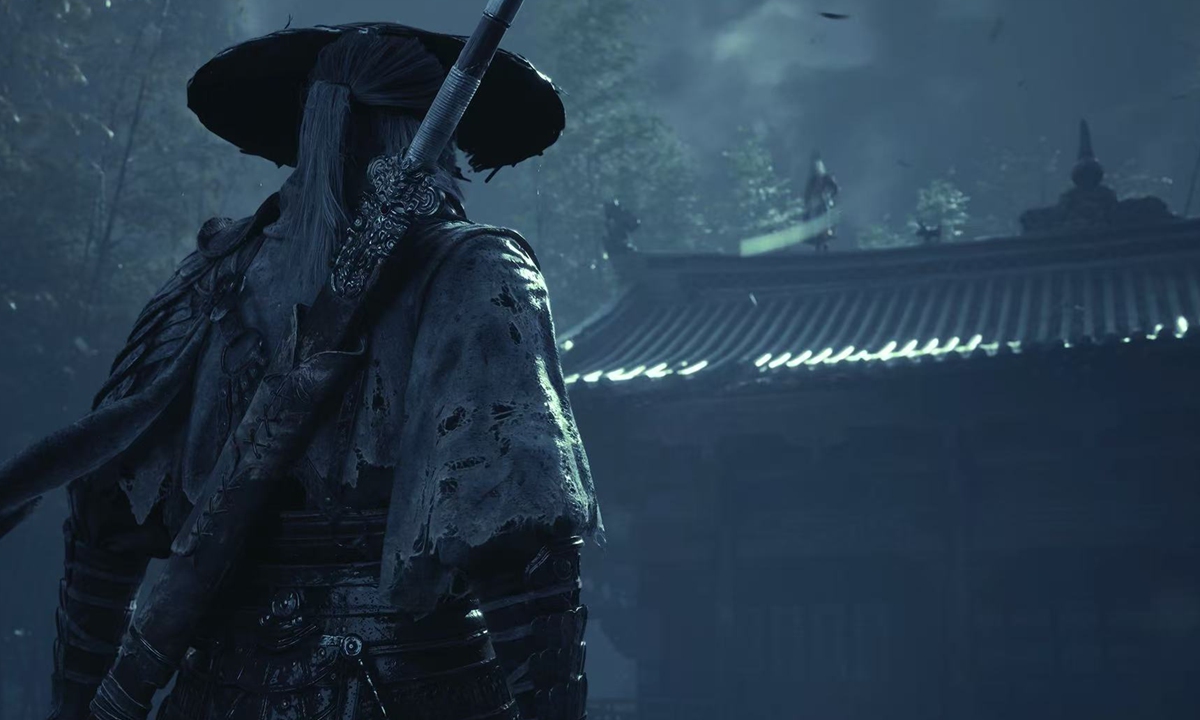
A character seen from behind in Phantom Blade Zero Photos: Courtesy of the production team
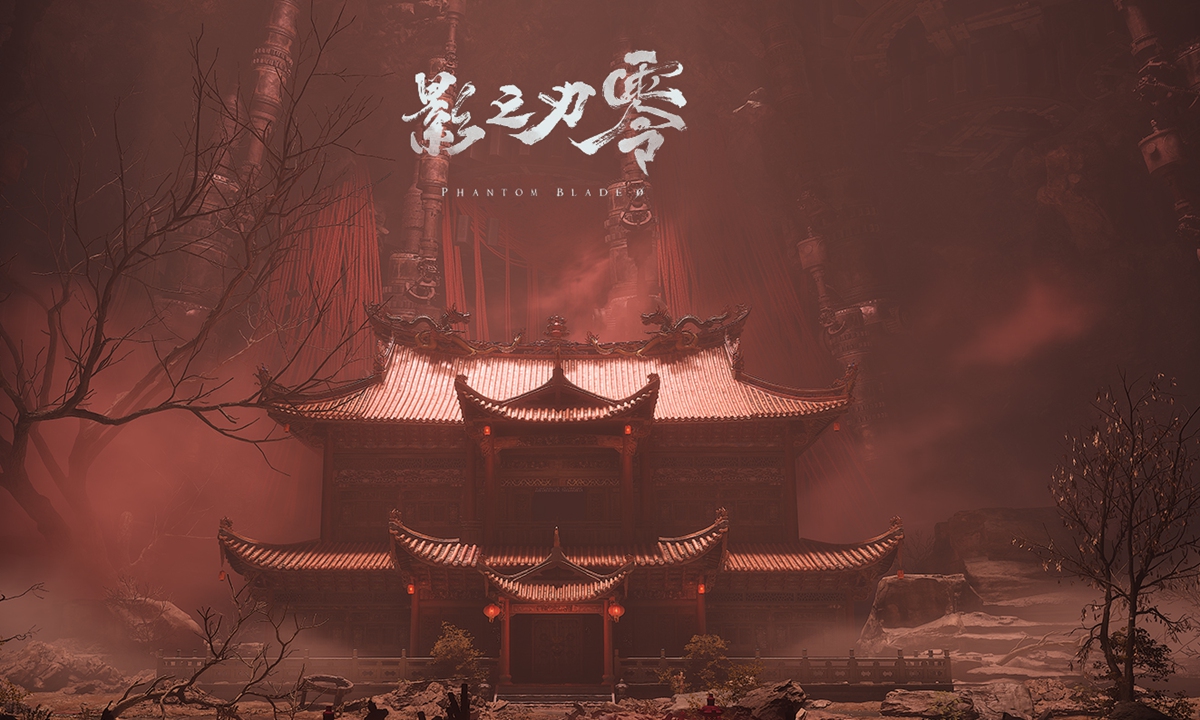
A location from the game Phantom Blade Zero Photos: Courtesy of the production team
Many overseas players who have tried the demo of the Chinese AAA game Phantom Blade Zero have gone on to explore traditional Chinese martial arts, searching online communities for information about kung fu, Wing Chun and internal cultivation.Liang Qiwei, the game's producer, said he had encountered this phenomenon while meeting players at international gaming events.
"For them, what initially draws them in is the fluid, hard-hitting combat. Traditions of the Chinese martial arts behind the fighting then become something they want to explore further," Liang told the Global Times.
The journey from playing the game to exploring its cultural roots has helped Phantom Blade Zero attract great attention. Its pre-release trailer surpassed 10 million views on YouTube within five days. The game has also received high scores from several international gaming media outlets: IGN gave it 9/10, while IGN China and PCGamesN awarded it perfect scores. Its average media review score on Metacritic stands at 88, exceeding the score of 83 received by the Chinese game Black Myth: Wukong in the early days following its 2024 release.
Heart of combat
Beyond its strong reviews, Phantom Blade Zero has built a dark and mysterious wuxia world. Wuxia refers to a Chinese literary genre centered on martial arts heroes, chivalry and justice.
In Phantom Blade Zero, players take on the role of a protagonist with just 66 days left to live who must find a way to survive while fleeing and fighting back against enemies, and ultimately unravel a major conspiracy in the martial arts world.
Li Tuo, a Beijing-based game critic, told the Global Times that, unlike Soulslike action games, Phantom Blade Zero places greater emphasis on the satisfying, flashy moves of wuxia and the flexibility to read and respond to opponents in combat.
"The game aims to be easy to pick up but difficult to master, allowing players to jump into combat quickly while gradually honing their skills through repeated practice," Li said.
The design draws on the team's years of experience creating wuxia works. Liang said the team began creating wuxia titles early on and gradually developed its own martial arts world through a sustained passion for the genre, continuous refinement and original ideas.
"It continues this creative direction. The team hopes to build an action game that follows the logic of Chinese martial arts, rather than simply copying the established frameworks of overseas titles," he said.
The team drew inspiration from martial arts movements and the choreography of Hong Kong kung fu films.
"We worked closely with martial arts star Donnie Yen [star of the Ip Man kung fu film franchise], director Yang Liu and the Xingfu Feiyang motion capture team. Drawing on the generation of force and attack-and-defense logic of traditional martial arts, and combining these with the choreography of Hong Kong kung fu films, we refined the motion capture and animation to give the moves the distinctive spirit of Chinese martial arts," Liang noted.
'Kung Fu Punk'
"We scanned traditional Chinese architecture, traditional objects and items associated with intangible cultural heritage, preserving their textures and forms before reworking them with industrial elements," Liang told the Global Times. "The aim was to blend traditional wuxia with modern industrial aesthetics, rather than simply piling up Chinese-style visual symbols."
"We chose not to recreate classic wuxia in the old way. Instead, we combined the traditional jianghu [the fictional sub-society of kung fu] with modern industrial aesthetics to create a distinctive style we call 'Kung Fu Punk,'" Liang said.
Rather than teaching overseas players about Chinese culture through explanatory notes or dialogue, Liang said, the team hopes to first build an emotional connection through combat and character stories, allowing players to gradually discover the traditions behind them.
In Liang's view, a wuxia hero does not have to be invincible. "We want players to see that wuxia is not just about spectacular fighting. It carries Chinese values concerning justice, difficult choices and staying true to one's principles, while also exploring questions of responsibility and moral conviction," he said.
Ryan Anderson, an US Steam user who regularly plays Soulslikes, told the Global Times that even players unfamiliar with wuxia can be drawn in by strong visuals and combat design, as well as compelling world-building and character development.
"If a game makes me care about a character's fate, I naturally become interested in the cultural world that character inhabits," Anderson said.
Liang said the team took overseas players' feedback into account to make the game easier to understand and play, but did not deliberately simplify traditional martial arts moves, Chinese cultural objects, or the fictional world of martial arts to cater to the market.
"Cultural differences may feel unfamiliar, but that does not necessarily make them a barrier. They can also encourage players to explore on their own," he said.
New forms of expression
The attention surrounding Phantom Blade Zero highlights how original Chinese games can draw on traditional culture to establish a distinctive identity.
When it comes to Chinese games, Black Myth: Wukong draws on Journey to the West and its mythological world, bringing classical Chinese literature into the action game format. Phantom Blade Zero, by contrast, draws on wuxia, a genre deeply rooted in Chinese literature, film and traditional culture, to explore a different form of expression.
Li said video games allow players to do more than simply watch a story: Through their action and exploration, they become part of it. However, a cultural theme alone does not automatically translate into global appeal.
"Players first need to find the game fun, the characters worth caring about and the world worth exploring. If cultural characteristics are genuinely built into the gameplay and storytelling, they can become a unique competitive strength rather than serving merely as a promotional tool," Li said.
RELATED ARTICLES


