China’s State Council report calls for supporting state-owned investment firm in playing role of quasi-stabilization fund

Latest News
China will support Central Huijin Investment Ltd., a Chinese state-owned investment company, in playing the role of a quasi-stabilization fund and further improve mechanisms for stabilizing the capital market, according to a State Council report on financial work released on Thursday by the National People's Congress (NPC).
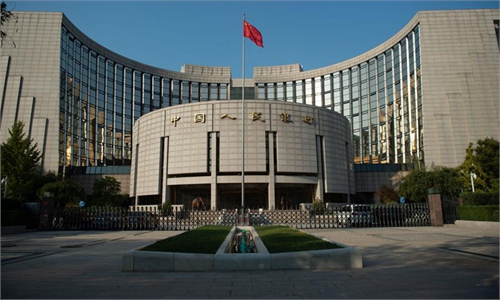
The second plenary meeting of the 25th session of the Standing Committee of the 14th NPC was held on Tuesday morning at the Great Hall of the People in Beijing. At the meeting, Pan Gongsheng, governor of the People's Bank of China (PBC), delivered a report on financial work at the request of the State Council.
The report called for making effective use of monetary policy instruments to support the capital market, broadening the sources and channels of medium- and long-term capital and the ways such funds enter the market, and consolidating and improving market stabilization mechanisms. It also stressed the need to maintain the stable operation of stock, bond and foreign exchange markets.
Li Changan, a professor at the School of Public Administration at the University of International Business and Economics, told the Global Times on Thursday that the main purpose of supporting Central Huijin in playing the role of a quasi-stabilization fund is to stabilize the capital market and enable it to better serve China's efforts to build itself into a leading financial power.
The latest policy arrangements could help expand Central Huijin's market-stabilization capacity and enable it to play a more active role in stabilizing the market, Li said. Beyond market stabilization, Central Huijin can also help guide investment toward value-oriented strategies, which is another important objective, he added.
Looking ahead, China will continue to implement a moderately accommodative monetary policy to create an appropriate monetary and financial environment for sustained economic improvement in quality and efficiency, the report said.
It called for using various policy instruments to maintain ample liquidity and ensure that the growth of aggregate financing to the real economy and money supply is in line with economic growth and expected targets for the overall price level. Other priorities include improving the interest rate regulation mechanism, strengthening the implementation and oversight of interest rate policies, reducing financing-related intermediary costs, maintaining the basic stability of the yuan exchange rate at a reasonabl equilibrium level, and continuously improving the monetary policy framework.
The report also emphasized improving the alignment of financial services with the needs of the real economy to support economic restructuring and upgrading and promote high-quality development.
It proposed improving the statistical framework and performance evaluation system for the five key areas of finance — technology finance, green finance, inclusive finance, pension finance and digital finance — while making better use of structural monetary policy instruments and strengthening coordination with fiscal, industrial and other policies.
Other priorities include increasing financial support for the development of the six major networks, scientific and technological innovation, and small and micro businesses; accelerating the development of a multi-tiered modern financial market system to enhance market resilience and resource allocation; advancing the high-quality development of the bond market's Sci-Tech Innovation Board; and supporting efforts to clear overdue payments to businesses.
RELATED ARTICLES