BRASIL 247 / MORE
Brazil establishes plan to reduce dependence on fossil fuels
Government resolution outlines a National Roadmap to guide the energy transition, with a 270-day deadline and the participation of four ministries
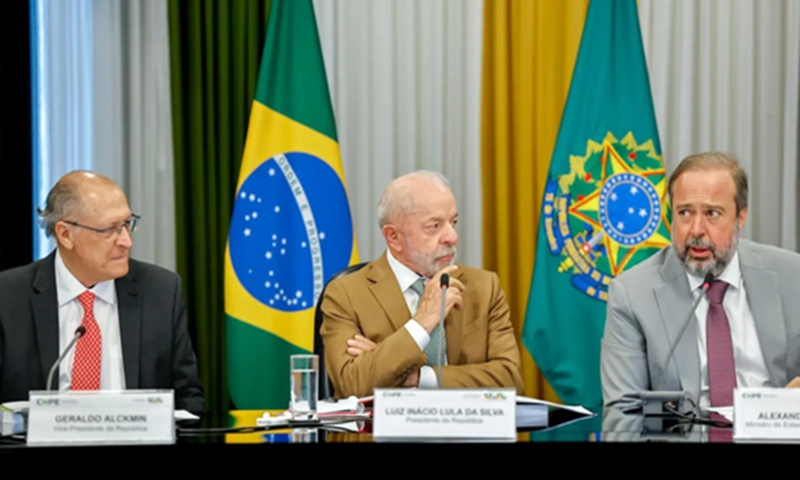
Luiz Inácio Lula da Silva (middle), during the Extraordinary Meeting of the National Council for Energy Policy (CNPE), at the Ministry of Mines and Energy, Brasília. Credit: Ricardo Stuckert
The Brazilian government has approved guidelines to gradually reduce Brazil's reliance on fossil fuels. A resolution by the National Council for Energy Policy (CNPE) mandates the creation of a National Roadmap, which will establish strategies for a planned energy transition, ensuring supply security, economic development, and societal participation.
The initiative fulfills a directive from President Luiz Inácio Lula da Silva and addresses Brazil's commitments to combating climate change. The document aims to balance the reduction of fossil fuel usage with the preservation of energy security, economic competitiveness, national sovereignty, and the mitigation of social and regional inequalities.
Brazil heads into COP31 demonstrating progress in reducing greenhouse gas emissions. This is largely driven by a decline in deforestation, which has historically been the country's primary source of emissions. Simultaneously, the government recognizes the need to intensify efforts to cut emissions linked to fossil fuel consumption, the leading driver of global warming.
Data from the 2026 National Energy Balance shows that renewable sources accounted for 49.5 percent of the Brazilian energy matrix in 2025. This figure significantly exceeds the global average of 14.5 percent recorded in 2023.
In the electrical matrix, the share of renewable sources surpasses 80 percent. Hydroelectric plants were responsible for 51.2 percent of electricity generation, while wind power accounted for 14.9 percent and solar power for 11.4 percent.
The energy matrix encompasses all sources utilized in the country, including those for transportation, cooking, and electricity production. In contrast, the electrical matrix exclusively considers the sources used to generate electricity.
Developing the Roadmap also aligns with the commitment made by nations at COP28 in Dubai in 2023. This agreement focused on advancing the transition away from fossil fuels in a just, orderly, and equitable manner.
During the same meeting, the CNPE approved the National Energy Transition Plan (Plante). This plan consolidates measures to be executed over the next four years, working in conjunction with the development of the new roadmap.
The resolution outlines 18 guidelines to direct the creation of the National Roadmap. Key points include social participation, transparency, adherence to climate targets, and energy security. It also requires an assessment of the transition's effects on the economy and public finances.
Further guidelines address economic competitiveness, energy pricing, professional training, and the reduction of inequalities. Technological innovation and the diversification of energy sources are also prioritized.
Another focal area involves adapting infrastructure and identifying associated risks and costs. It calls for harmonizing financing mechanisms and aligning subsidies and incentives provided to the energy sector.
The Roadmap must incorporate existing national planning instruments. These include the National Energy Policy, the National Energy Transition Policy, Plante, the Climate Plan, Brazil's Nationally Determined Contribution (NDC), and the Ecological Transformation Plan.
The resolution establishes an Interministerial Working Group tasked with drafting the Roadmap. The Ministry of Mines and Energy will coordinate the group, with the participation of the Chief of Staff's office, the Ministry of Finance, and the Ministry of Environment and Climate Change.
This group will coordinate technical studies and identify alternatives for the energy transition. It will also evaluate financing mechanisms to support the planned measures, including the potential creation of an Energy Transition Fund.
The deadline to complete the document is 270 days from the appointment of the group's members. This period can be extended for an additional 90 days.
The drafting process will feature public consultations. It may also involve representatives from other government agencies, the productive sector, subject matter experts, and civil society organizations.
The Brazilian COP30 presidency intends to present an International Roadmap. This is designed to serve as a reference, helping other countries establish their own strategies to transition away from fossil fuels while respecting each nation's unique circumstances.
The creation of the national document coincides with Brazil's preparations for COP31. The proposal aims to translate climate commitments into long-term planning, linking the decarbonization of the economy to energy security, national sovereignty, industrialization, and social development.
(Reported by Brasil 247 on November 7, 2026)
