Beyond the beaches: How E.China’s Pingtan is building a new business landscape for Taiwan entrepreneurs
By Yin Yeping and in Pingtan Published: Nov 13, 2026 09:45 PM

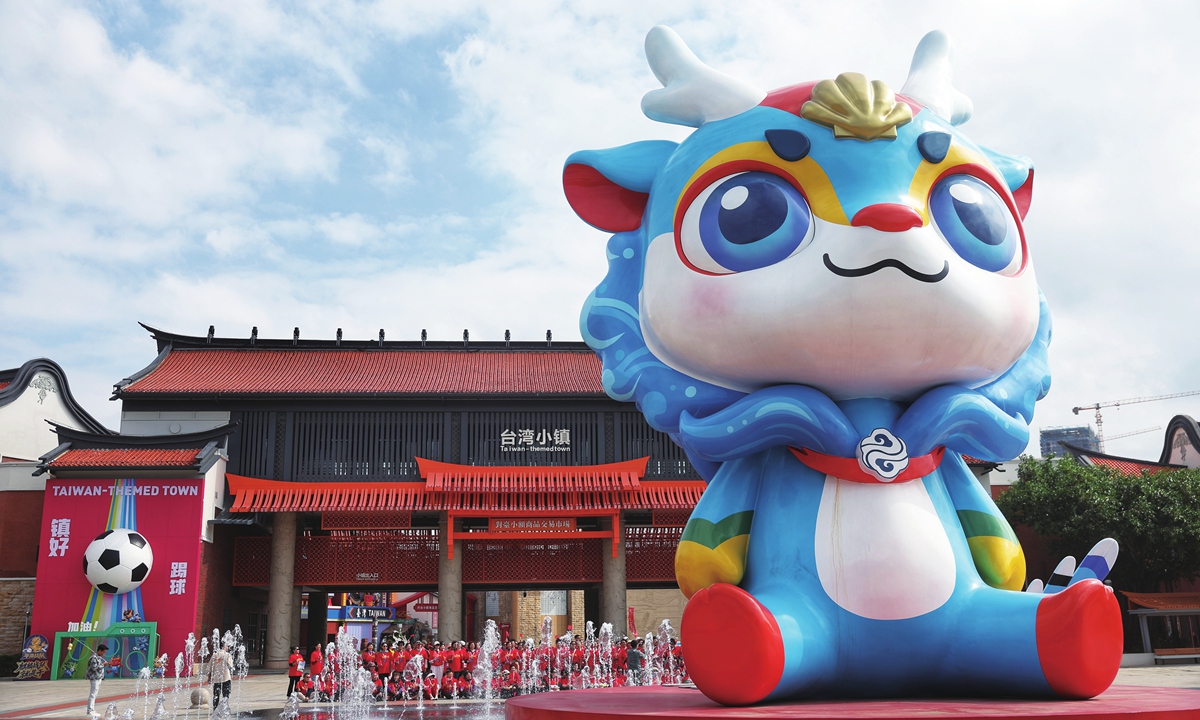
A view of Taiwan-themed town in Pingtan, Fujian Province, a national 3A-rated tourist attraction and a major marketplace for small-scale trade with Taiwan region on the Chinese mainland Photo: Cui Meng/Global Times
Through giant floor-to-ceiling glass windows at a seaside cafe in Pingtan, East China's Fujian Province, visitors can watch waves roll toward the shore and catch the sunrise on clear mornings, a view that has made the cafe a popular photo spot for people from around the world.
The cafe, Reef BISTRO, is run by Ye Hanhui from Taiwan Island. The venue was previously an abandoned trampoline facility that had fallen into disrepair after succumbing to strong coastal winds. Ye first came to Pingtan as a tourist and was drawn to the coastal scenery and relaxed lifestyle. He later decided to settle there and start a business.
The local village committee helped Ye in operating the cafe. Rather than asking him to independently finance all the surrounding facilities, the village committee built part of a wooden walkway according to his design and leased the facilities to him.
Ye said that he hoped to make the cafe a recognizable calling card for other entrepreneurs from Taiwan Island in Pingtan, demonstrating that they could establish successful businesses on the Chinese mainland.
Rising entrepreneurs
Ye's experience reflects a broader change in Pingtan's tourism sector, which is creating new opportunities for private investment and businesses serving visitors from the region and beyond.
Pingtan received 12 million tourist visits in 2025, marking the third consecutive year that the figure exceeded 10 million, according to official data.
The growth of Pingtan's tourism sector has created opportunities for people from different professional backgrounds to contribute to local development. Chen Jianxiang, chief planner of the Pingtan Bureau of Tourism, Culture, Sports and Media, is one such example.
Chen came to the mainland in 2010 to study at the renowned Fudan University in Shanghai. After graduation, he worked in management consulting in Shanghai before moving to Pingtan in 2017 through a talent recruitment program. Since then, he has been involved in industrial planning and investment promotion, he said.
The State Council approved Pingtan's development as an international tourism island in 2016. Since then, the island has increasingly focused on tourism development, Chen said.
When Chen arrived in Pingtan in 2017, the island had only around a dozen homestays. The sector has since expanded significantly, with more than 900 homestay buildings registered there as of November 2026. This growth has brought previously vacant houses in coastal villages back into use.
According to a preliminary survey conducted about two years ago, around 40 percent of the vacant houses in some coastal villages in Pingtan had been put back into use, Chen said. Some young people who had previously worked in larger cities have returned to Pingtan to establish homestays and cafes.
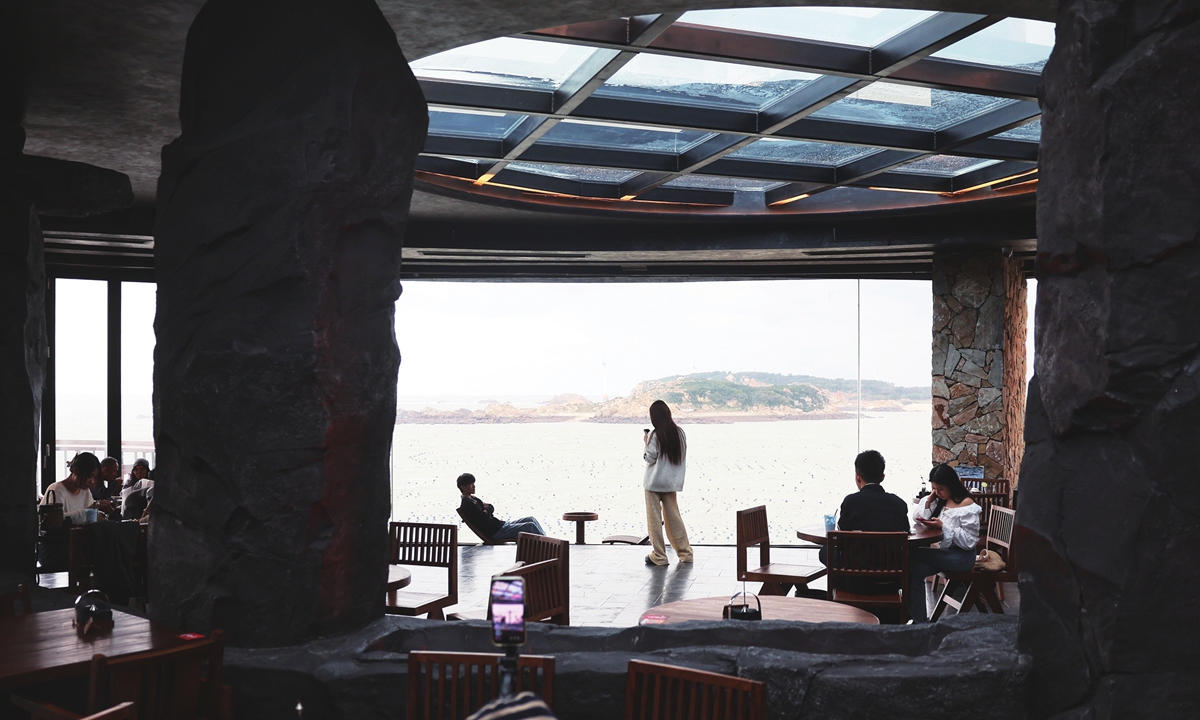
Visitors enjoy sea views at Reef BISTRO, a seaside cafe run by Taiwan entrepreneur Ye Hanhui in Pingtan. Photo: Cui Meng/Global Times
Beyond tourism, Pingtan has sought to promote cross-Straits trade. The Taiwan-themed town, developed as a marketplace for products from Taiwan Island, has gradually expanded its business size, creating a platform for Taiwan businesses to explore the mainland market.
For businessman Yang Zongxian from Taiwan Island, who first visited Pingtan in 2011 and established his presence on the island in 2014, the Taiwan-themed town has provided a platform to develop his business.
Yang initially entered the town when it opened in 2014, but his first business there incurred losses of nearly 3 million yuan ($450,000) before he withdrew in 2017. After years of exploring the local market and operating businesses in other locations, he returned to a new business area in Pingtan last year, leasing around 9,000 square meters of commercial space to do business.
The new area includes more than a dozen types of businesses, among them beef noodle restaurants, fried chicken shops, coffee shops, cultural and creative businesses, and specialty food stores. It also includes a livestreaming base and a large restaurant featuring cuisine from Taiwan Island.
Those businesses have employed around 100 people, including 18 young people from Taiwan Island. Yang has recruited young people from Taiwan to work as store managers. They can first become familiar with the local market before exploring opportunities to become shareholders and business partners.
The commercial redevelopment has also benefited from preferential rental arrangements and renovation support. In addition, local and provincial programs provide eligible young people from Taiwan with talent and rental subsidies, with combined support reaching around 60,000 yuan, according to Yang. He said he seeks to pass these benefits on to the young people he recruits, making it easier for them to work and start businesses in Pingtan.
Cross-Straits cooperation
Cross-Straits business cooperation in Pingtan has expanded into many service sectors, with traditional Chinese medicine (TCM) emerging as a new field of cooperation.
Taiwan businessman Xue Qingde established Jiyuantang TCM Clinic in Pingtan in 2018, hoping to use the island as a platform to promote exchanges between medics from both sides of the Taiwan Straits.
The idea came after Xue experienced health problems in 2017 and found TCM helpful for his healing. Xue took the initiative to establish a TCM treatment business that would bring together the knowledge and expertise from both sides of the Straits.
The clinic has since expanded from an initial 500 square meters to nearly 1,500 square meters now, while annual patient visits increased from around 4,000 in the beginning to 40,000 nowadays, according to Xue.
It now has around 36 employees, including about 15 licensed TCM practitioners, and offers services ranging from internal medicine and pediatrics to acupuncture, massage and rehabilitation. In October 2024, Xue expanded his business to Fuzhou.
Xue is not alone. Official figures show that, by the end of 2025, Pingtan had more than 1,900 Taiwan-invested businesses and nearly 6,000 people from Taiwan were working in Pingtan.
Pingtan's rapid development is tethered to the national push to promote integrated development across the Taiwan Straits.
The national 15th Five-Year Plan (2026-30) outline calls for supporting Fujian in advancing the high-quality development of the demonstration zone for integrated development across the Straits, and promoting major cooperation platforms.
It also calls for supporting enterprises from Taiwan Island in establishing a stronger presence on the mainland market, strengthening industrial cooperation and deepening exchanges in education, healthcare and social security.
Fujian's 15th Five-Year Plan further proposes developing Pingtan into a pilot area for a common market across the Straits, expanding access in trade, investment, tourism, education and healthcare, and promoting the resumption of direct passenger shipping services between Pingtan and Taiwan Island.
RELATED ARTICLES